
Questions or ideas?
We would love to hear from you!
Various salmon fillets and smoked salmon products from Dutch supermarkets Albert Heijn, Jumbo, Aldi, Dirk, and Spar come from the factories of a salmon farm that feeds all its salmon chicken. This partly concerns private label products. This is revealed by research from Foodrise.
Foodrise found production codes referring to Lerøy Seafood on private label salmon packaging at Albert Heijn, Jumbo, Aldi, Dirk, and Spar. In a written response to Foodrise, Lerøy states that chickenmeal “has a nutritional profile that fits well as a feed ingredient,” that it constitutes only “a small share of the total feed,” and that it concerns chicken by-products produced for human consumption. The company calls its use “a responsible choice from both a nutritional and sustainability perspective.”
The consumer is not informed about this unnatural food chain. There is no labeling requirement for fish feed. In response to questions from Foodrise, the supermarkets indicate that they will not change their purchasing or labeling policies.
Producers are switching to chicken because the price of traditional fishmeal is becoming increasingly expensive due to overfishing and climate change. In Peru, the anchoveta catch has virtually disappeared this year due to a super El Niño. In Norway, the blue whiting is so overfished that feed manufacturers are removing it from their feed. Other major salmon farming producers are expected to follow Lerøy’s lead and feed chicken to salmon as well.
“Feeding chicken to salmon is unnatural and symbolizes the state of the farmed fish sector. Salmon farming has reached its ecological limits: for decades, millions of tons of wild fish were sucked from the oceans to feed farmed salmon; now, the switch is being made to chickenmeal. Anyone buying salmon in the supermarket has no idea that the fish has eaten chicken. That is why the composition and origin of fish feed must be mandatory on the packaging,” says Sybren Kooistra of Foodrise.
Over two percent of the Dutch population eats no meat, but does eat fish. Many of these pescetarians run the risk of unintentionally and unknowingly increasing meat consumption. In response to this, Kooistra says: “Farmed fish has a sustainable image. But to feed one farmed salmon, hundreds of fish are killed. The fact that chickens now have to be slaughtered for this as well raises the question of how viable and sustainable the farmed fish sector actually is.”
We want the composition and origin of fish feed to be mandatorily stated on the packaging. That way, at least you’ll know if there’s chicken in your salmon.

We would love to hear from you!
Share on social media
Stay up to date with our latest work.
Together with Compassion in World Farming EU, we brought our urgent warning to the European Parliament during EU Ocean Week: “Carnivorous aquaculture is draining our oceans, risking global food security and impacting European fisheries“. At the event Carnivorous Aquaculture: Eating up the Ocean, Threatening Food Security, hosted by French MEP Emma Fourreau, Foodrise and Compassion in World Farming EU revealed the environmental and welfare consequences of carnivorous aquaculture, alongside a preview of the documentary SEABASS INC by Carlos Underwood, bringing the voices of costal communities to the heart of decision-making.
The event panellists, including communities affected by this industry and leading scientists, discussed the real-life consequences of this extractive industry from pollution to fish welfare. MEP Emma Fourreau said: ” The European Union must stop contributing to the overexploitation of West Africa’s aquatic resources through its market for fishmeal and fish oil. Beyond the environmental impacts and consequences for animal welfare of such activities, boosting the growth of carnivorous aquaculture in Europe is the wrong answer to food security”
Conversations like these are critical in spaces like the European Parliament. With the upcoming Vision 2040 for Fisheries and Aquaculture, this is a crucial moment to identify and promote truly sustainable practices, while banning those that harm animals, people and the planet.
We would love to hear from you!
Share on social media
Stay up to date with our latest work.
Shrimps are Europe’s most valuable wild seafood product, yet in the last 20 years the market has been flooded by much cheaper imports of Ecuadorian farmed shrimp. The country’s rising production surged from roughly 40,000 tonnes in 2000 to an estimated 1.2 million tonnes in recent years. This is an astronomical change, now more than half of the shrimp imported into the EU comes from Ecuador.
Ecuador’s shrimps are not caught in the wild but farmed on a massive scale, most often in areas where mangrove forests or agricultural lands have been cleared. Our report is introduced by a lawyer representing a community who faced eviction from their farming lands in early 2026. Conflicts over land and space are rife, shrimp farms now occupy 220,000 hectares of land. Impacts on small scale fishers are also significant, not only because of mangrove disappearance but also because farmed shrimp are fed 178,000 tonnes of wild fish as feed every year.
Spain is the main European importer, bringing in more shrimp from Ecuador annually than is caught or farmed across the entire European Union combined. Spanish fishing companies are also increasingly investing in the industry. The climate impacts are not to be overlooked, land use and feed input mean farmed shrimp’s average greenhouse gas emissions are higher than that of the average dairy cow.
Our new research, conducted together with Animal Welfare Observatory and supported by Eurogroup for Animals shows that the environmental and social harm behind this growing trade has remained largely invisible to consumers.
As our Research Campaigner Pieter puts it: “Farmed shrimp is an extractive industry and an example of nutrient colonialism. Large feed companies are emptying South American oceans for fishmeal and clearing land for soymeal as demand for feed for cheap shrimps reaches unprecedented levels in Europe. Consumers are being largely left in the dark about the origins of their seafood”.
We would love to hear from you!
Share on social media
Stay up to date with our latest work.
This Summer, Phoebe Zhuang, a master’s student from the University of Amsterdam, joined Foodrise’s team as an intern. Here is her take from this year’s MARE Conference.
The MARE People and the Sea Conference is an event where social scientists come together to have interdisciplinary discussions on the use and management of marine resources. This year’s edition focused on the balance between tensions, trade-offs, and the potential transformations required for the future of sustainable marine resource management and governance. I acted as both a volunteer for the University of Amsterdam and an intern for Foodrise. I witnessed a great gathering of wonderful people and the latest scientific findings from marine social scientists.
In my own master’s research, I focused on the utilisation of small pelagic fish and their potential for greater human consumption rather than fishmeal production on the South African West Coast. I was curious to hear more and attended the sessions on aquafeed value chains, small-scale fisheries and fisheries system transformation. 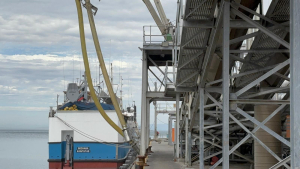
The expanding farming sectors, aquaculture in particular, have driven the increasing demand for Fishmeal and Fish Oil (FMFO), a crucial raw material for animal feeds. The rising FMFO industry has been changing coastal dynamics, aquaculture supply chains and the global food system. The fish used for FMFO production are usually small pelagic fish, such as sardine, anchovy and herring, which are an important source of food, protein and nutrition in coastal areas. In West Africa and South Asia, they are part of local artisanal food systems, contributing to local food security, fishers’ income and sustainable livelihoods. Now, with the increasing demand of raw material for FMFO production, these nutritionally valuable and culturally significant fish are diverted from human consumption to FMFO factories.
However, it is not only about the shift in use, but also what comes afterwards – the local fish food systems left shaken. During the sessions we heard about the shared concerns that affect countries like Senegal, Mauritania, India, Bangladesh, Vietnam. The diversion of fish toward feed is taking place across the world where richer countries extract so called “low value” fish through the capitalist global market. And the locals, they suffer.
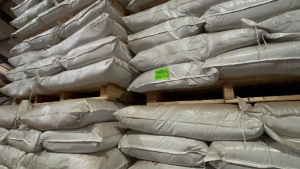 Systems seem trapped in FMFO production for the global market, despite huge capacity and the need for food in the region. Consequently, local fish food value chains were hit hard, driving increased food insecurity among coastal populations.
Governments and corporates often hide behind the concept of a “neoliberal” market and justify the diversion by saying that FMFO creates new revenue and boosts economic growth and local development. But let’s think about what has happened at the local level — Yes, there is growth and development, but for whom, and at what cost?
The people who were born and raised by the sea are now not able to access to the same fish as they have been eating over the generations, not to mention that they are also not welcomed in this new FMFO industry.
At some point, all of us in the room felt a sense of powerlessness and depression — FMFO has done too much to local communities that it seems hopeless for people who suffer from exclusion and marginalisation to fight back at the lower end of the power relation.
We are far from the solution, but we are all working towards it. One researcher from India shared, that at least some of the governments are starting to see the problems. This is where we must focus. As the FMFO industry continues to expand, growing attention is being paid to the conflicting and unequal dynamics among seafood supply chains, the FMFO sector, and local fish-based food systems.
Foodrise has been looking at high-trophic aquaculture on the EU and global levels, especially salmon and seabass aquaculture, which contribute to environmental degradation and food injustice along the supply chains. Foodrise is taking action to stop this toxic industry in its tracks — through hard-hitting investigative research, building public pressure, and platforming the voices of communities on the frontlines.
In the report Ocean Takeover, we found that seabass and seabream farming have taken over large tracts of the Mediterranean Basin in recent decades and wild-caught fish from West and Southern Africa are being used to produce feed for Greek seabass and seabream farms. Using conservative assumptions, nearly one million people in the region could eat a weekly portion of 200g of fish using the fish currently turned into fish oil for seabass and seabream aquaculture in Greece.
The FMFO industry’s impact is no longer invisible. We may feel powerless at times, but the power lies in connection, in knowledge, and in collective action. As researchers, advocates, and communities, we must challenge this extractive system and push for a future where fish feed people — not just profits and corporate interests.

We would love to hear from you!
Share on social media
Stay up to date with our latest work.
Kweekzalm richt ecologische schade aan, is niet duurzaam en veroorzaakt voedselschaarste aan de Afrikaanse westkust. Toch blijft het roze stukje vis een schoon imago houden dankzij veelvuldige greenwashing technieken van de kweekzalmindustrie, met name actief in Noorwegen, Denemarken en Schotland. Op de websites van deze bedrijven wordt het begrip ‘duurzaamheid’ veelvuldig gebruikt en de gezondheid van de zalm geprezen, terwijl de realiteit heel anders blijkt. En juist Nederlandse banken lijken hiervoor te vallen.
Het nieuwe rapport ‘Fishy Finances: Exposing industrial salmon farming’s biggest financial backers’ van Feedback laat zien dat in de top vijf van grootste financiële dienstverleners aan zalmkwekerijen wereldwijd twee Nederlandse banken staan: ABN Amro heeft sinds 2015 voor 1.3 miljard dollar verstrekt en Rabobank zelfs voor 1.8 miljard dollar. Dankzij de financiële sector wordt de kweekvisindustrie aangemoedigd hun vervuilende en oneerlijke praktijken verder uit te breiden.
Hiermee vormen deze banken de twee grootste financiële verstrekkers (ABN AMRO 1.3 miljard dollar, Rabobank 0.9 miljard dollar) aan het Noorse Mowi. Het miljardenbedrijf heeft al meerdere schandalen achter haar naam staan: het overtreden van milieuwetten in Schotland, rechtszaken in Chili vanwege grote hoeveelheden ontsnapte zalm, het gebruik van verboden chemicaliën op ‘biologische’ zalm in Britse supermarkten en het overtreden van EU mededingingsregels.
Zelfs Triodos, een van de duurzaamste banken van Nederland, blijkt sinds december 2024, 16 miljoen dollar geïnvesteerd te hebben in Bakkafrost, één van de grootste zalmkwekerijen ter wereld. Het bedrijf heeft een toenemend sterftecijfer onder de zalm en gebruikt bovengemiddeld veel wilde vis om de zalm te voeden.
Wat gaat er mis in de kweekzalmindustrie?
Enorme bedrijven zoals Mowi, SalMar and Bakkafrost ontvangen tientallen miljarden aan investeringen en kredietverleningen voor het uitvoeren van schadelijke praktijken. Feedback EU roept de Nederlandse banken op de geldkraan zo snel mogelijk dicht te draaien.
Frank Mechielsen, Directeur Feedback EU: “Het is tijd dat de greenwashing praktijken van de zalmindustrie aan het licht worden gebracht en dat iedereen kan inzien hoe verwoestend deze industrie te werk gaat. Nederlandse banken dragen bij aan het aanrichten van ecologische schade, voedselschaarste en dierenleed. De geldkraan moet dicht.”
Dr Aliou Ba, Ocean Campaign Lead Greenpeace Africa: “De miljarden die naar de industriële zalmteelt gaan, vernietigen niet alleen mariene ecosystemen, maar beroven ook Afrikaanse kustgemeenschappen van voedselzekerheid. Deze financiële instellingen stoppen geld in een industrie die wilde vispopulaties uitput voor de productie van vismeel en visolie, terwijl lokale vissers moeite hebben om hun families te voeden. Door zalmkwekerijen te financieren, kiezen wereldwijde investeerders voor bedrijfswinsten in het mondiale noorden boven het levensonderhoud van miljoenen mensen die afhankelijk zijn van gezonde oceanen in het mondiale zuiden. Wij eisen dat zij de financiële steun aan deze roofzuchtige industrie stopzetten en in plaats daarvan investeren in de bescherming van de mariene hulpbronnen die onze gemeenschappen in stand houden.”
In 2024 bracht Feedback een rapport uit over hoe de groeiende Noorse kweekzalmindustrie resulteert in voedselschaarste aan de Afrikaanse westkust.
Lees de Nederlandse samenvatting van het rapport hier.
We would love to hear from you!
Share on social media
Stay up to date with our latest work.
In het recente verkiezingsdebat over landbouw en handel kwamen alle kandidaat Europarlementariërs (MEPs) van de negen aanwezige partijen samen. Het debat werd georganiseerd door Feedback EU in samenwerking met Platform ABC, de Nederlandse Akkerbouw Vakbond, en de Nederlandse Melkveehouders Vakbond. Hoewel er een consensus leek te zijn over enkele hoofdpunten, zoals het verbeteren van het inkomen van boeren en het tegengaan van oneerlijke concurrentie en handelsverdragen, waren de meningen over de invulling en aanpak van deze doelen sterk verdeeld.
Consensus en Controverse
Alle partijen spraken zich uit voor een beter inkomen voor boeren en tegen oneerlijke handelspraktijken. De meeste partijen steunen ook de vergroening van het Gemeenschappelijk Landbouwbeleid (GLB). Echter, rechtse partijen willen de hectarepremie behouden als buffer voor slechte tijden. Er waren uiteenlopende meningen over wat eerlijk en beter is voor de boer en het milieu, en over de rol van Europa hierin.
Monique Ansink (Volt) vatte het treffend samen: “Als je achter de kudde aanrent, loop je altijd in de stront.” Hiermee benadrukte ze de noodzaak voor progressieve verandering en leiderschap.
Milieu en Mest
Anja Hazekamp (PvdD) bracht de omvang van het mestprobleem in Nederland onder de aandacht: “We produceren 70 miljoen ton mest per jaar, dat is 1000 kg per inwoner, ofwel 33 badkuipen per jaar per persoon.” Dit beeldende voorbeeld stuitte op kritiek van de BoerBurgerBeweging (BBB) en de SGP, die vonden dat de cijfers overdreven waren.
Hans Geurts (BBB) pleitte tegen de afschaffing van de derogatie is, waardoor hij minder dierlijke mest en meer kunstmest moet gaan verbruiken, terwijl de SGP een kringlooplandbouw voorstelde waarin ook menselijke mest wordt gebruikt.
Subsidies en Duurzaamheid
Anja Hazekamp (PvdD) stelde dat alle GLB-subsidies moeten worden ingezet voor verduurzaming en vermindering van externe kosten. Ze bekritiseerde het huidige systeem, waarbij de meeste subsidies naar grote bedrijven in de veehouderij gaan vanwege de hectarepremie.
Lara Sibbink (GroenLinks/PvdA) benadrukte het belang van biologische landbouw, waar veel minder in is geïnvesteerd dan in conventionele landbouw. Ze pleitten voor GLB-ondersteuning voor biologische landbouw vanwege de lagere externe kosten.
Hendri Nortier (D66) stelde dat eerlijke beprijzing cruciaal is en dat potentiële klimaatschade in de prijs moet worden meegenomen. Hij betoogde dat Nederland, door in te spelen op deze ontwikkelingen, de concurrentiekracht van de boeren kan versterken.
Wetenschappelijke Feiten en Polarisatie
Een boer uit het publiek klaagde dat tegenwoordig alle wetenschap subjectief lijkt. De wetenschappelijke feiten over klimaat, stikstof en landbouw werden door sommige boeren en rechtse partijen ter discussie gesteld.
Lara Sibbink (GroenLinks/PvdA) was verbaasd over het gebrek aan feitenkennis van sommige kandidaten. Ze werd door een boer uit het publiek neergezet als theatermaker, wat ze beaamde naast haar rol als voedselexpert.
Monique Ansink (Volt) riep op om de links-rechts discussie en polarisatie te vermijden en samen te werken aan een duurzame toekomst. Hans Geurts (BBB) sloot zich hierbij aan en benadrukte het belang van communicatie over gewasbeschermingsmiddelen zonder angstzaaien.
Handel en Vrijhandelsverdragen
Fenna Feenstra (SP) stelde dat wat we hier niet willen, we ook niet in Indonesië en Brazilië moeten willen.
Anja Hazekamp (PvdD) benadrukte het belang van het uitsluiten van landbouw uit vrijhandelsverdragen. Lara Sibbink (GroenLinks/PvdA) benadrukte de noodzaak van voedselsoevereiniteit.
De SGP en BBB stemden tegen het Mercosur-verdrag vanwege oneerlijke concurrentie en lagere duurzaamheidsnormen voor importproducten. Lambert Polinder (SGP) benadrukte dat de import van buiten de EU aan dezelfde productiemethoden moet voldoen als binnen de EU.
Lara Sibbink (GroenLinks/PvdA) pleitte voor mirror measures in handelsverdragen, die wederkerig moeten worden toegepast, bijvoorbeeld bij de export van pesticiden uit de EU.
Hans Geurts (BBB) gaf aan dat de BBB, ondanks hun eerdere tegenstand tegen Mercosur, nu zullen deelnemen aan de EVP-fractie en pragmatischer zullen zijn in hun stemgedrag, wat door de VVD wordt bevestigd.
Oneerlijke concurrentie en Mirror Measures
Frank Mechielsen, directeur van Feedback EU gaf een presentatie over oneerlijke concurrentie voor Europese boeren van boeren uit landen buiten de EU en presenteerde ook de beleidsnota die recent is uitgebracht door Feedback EU over dit wetgevingsinstrument. De beleidsnota is hier terug te lezen.
Samenvatting
Het verkiezingsdebat over landbouw en handel toonde een brede eensgezindheid over de noodzaak van eerlijke inkomens voor boeren en de strijd tegen oneerlijke concurrentie en handelsverdragen. Echter, de visies op hoe deze doelen te bereiken verschilden sterk tussen de partijen. Linkse partijen benadrukten de noodzaak van duurzaamheid en biologische landbouw, terwijl rechtse partijen pleitten voor behoud van de hectarepremie en pragmatische benaderingen in handelsverdragen. De discussie over mest en wetenschappelijke feiten illustreerde de polarisatie binnen het debat, met oproepen van Volt en BBB om gezamenlijk naar een duurzame toekomst te werken. Het was duidelijk dat, hoewel de doelen overeenkomen, de wegen naar die doelen sterk uiteenlopen.
We would love to hear from you!
Share on social media
Stay up to date with our latest work.