
Questions or ideas?
We would love to hear from you!
Shrimps are Europe’s most valuable wild seafood product, yet in the last 20 years the market has been flooded by much cheaper imports of Ecuadorian farmed shrimp. The country’s rising production surged from roughly 40,000 tonnes in 2000 to an estimated 1.2 million tonnes in recent years. This is an astronomical change, now more than half of the shrimp imported into the EU comes from Ecuador.
Ecuador’s shrimps are not caught in the wild but farmed on a massive scale, most often in areas where mangrove forests or agricultural lands have been cleared. Our report is introduced by a lawyer representing a community who faced eviction from their farming lands in early 2026. Conflicts over land and space are rife, shrimp farms now occupy 220,000 hectares of land. Impacts on small scale fishers are also significant, not only because of mangrove disappearance but also because farmed shrimp are fed 178,000 tonnes of wild fish as feed every year.
Spain is the main European importer, bringing in more shrimp from Ecuador annually than is caught or farmed across the entire European Union combined. Spanish fishing companies are also increasingly investing in the industry. The climate impacts are not to be overlooked, land use and feed input mean farmed shrimp’s average greenhouse gas emissions are higher than that of the average dairy cow.
Our new research, conducted together with Animal Welfare Observatory and supported by Eurogroup for Animals shows that the environmental and social harm behind this growing trade has remained largely invisible to consumers.
As our Research Campaigner Pieter puts it: “Farmed shrimp is an extractive industry and an example of nutrient colonialism. Large feed companies are emptying South American oceans for fishmeal and clearing land for soymeal as demand for feed for cheap shrimps reaches unprecedented levels in Europe. Consumers are being largely left in the dark about the origins of their seafood”.
We would love to hear from you!
Share on social media
Stay up to date with our latest work.
Today, Ireland took over the Presidency of the Council of the EU. Together with farmers’ groups, civil society organisations and community groups, we sent an open letter urging the new Presidency to rethink the EU’s and Ireland’s current approach to biomethane expansion.
We warn that expanding biomethane production risks locking Europe into polluting industrial livestock farming, undermining efforts to reduce livestock numbers and build a more sustainable and resilient food system. Rural communities are being asked to carry an unfair share of the environmental, social and infrastructural burden, while the benefits often flow elsewhere. Through this open letter, we aim to ensure that these concerns are part of the conversation as the EU shapes its future energy and agriculture policies.
Europe needs to transition away from fossil fuels and environmentally destructive industrial systems. The current trajectory of industrial biomethane will not deliver that transition. We need to change course.
Click here to read the full letter.
Signed by:

We would love to hear from you!
Share on social media
Stay up to date with our latest work.
Welcome Sybren Kooistra!
With enthusiasm, we welcome Sybren Kooistra as the new Campaign Director of Foodrise EU. Sybren previously served as Campaign Director of the European Greens and brings campaign experiences from roles at Milieudefensie, Reform Act and GroenLinks.
At Foodrise, he will direct campaigns targeting the outsized negative impact of industrial agriculture – one of the most powerful and least confronted forces driving ecological breakdown in the Netherlands and the EU.
We’re very excited to have him on our team to join our mission of transforming the food system for people and planet.
We would love to hear from you!
Share on social media
Stay up to date with our latest work.
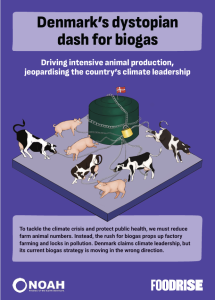
Our new research together with NOAH-Friends of the Earth Denmark, reveals a concerning development: the expansion of manure-fed biogas risks undermining Denmark’s climate ambitions. Analysis of Danish biogas and livestock data shows that, despite an overall reduction trend, municipalities with the largest biogas production capacity have also experienced the greatest increases in pig or cattle numbers over the past 15 years. The four municipalities with the highest biomethane and electricity production saw an estimated 8% increase in pig numbers, while those ranked 5–8 saw a 5% increase in cattle between 2010 and 2024.
That the hype around biomethane is real is also reflected in the European Commission’s ambition to reach 35 billion cubic metres (bcm) per year by 2030. This trend comes at a time when scientists repeatedly stress the need to reduce livestock numbers to meet climate targets. Animal agriculture accounts for an estimated 84% of EU agricultural emissions, and around 80% in Denmark. While the industry promotes biogas as a solution to methane emissions, manure represents only about one-quarter of total emissions from animal production. This narrative overlooks emissions from enteric fermentation (such as methane from ruminant digestion), which account for nearly 40%, as well as emissions from feed production, responsible for around 30%.
Despite these limitations, funding priorities tell a different story: an estimated 20 times more public funding is allocated to biogas than to the Plant-Based Food Grant under Denmark’s Plant-Based Action Plan.
The data also highlights a broader trend of intensification in livestock farming. While the number of pig farms has dropped from over 5,000 in 2010 to fewer than 2,000 in 2024 (a reduction of more than 60%), the average number of pigs per farm has more than doubled, from 2,600 to nearly 6,000.
This points to a key structural issue: scaling up biogas requires large volumes of manure. The industry aims to collect significantly more manure than the government predicts, relying on unrealistically high collection rates of around 75% of the total manure produced. Under more realistic assumptions, meeting these targets would require a substantial increase in livestock numbers—resulting in higher emissions and greater environmental pressure. The benefits of biogas expansion therefore appear to favour mostly large-scale industrial farms, with the potential to lock us into an industrial food system that affects animals, people, and the planet.
Read the full briefing here:
We would love to hear from you!
Share on social media
Stay up to date with our latest work.
High-emissions beef and lamb received an estimated 580 times more common agricultural policy (CAP) subsidies from the European Union than legumes such as lentils and beans in 2020 (€8 billion compared to just €14 million), according to shocking figures released by the environmental organisation Foodrise.
Similarly, dairy received an estimated 500 times more CAP payments than nuts and seeds (€16 billion compared to just €29 million). Overall, the EU directed three times more CAP subsidies to production of high-emitting meat and dairy than to plant-based foods in 2020 – around 77% of total CAP subsidies for farmers (€39 billion out of €51 billion).
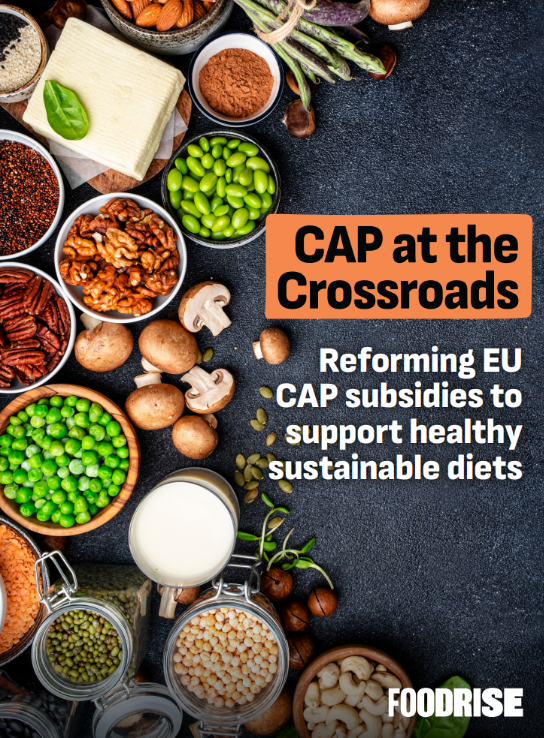
The breakdown of funding for individual food types by the EU is published today in a new report, CAP at the Crossroads, from the environmental organisation Foodrise showing the production of meat and dairy received over 10 times more CAP subsidies than fruit and vegetable production, and over 16 times more than cereal production.
This comes as EU policymakers are due to make crucial decisions this year on public money given to farmers through its common agricultural policy for 2028–2034, with the significant risk that meat and dairy will continue to get the lion’s share.
These disparities come despite animal-based foods being estimated to cause between 81 and 86% of the embodied greenhouse gas emissions (the total emissions released during the lifecycle of products) from EU food production, [1] while only providing an estimated 32% of calories and 64% of protein consumed in the EU. [2]
On average, beef causes an estimated 21-62 times more emissions compared with pulses, per gram of protein [3] – and pulses have benefits for fixing nitrogen in soils and health. [4]
Calls have been growing for agricultural subsidies to be reformed to support a shift to healthy sustainable diets and reduced livestock numbers – including the EU’s Group of Chief Scientific Advisors, [5] the European Court of Auditors, [6] the World Bank, [7] and the 2025 EAT-Lancet Commission. [8]
But this comes in a context of the EU rolling back environmental commitments faced by agribusiness lobbying and the rise of the far-right – and is still mulling a potential ‘veggie burger’ labelling ban reserving words like ‘burger’ and ‘sausage’ for meat products.
Martin Bowman, Senior Campaigns Manager at Foodrise, said:
“It’s scandalous that such an unfair share of EU subsidies, worth billions of euros of EU taxpayers’ money, are being pumped into propping up high-emissions meat and dairy production and distorting European diets. CAP is at a crossroads, and EU policymakers have a huge opportunity to switch course and take the action required to support a just transition to healthy sustainable plant-rich diets. Which we know have the potential to boost farmer incomes, reduce reliance on imports, mitigate climate change, improve Europeans’ health and restore nature.
“At the very least, plant-based foods deserve a fairer share of CAP subsidies, to compete on an equal footing. In line with the recommendations of the landmark Strategic Dialogue report, EU policymakers should urgently introduce a Plant-Based Action Plan to promote plant-based foods across the supply chain, and an Agri-food Just Transition Fund to support farmers in the transition. The shameful use of EU funds to promote meat and dairy to EU citizens – which is directly contrary to EU health and climate goals – should end immediately.”
The food experts highlight the economic, health and environmental benefits of the EU supporting a shift to healthy sustainable diets – with a greater transition to plant-based foods, and less meat and dairy.
In addition to a move from funding from meat and dairy to plants, Foodrise’s report recommends that the EU takes forward key Strategic Dialogue recommendations, like implementing a Plant-Based Action Plan to promote plant-based foods across the supply chain, and an Agri-food Just Transition Fund to support farmers through a just transition.
The report also recommends ending the use of EU funds for the promotion and marketing of meat and dairy.
The adoption of the healthy sustainable Planetary Health Diet in high-income countries could reduce agricultural production emissions by an estimated 61%. [9] It could also reduce the EU’s reliance on food imports, [10] boost agricultural incomes, [11] reduce EU fertiliser use by about a quarter, [12] reduce deaths from air pollution, [13] and prevent up to up to 10–39% of cancers in Europe. [14]
The European Plant-Based Food and Beverage Market is projected to grow by over 50% to USD 83.3 billion by 2030, [15] and a recent report found that alternative proteins have potential to support 414,000 high-quality jobs by 2040. [16] Healthy sustainable diets could increase average EU agricultural incomes, according to a recent study. [17]
The 2024 Strategic Dialogue on the Future of EU Agriculture resulted in a breakthrough agreement between EU farming groups, civil society, businesses and academics, which acknowledged an EU trend towards more plant-based foods and recommended “it is crucial to support this trend”. [18]
ENDS
Notes to Editors
Methodology
Foodrise analysis was based on the underlying dataset from Kortleve et al (2025), shared by researchers at the University of Leiden. Figures are calculated on a consumption basis – so subsidies for crops fed to animals are counted towards animal sourced-foods. For instance, estimates for subsidies to beef and lamb includes estimated subsidies to animal feed used to produce beef and lamb.
Further info on meat and dairy subsidies
Promotion and marketing of European agricultural products is part of the CAP. Between 2016–2020, the EU spent €252.4 million to exclusively promote European meat and dairy products, including campaigns like “Become a Beefatarian” [19]. In 2023 alone, the EU spent nearly €75 million promoting animal products, of which €29 million was for campaigns encouraging people to eat more meat. [20]
Footnotes
[1] Based on various sources: Anniek J. Kortleve et al., ‘Over 80% of the European Union’s Common Agricultural Policy Supports Emissions-Intensive Animal Products’, Nature Food 5, no. 4 (2024): 288–92, https://doi.org/10.1038/s43016-024-00949-4; Directorate-General for Agriculture and Rural Development (European Commission) et al., Future of EU Livestock: How to Contribute to a Sustainable Agricultural Sector ? : Final Report (Publications Office of the European Union, 2020), https://data.europa.eu/doi/10.2762/3440; European Court of Auditors, Common Agricultural Policy and Climate: Half of EU Climate Spending but Farm Emissions Are Not Decreasing (European Court of Auditors, 2021), 28, https://www.eca.europa.eu/lists/ecadocuments/sr21_16/sr_cap-and-climate_en.pdf.
[2] EC, EU Agricultural Outlook, 2024-2035 (European Commission, DG Agriculture and Rural Development, 2024), 18, https://data.europa.eu/doi/10.2762/2329210.
[3] Joseph Poore and Thomas Nemecek, ‘Reducing Food’s Environmental Impacts through Producers and Consumers’, Science 360, no. 6392 (2018): 987–92, https://doi.org/10.1126/science.aaq0216.
[4] Fabio Stagnari et al., ‘Multiple Benefits of Legumes for Agriculture Sustainability: An Overview’, Chemical and Biological Technologies in Agriculture 4, no. 1 (2017): 2, https://doi.org/10.1186/s40538-016-0085-1.
[5] Directorate-General for Research and Innovation (European Commission) and Group of Chief Scientific Advisors (European Commission), Towards Sustainable Food Consumption: Promoting Healthy, Affordable and Sustainable Food Consumption Choices (Publications Office of the European Union, 2023), 29, https://data.europa.eu/doi/10.2777/29369.
[6] European Court of Auditors, Common Agricultural Policy and Climate: Half of EU Climate Spending but Farm Emissions Are Not Decreasing (European Court of Auditors, 2021), 28, https://www.eca.europa.eu/lists/ecadocuments/sr21_16/sr_cap-and-climate_en.pdf.
[7] The World Bank, ‘Recipe for a Livable Planet: Achieving Net Zero Emissions in the Agrifood System’, World Bank, 2024, xxiii, https://www.worldbank.org/en/topic/agriculture/publication/recipe-for-livable-planet.
[8] Johan Rockström et al., ‘The EAT–Lancet Commission on Healthy, Sustainable, and Just Food Systems’, The Lancet 406, no. 10512 (2025): 1625–700, https://doi.org/10.1016/S0140-6736(25)01201-2; EAT-Lancet Commission, ‘New Landmark EAT-Lancet Commission Warns Food Systems Breach Planetary Limits’, EAT, 2025, https://eatforum.org/update/eat-lancet-commission-warns-food-systems-breach-planetary-limits/.
[9] Zhongxiao Sun et al., ‘Dietary Change in High-Income Nations Alone Can Lead to Substantial Double Climate Dividend’, Nature Food 3, no. 1 (2022): 1, https://doi.org/10.1038/s43016-021-00431-5.
[10] Zhongxiao Sun et al., ‘Adoption of Plant-Based Diets across Europe Can Improve Food Resilience against the Russia–Ukraine Conflict’, Nature Food 3, no. 11 (2022): 11, https://doi.org/10.1038/s43016-022-00634-4.
[11] Jörg Rieger et al., ‘From Fork to Farm: Impacts of More Sustainable Diets in the EU-27 on the Agricultural Sector’, Journal of Agricultural Economics n/a, no. n/a (2023), https://doi.org/10.1111/1477-9552.12530.
[12] Zhongxiao Sun et al., ‘Adoption of Plant-Based Diets across Europe Can Improve Food Resilience against the Russia–Ukraine Conflict’, Nature Food 3, no. 11 (2022): 11, https://doi.org/10.1038/s43016-022-00634-4.
[13] Marco Springmann et al., ‘The Global and Regional Air Quality Impacts of Dietary Change’, Nature Communications 14, no. 1 (2023): 1, https://doi.org/10.1038/s41467-023-41789-3.
[14] In a 20-year risk period. See: Jessica E. Laine et al., ‘Co-Benefits from Sustainable Dietary Shifts for Population and Environmental Health: An Assessment from a Large European Cohort Study’, The Lancet Planetary Health 5, no. 11 (2021): e786–96, https://doi.org/10.1016/S2542-5196(21)00250-3.
[15] Mordor Intelligence, ‘Europe Plant-Based Food and Beverages Market – Size, Trends & Share’, Mordor Intelligence, 11 November 2025, https://www.mordorintelligence.com/industry-reports/europe-plant-based-food-and-beverage-market.
[16] Systemiq, ‘Seizing the Economic Opportunity of Alternative Proteins in Europe’, SYSTEMIQ, January 2026, https://www.systemiq.earth/economic-opportunity-of-alternative-proteins-europe/.
[17] Jörg Rieger et al., ‘From Fork to Farm: Impacts of More Sustainable Diets in the EU-27 on the Agricultural Sector’, Journal of Agricultural Economics n/a, no. n/a (2023), https://doi.org/10.1111/1477-9552.12530.
[18] Strategic Dialogue on the Future of EU Agriculture: A Shared Prospect for Farming and Food in Europe (2024), 10, https://agriculture.ec.europa.eu/document/download/171329ff-0f50-4fa5-946f-aea11032172e_en?filename=strategic-dialogue-report-2024_en.pdf. 11–12.
[19] Greenpeace EU, Marketing Meat: How EU Promotional Funds Favor Meat and Dairy (Greenpeace EU, 2021), https://www.greenpeace.org/static/planet4-eu-unit-stateless/2021/04/20210408-Greenpeace-report-Marketing-Meat.pdf.
[20] Party for the Animals, ‘EU spends millions in taxpayer money on meat ads’, Party for the Animals, 30 April 2024, https://www.partyfortheanimals.com/sv/eu-spends-millions-in-taxpayer-money-on-meat-ads.

We would love to hear from you!
Share on social media
Stay up to date with our latest work.
CAP at the Crossroads: Reforming EU CAP subsidies to support healthy sustainable diets, a new report from Foodrise, reveals the scale of EU common agricultural policy (CAP) subsidies directed to meat and dairy, and makes the case for reform to support healthy sustainable diets.
What’s the problem?
Animal-sourced foods are estimated to cause a staggering 81-86% of the total greenhouse gas emissions from EU food production, yet only supply an estimated 32% of calories and 64% of protein consumed in the EU.
This new report reveals that a hugely unfair share of EU CAP subsidies, worth billions of euros of EU taxpayers’ money, are directed to propping up high-emissions meat and dairy production, and to promote meat and dairy products.
The EU is at a crossroads – poised to make crucial decisions on the future of CAP for 2028–2034. Right now, it has the opportunity to support a transition to healthy sustainable diets – a huge economic opportunity with multiple benefits for EU food security, climate mitigation, nature and health. Or continue with a broken status quo.
Key findings:
Solutions
Calls have been growing for agricultural subsidies to be reformed to support a shift to healthy sustainable diets and reduced livestock numbers – including the EU’s Group of Chief Scientific Advisors, the European Court of Auditors, the World Bank, and the 2025 EAT-Lancet Commission.
The benefits this could bring are huge.
The adoption of the plant-rich Planetary Health Diet in high-income countries could reduce agricultural production emissions by an estimated 61%. It could also reduce the EU’s reliance on food imports, boost agricultural incomes, reduce EU fertiliser use by about a quarter, reduce deaths from air pollution, and prevent up to up to 10–39% of cancers in Europe.
Policy recommendations
We recommend that EU policymakers:
What the experts say
Martin Bowman, Senior Policy and Campaigns Manager at Foodrise, said:
“It’s scandalous that such an unfair share of EU subsidies, worth billions of euros of EU taxpayers’ money, are being pumped into propping up high-emissions meat and dairy production and distorting European diets. CAP is at a crossroads, and EU policymakers have a huge opportunity to switch course and take the action required to support a just transition to healthy sustainable plant-rich diets. Which we know have the potential to boost farmer incomes, reduce reliance on imports, mitigate climate change, improve Europeans’ health and restore nature.
“At the very least, plant-based foods deserve a fairer share of CAP subsidies, to compete on an equal footing. In line with the recommendations of the landmark Strategic Dialogue report, EU policymakers should urgently introduce a Plant-Based Action Plan to promote plant-based foods across the supply chain, and an Agri-food Just Transition Fund to support farmers in the transition. The shameful use of EU funds to promote meat and dairy to EU citizens – which is directly contrary to EU health and climate goals – should end immediately.”
Read the full report:
We would love to hear from you!
Share on social media
Stay up to date with our latest work.
For Foodrise, this is an important achievement in our campaigning work over the past couple of years. To have a serious chance of responding to the climate crisis and improving public health, we need to reduce animal numbers and promote plant-based alternatives. The global livestock sector is estimated to be responsible for between 12% and 19% of total human-caused climate emissions, making it one of the world’s highest-emitting sectors. The current industrial scale of meat and dairy production poses a serious threat to both planet and people.
Together with other NGOs, we’ve actively driven the protein agenda, working to steer the Netherlands towards a more plant-based future. We see enormous potential: farmers shifting to plant-based production, consumers discovering new alternatives, and policies aligning with climate goals. The advertising ban brings that future one step closer to reality and helps turning ambition into action.
We would love to hear from you!
Share on social media
Stay up to date with our latest work.
The global livestock sector is estimated to be responsible for between 12% and 19% of total greenhouse gas emissions, according to a recent study from Foodrise, Friends of the Earth, IATP and Greenpeace. The European Union houses more than a third of these industry’s top polluters. When talking about the drivers of the climate crisis, most eyes are focused on fossil fuels, transport, and individual lifestyle choices. And all the while, big corporations like Lactalis (France), Arla (Denmark), Nestlé (Switzerland), and FrieslandCampina (the Netherlands) continue business as usual, without facing any real accountability for their damaging practices.
To have any real chance of limiting global warming to the Paris Agreement’s 1.5°C target, the livestock sector needs to be taken just as seriously as the biggest oil firms. The top five meat and dairy emitters alone produce more greenhouse gas emissions than major oil companies such as Shell. There is no time left for techno-fixes that won’t hold up in court. Livestock reduction is the only credible path forward.
In 2023, the climate emissions of the 45 biggest producers were estimated to exceed the reported emissions of all EU27 countries and the UK combined. This strongly accelerates global warming, fuels extreme weather and environmental destruction, and contributes to air pollution that harms human health.
Read our latest findings here:
We would love to hear from you!
Share on social media
Stay up to date with our latest work.
Foodrise EU is delighted to announce the appointment of Olivia Hicks and Alexander Kok to its Board of Trustees. Both bring deep expertise and commitment to transforming our food system.
Olivia Hicks is a non-executive director of the Coolaroo Foundation and previously worked as a senior lawyer for the Australian Government. She has extensive experience in governance, public interest law and philanthropy.
Alexander Kok is the founder of a start-up in the protein transition and previously served as a senior marketeer at Booking.com. He brings strong entrepreneurial and strategic communications experience to the organisation.
Gemma Verhoeven, Chair of the Board, said: “With Olivia and Alexander, we welcome two highly talented people who not only strengthen our board with their expertise, but also make it more inclusive and future-focused. We are genuinely excited to work with them as we take Foodrise into its next chapter.”
Foodrise EU’s board further consists of Laura Platenkamp and Gine Zwart.
We would love to hear from you!
Share on social media
Stay up to date with our latest work.
Here it is: our Menu of Food Voices! This document reflects our key learnings during the eighteen-month Food Voices Coalition project, funded by Healthy Food Healthy Planet. Seven organisations in six European countries worked in various ways to influence the food retail sector, from workshops to research and campaigns, through food policy councils, networking, and mobilisation. The common thread in all our work is that we worked from the bottom up, giving a voice to citizens; to marginalised communities, students, and farmers.
A brief recap of our impact so far:
What’s special about this journey is that, while pursuing and achieving impact, we did so reflectively, making the quality of the process part of the impact. By raising awareness on processes, not only among communities and stakeholders, but also within ourselves and within our own organisations, we created a lasting impact that extends beyond the project itself, because it’s about strengthening the power of change.
Although the project has come to an end, we will stay connected and continue our work!
Interested in a specific project or location? Please reach out to the organisation in charge.
For general questions please contact: info@foodrise.eu

Iedereen moet toegang hebben tot gezond en betaalbaar voedsel
See the issue
We would love to hear from you!
Share on social media
Stay up to date with our latest work.
Learn in less than three minutes about a new, revolutionary supermarket model. It’s not only a place to do your groceries, but also a place that brings people together and offers access to healthy, sustainable food.
The residents of Moerwijk started the initiative and built the foundation for the concept of a ‘democratic supermarket’. Together with them, Foodrise further explored what this concept would entail and how it could make a big difference for the neighbourhood.
Watch the video below in English or Dutch.
Iedereen moet toegang hebben tot gezond en betaalbaar voedsel
See the issue
We would love to hear from you!
Share on social media
Stay up to date with our latest work.
This week marks the European Biomethane Week, a moment when producers, users, investors, and legislators come together to further boost the ongoing upscaling of biomethane. And, of course, it’s also the moment for Foodrise to be a critical voice in the room.
Since we started working on this topic in 2020, we have seen it all: the potential, the room for improvement, but above all the concerning pathway that currently planned biomethane upscaling could lead us down, one where we risk locking ourselves into a dependency on large-scale animal production for both our food and our energy. This, at a time when, both from a climate and dietary perspective, we should actually be moving towards more plant-based food production.
But there is more. Together with the StopTheBiomethaneRush Coalition, we have highlighted multiple downsides of the biomethane rush: impacts on local communities, methane leaks, dependency on food waste instead of preventing it, and many others.
In other words, we simply can’t sit still during this week, and we won’t.
Today, the Methane Matters Coalition – consisting of Changing Markets, Deutsche Umwelthilfe, EEB, Zero Waste Europe and the Environmental Investigation Agency – has launched its new comprehensive report, undertaken by Profundo: “Biogas in the EU: A policy and financial analysis”, for which we have been happy to provide input on this journey as part of the study’s steering committee; and also be part of a panel at its launch event.
The goal of the research has been to provide a concrete analysis of the policy and financial environment for biogas, the potential risks associated with this, and any recommendations for how policies and financial flows can be changed to build a more sustainable and just energy transition in Europe. For this, the report also includes case studies from seven European countries – six EU member states, Denmark, Germany, Ireland, the Netherlands, Poland, and Romania, chosen to reflect a balance of geographies within the EU, and the UK.
Some key insights from the report:
Since our organisation is based in the Netherlands, we were particularly interested in taking a closer look at the current state of biomethane here. The report provides excellent insights with a dedicated Dutch case study:
As highlighted in the report, the biomethane industry in the Netherlands is still in its early stages, now spurred by the country’s new target of 2 billion cubic metres by 2030. This makes it especially important to avoid the pitfalls experienced in other EU countries and to ensure that biomethane develops within a sustainable niche.
The report therefore includes the following recommendations to Dutch policymakers:
Introduce a moratorium on biomethane from manure sourced from industrial animal farming
While the expansion of biomethane production in the Netherlands is still in its early stages, the government’s intention to significantly increase production by using large quantities of animal manure contrasts sharply with the country’s dramatic nitrogen crisis and the need to significantly and rapidly reduce livestock numbers. Dutch policy-makers must review biomethane policies and subsidies as laid out in this research, stop any incentives that could lock in industrial animal farming, and ensure that biomethane policies are co-designed and coherent with efforts to reduce the number of animals.
Maintain stringent MER-requirements for biogas production facilities and distribution channels in allocating so-called ‘’acceleration areas” under RED III
The Netherlands should maintain a so-called Project-MER (i.e. a project-based environmental impact assessment) requirement for biogas production facilities and distribution channels. While the Dutch government is in the process of identifying so-called ‘’acceleration areas’’ for the Dutch energy transition as part of its transposition of RED III into national law, regulators must ensure that environmental safeguards for biogas production facilities and distribution channels are maintained.
Respect the EU-wide nitrogen application levels for animal manure and oppose the RENURE changes to the Nitrates Directive
Contrary to recent actions, the Dutch government should oppose changes in the EU Council to increase the maximum nitrogen application level and to stop applying for any future derogations under the existing limits. The Netherlands is one of three European countries that have a derogation under the EU Nitrates Directive, allowing some farmers to apply more nitrogen from animal manure per hectare. In 2024, the EU Commission opened a public consultation on revising Annex III of the Nitrates Directive, aiming to increase the maximum nitrogen application level from 170 kg to 270 kg per hectare, provided that this nitrogen originates from ‘recovered nitrogen from manure (RENURE)’ fertilisers.
More information can be found on the Methane Matters Coalition page: https://methanematters.eu/
We would love to hear from you!
Share on social media
Stay up to date with our latest work.
This Summer, Phoebe Zhuang, a master’s student from the University of Amsterdam, joined Foodrise’s team as an intern. Here is her take from this year’s MARE Conference.
The MARE People and the Sea Conference is an event where social scientists come together to have interdisciplinary discussions on the use and management of marine resources. This year’s edition focused on the balance between tensions, trade-offs, and the potential transformations required for the future of sustainable marine resource management and governance. I acted as both a volunteer for the University of Amsterdam and an intern for Foodrise. I witnessed a great gathering of wonderful people and the latest scientific findings from marine social scientists.
In my own master’s research, I focused on the utilisation of small pelagic fish and their potential for greater human consumption rather than fishmeal production on the South African West Coast. I was curious to hear more and attended the sessions on aquafeed value chains, small-scale fisheries and fisheries system transformation. 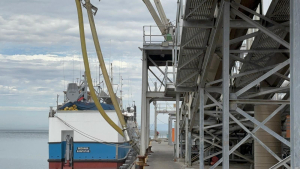
The expanding farming sectors, aquaculture in particular, have driven the increasing demand for Fishmeal and Fish Oil (FMFO), a crucial raw material for animal feeds. The rising FMFO industry has been changing coastal dynamics, aquaculture supply chains and the global food system. The fish used for FMFO production are usually small pelagic fish, such as sardine, anchovy and herring, which are an important source of food, protein and nutrition in coastal areas. In West Africa and South Asia, they are part of local artisanal food systems, contributing to local food security, fishers’ income and sustainable livelihoods. Now, with the increasing demand of raw material for FMFO production, these nutritionally valuable and culturally significant fish are diverted from human consumption to FMFO factories.
However, it is not only about the shift in use, but also what comes afterwards – the local fish food systems left shaken. During the sessions we heard about the shared concerns that affect countries like Senegal, Mauritania, India, Bangladesh, Vietnam. The diversion of fish toward feed is taking place across the world where richer countries extract so called “low value” fish through the capitalist global market. And the locals, they suffer.
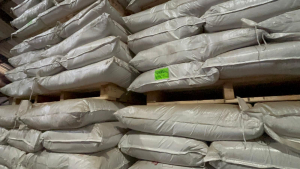 Systems seem trapped in FMFO production for the global market, despite huge capacity and the need for food in the region. Consequently, local fish food value chains were hit hard, driving increased food insecurity among coastal populations.
Governments and corporates often hide behind the concept of a “neoliberal” market and justify the diversion by saying that FMFO creates new revenue and boosts economic growth and local development. But let’s think about what has happened at the local level — Yes, there is growth and development, but for whom, and at what cost?
The people who were born and raised by the sea are now not able to access to the same fish as they have been eating over the generations, not to mention that they are also not welcomed in this new FMFO industry.
At some point, all of us in the room felt a sense of powerlessness and depression — FMFO has done too much to local communities that it seems hopeless for people who suffer from exclusion and marginalisation to fight back at the lower end of the power relation.
We are far from the solution, but we are all working towards it. One researcher from India shared, that at least some of the governments are starting to see the problems. This is where we must focus. As the FMFO industry continues to expand, growing attention is being paid to the conflicting and unequal dynamics among seafood supply chains, the FMFO sector, and local fish-based food systems.
Foodrise has been looking at high-trophic aquaculture on the EU and global levels, especially salmon and seabass aquaculture, which contribute to environmental degradation and food injustice along the supply chains. Foodrise is taking action to stop this toxic industry in its tracks — through hard-hitting investigative research, building public pressure, and platforming the voices of communities on the frontlines.
In the report Ocean Takeover, we found that seabass and seabream farming have taken over large tracts of the Mediterranean Basin in recent decades and wild-caught fish from West and Southern Africa are being used to produce feed for Greek seabass and seabream farms. Using conservative assumptions, nearly one million people in the region could eat a weekly portion of 200g of fish using the fish currently turned into fish oil for seabass and seabream aquaculture in Greece.
The FMFO industry’s impact is no longer invisible. We may feel powerless at times, but the power lies in connection, in knowledge, and in collective action. As researchers, advocates, and communities, we must challenge this extractive system and push for a future where fish feed people — not just profits and corporate interests.

We would love to hear from you!
Share on social media
Stay up to date with our latest work.
“This could be the moment of change” were the words David Attenborough used when referring to the United Nations Third Ocean Conference in Nice that took place in early June. As world leaders poured into Nice to discuss ocean protection, journalists and policy makers alike were speculating on the big wins we would see from the conference. Here at Foodrise, our critical eye was trained on the conversations taking place around industrial fish farming. Would world leaders highlight the unsustainable practices of this industry? Would the communities affected by this industry get the airtime they need and deserve?
Murky waters: The uncritical embrace of industrial fish farming
There was a lot to be celebrated at UNOC, yet when it came to fish farming we were disappointed by the framing of industrial aquaculture as the future of the ‘blue economy’. Globally we now eat more farmed fish than wild-caught fish. But where was the debate on the subject? Key international and regional bodies such as the UN’s Food and Agriculture Organisation (FAO) and European Commission are turning a blind eye to the voices of communities whose traditional relationships with their coasts and fish are being disrupted.

At one event, Türkiye’s deputy minister for Agriculture Ebubekir Gizligider’s celebration of aquaculture’s growth was perhaps unsurprising given the country’s aquaculture sector has doubled in the last ten years. An investigation by journalists at Desmog recently highlighted how Türkiye now supplies more than half of the world’s seabass and a third of its seabream. But at the same time, anchovy stocks in the Black sea have been decimated and the country now increasingly sources fish oil from West Africa, itself a region where sardinella stocks are now at their lowest ever recorded. According to calculations by Desmog, the amount of fishmeal extracted across four years by Kılıç Deniz, the biggest Turkish importer of Senegalese fish oil, would have been enough to feed two million people. The seabass farmed by Kilic, using extracted Senegalese fishmeal, is further shown to be sold across several major UK retailers including Waitrose, Co-op, Aldi, Lidl and Asda.
Communities cut through the blues
An undercurrent of hope existed in the voices of communities leading the charge when it came to holding industry and government to account. At an event co-hosted by the Coalition for Fair Fisheries Arrangements, the African Confederation of Professional Organisations of Artisanal Fisheries (CAOPA), Low Impact Fishers of Europe, and Blue Ventures, speakers from Senegal, Chile, France and India issued a powerful call for their voices to be heard and taken into account in policy making. Small-scale fishers have a central role to play in ocean management. As communities with daily contact with the sea, they are the groups who best understand the changes in the ocean and the difficulties faced by populations reliant on fishing.
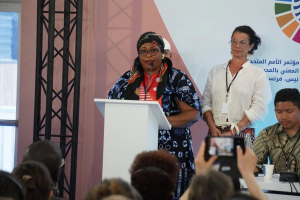
Rise Up’s ‘Ocean Basecamp’ also provided an open space to present more local and regional evidence of the plight of the ocean. We met organisations like the Bob Brown Foundation (Tasmania) and Mujeres por la Defensa del Mar, a group of coastal Chilean indigenous women also fighting the growth of salmon farms. The event spaces here were buzzing and allowed us to speak, exchange and plan with some inspiring activists and campaigners.
Making waves: Foodrise and Greenpeace’s Ocean Takeover launch event
The highlight of our week for us was the launch of our new ‘Ocean Takeover’ report in partnership with Greenpeace at a media briefing attended by journalists from around the world. We brought together four powerful speakers:
In the room we also had Fay Orfanidou, leader of a Greek campaigning group called Aktaia, which is challenging the rapid growth of seabass farming around their island of Poros.
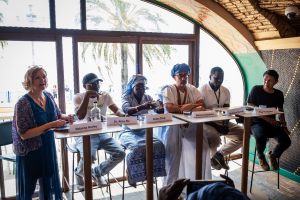
In Greece seabass and seabream farming has seen a 141% increase since the turn of the century. At the same time, it pollutes local waterways and coastlines, damages marine ecosystems and upends economic activities in tourism.
In West Africa, fish is being converted into fish meal and fish oil to feed the growth of fish farms, just like the farms on Fay’s home island of Poros. Globally, if we ate the wild fish (herring, sardine, anchovy, mackerel and blue whiting) currently reduced down to fish oil and fed to farmed seabass and seabream directly, over 300,000 tonnes of fish could be left in the ocean for ecosystem health and restoration. Yet if we focus just on West and Southern Africa, using conservative assumptions, nearly one million people in these regions could eat a weekly portion of 200g of fish, instead of the fish being turned into fish oil. Mansour, Mustapha and Diaba all spoke in great detail of the impact of the expansion of fish meal and fish oil trawlers and factories in their local communities. It was truly moving to then have the different communities come together and call for much needed change!
Call to Action: Let Our Oceans Breathe!
The growth of industrial fish farming is suffocating the coasts of Greece and emptying the coastline off West Africa. In the wake of UNOC we will be channelling this energy into our campaign work, reflecting on Diaba’s closing call to action:
In Wolof we say – To Protect the Oceans, is to Protect Ourselves – Without the Ocean we cannot live’
It is time. We are rising, we are demanding that we are taken into account, that we let our oceans breathe!


We would love to hear from you!
Share on social media
Stay up to date with our latest work.
There is not much good news coming out of Brussels these days. Environmental deregulations being proposed on a nearly daily basis, conservative and far-right parties fighting against civil society organisations, a European Commission reluctant to defend their past work on the EU Green Deal – the list could go on…
At the same time, we know that we cannot afford to waste more time on one of the biggest challenges we face in our food system – the way we produce and consume proteins. Climate and environmental destruction; animals being treated as a mere commodity; pollution threatening the health of local communities; cardiovascular diseases because of meat-based diets; as well as deforestation and human rights violations in the Global South – all these are consequences of our industrialized animal production system.
But now there is hope!
It all started when Denmark launched the world’s first national action plan specifically for plant-based foods in late 2023. With its plan, Denmark aims to pivot the food system – from farm to fork – toward climate-friendly, plant-based production and consumption. Some examples of this?
Importantly, the action plan is also backed by a significant amount of funding, allowing new innovative ideas and business models for the plant-based transition to be developed and implemented by farmers and companies.
What made this possible was the remarkable teaming up of the Vegetarian Society and the Danish Agriculture & Food Council, a broad political consensus across party lines, as well as a shared understanding that was voiced by Denmark’s minister for Agriculture and Fisheries, Jacob Jensen, during the presentation of the plan: “If we want to reduce the climate footprint within the agricultural sector, then we all have to eat more plant-based food”. And with Denmark recently agreeing to a landmark “tripartite agreement” for its agricultural sector and transforming 15% of its farmland into forest and natural habitats, one thing has been clear: only with more plant-based proteins, can more food be produced for people on less land, freeing it for nature.
But this is not the end of the story. Rather, momentum is currently growing all over Europe. And we are excited that Foodrise is getting involved!
In January 2025, 130+ organisations called on the EU Commission to propose an Action Plan for Plant-Based Foods by 2026, as recommended by the Strategic Dialogue on the future of EU Agriculture (see here our blog post from last year). Such a plan should address the entire agri-food value chain, from production and processing, to retail, public procurement and consumer availability and affordability. It would also substantially reduce Europe’s dependency from feed imports.
Our EU Advocacy Officer was then happy to learn more about the Danish success story during a visit in Copenhagen in spring.
And in June, our team attended an impressive event in Brussels, hosted by Members of the European Parliament from 5 different political groups. Following a video message from EU Agriculture and Food Commissioner, Christophe Hansen, the event reflected on the experiences of Denmark and how these could be repeated at European level. With all this energy and enthusiasm, it was then exciting to see that the new Danish EU Presidency included a clear focus on the potential of a common EU action plan for plant-based foods and a common EU protein strategy in their working programme for the second half of 2025. And they got off to a flying start – with a first discussion of EU Agriculture Ministers on 14 July, about the future diversification of protein sources.

For Foodrise, this is especially important because we have demonstrated in several reports the harmful impact of industrialised animal production. All these dangerous impacts show how essential the plant-based transition is for a healthier, fairer, and more sustainable food system. The EU Action Plan for plant-based foods can give this transition a huge boost by providing a framework so that retailers and financiers accelerate their plant-based policies and practices, while creating new business opportunities for European farmers.
With the EU Commission in the middle of presenting its proposals for the future EU Common Agricultural Policy as well as the EU’s budget, Foodrise is all the happier to be part of a group of dedicated organisations which drives further the call for an Action Plan for Plant-Based Foods – with a clear strategy, passion, and willingness to build bridges.
We would love to hear from you!
Share on social media
Stay up to date with our latest work.
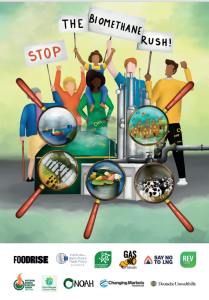
After months of hard work, it is finally here: our StopTheBiomethaneRush booklet!
This is not only a big moment for us at Foodrise after five years of working on this topic – it is especially so for our StopTheBiomethaneRush coalition.
From a small group of organisations that would informally discuss biomethane, we have evolved into a strong coalition ready to step up at a time when biomethane is heavily promoted as “the” sustainable solution – be it for the agricultural sector, industry, transport, or the energy system as a whole.
But where there are glossy brochures and European production targets being set based on industry calculations, it’s important to take a closer look. We do so with StopTheBiomethaneRush, a diverse coalition of organisations active in the fields of food sovereignty, sustainable land use, animal rights, energy systems, shipping, the heating transition, and emissions mitigation. Importantly, local communities around Europe are also represented in our coalition, giving voice to those directly affected on the ground. Together, we challenge the large-scale development of industrial biogas operations, which create risks of additional environmental pollution, climate impacts, animal cruelty, and social injustices.
Don’t get us wrong. As a coalition, we do recognise that biomethane from unavoidable organic waste streams can contribute to energy needs. But production levels must be kept within a sustainable niche.
What does that mean specifically? We explain it in our new StopTheBiomethaneRush booklet. Our analysis, based on scientific evidence and the experiences of impacted communities, identifies how policy can ensure biomethane production remains compatible with sustainable practices in the farming, food, and energy sectors, while also respecting community well-being.
With Denmark, a major producer of biomethane linked to its highly industrialised animal production system, having taken over the EU Presidency at the beginning of July, we look forward to contributing our expertise over the next six months and beyond.
Let’s get this right!
Read the booklet here:
We would love to hear from you!
Share on social media
Stay up to date with our latest work.
We are excited to share that Tom Kools has been appointed as the new Executive Director of Foodrise EU. Tom has been a valued member of our board since September and now steps into a more active, operational role to help drive our mission forward.
Gemma Verhoeven (chair of the board of Foodrise EU): “With extensive experience across the food system and strong ties throughout the sector, Tom brings fresh ideas, energy, and a wide-reaching network to support our work. We are looking forward to this next chapter with Tom and to continuing our collective efforts toward a more sustainable and equitable food system”.
Tom Kools: “Now more than ever, we have the chance to shift money and power away from a food system that harms people, animals and the planet, and instead invest in one that supports health, sustainability and fairness. I’m proud to join Foodrise in this new role to help build the movement to make that happen”.
As of July 1, Tom will be joining and can be contacted at tom@foodrise.eu
We would love to hear from you!
Share on social media
Stay up to date with our latest work.
On 16 June 2025, a day before the start of the Healthy Food Healthy Planet Annual Forum in Serock, Poland, the Food Voices Coalition came together to reflect on where we stand and how to take our next steps. ALTAA, Cecu, Foodrise UK and Foodrise EU, Green REV Institute and Terra! engaged in discussions on how to shape the Menu of Food Voices, a document that we are preparing to share our experiences on how we contribute to food system transformation by listening to people’s voices.
 During the Annual Forum, which had power as the central theme (power over, to, with and within), we shared already some of our experiences through the ladder & snakes’ game of power. The game was designed by Lucy Antal from Foodrise UK with contributions from the other organisations. There were four groups each representing a character, in this case a young activist, consumer, corporate power and policy maker, each with their own symbol on the pawns. There were several extra features, such as certain advantages or disadvantages you have as a character related to power, or squares like “drought” that led you backwards on the board. If you had landed on one of the colored squares of the giant game board after throwing a die, a realistic scenario was presented, in which you had the choice between two options. The decision had to be taken from the perspective of the character and after consultation in the group about the scenario. It was a successful try-out with many positive reactions.
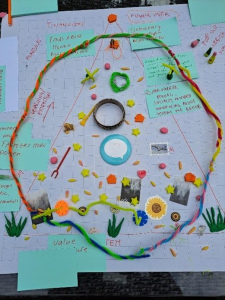 Located in a beautiful, forested area, the Annual Forum provided ample opportunities to connect with each other. The program was designed to connect with and use the wisdom of our bodies. We let our hands do the talking in depicting a European food system (both the current and the ideal system). We could immerse ourselves in the world of unusual allies and create messages to connect with them. We could also take a nap together (‘rest is resistance’) or meditate, alongside storytelling and workshop sessions to develop our skills. This way of connecting creates a completely new dynamic of interaction.
The creative approach, the environment, and the many inspiring people made it a truly powerful meeting. By approaching the huge task of transforming the unjust and harmful food system not only rationally with our brains but by using emotions and intuition and body wisdom, new insights are born and we can be more effective in having an impact. Understanding at an emotional level how power affects us and our relationships and our work opens new ways of working. Before we can change the system we have to be aware of the system within ourselves!

Iedereen moet toegang hebben tot gezond en betaalbaar voedsel
See the issueWe would love to hear from you!
Share on social media
Stay up to date with our latest work.
Kweekzalm richt ecologische schade aan, is niet duurzaam en veroorzaakt voedselschaarste aan de Afrikaanse westkust. Toch blijft het roze stukje vis een schoon imago houden dankzij veelvuldige greenwashing technieken van de kweekzalmindustrie, met name actief in Noorwegen, Denemarken en Schotland. Op de websites van deze bedrijven wordt het begrip ‘duurzaamheid’ veelvuldig gebruikt en de gezondheid van de zalm geprezen, terwijl de realiteit heel anders blijkt. En juist Nederlandse banken lijken hiervoor te vallen.
Het nieuwe rapport ‘Fishy Finances: Exposing industrial salmon farming’s biggest financial backers’ van Feedback laat zien dat in de top vijf van grootste financiële dienstverleners aan zalmkwekerijen wereldwijd twee Nederlandse banken staan: ABN Amro heeft sinds 2015 voor 1.3 miljard dollar verstrekt en Rabobank zelfs voor 1.8 miljard dollar. Dankzij de financiële sector wordt de kweekvisindustrie aangemoedigd hun vervuilende en oneerlijke praktijken verder uit te breiden.
Hiermee vormen deze banken de twee grootste financiële verstrekkers (ABN AMRO 1.3 miljard dollar, Rabobank 0.9 miljard dollar) aan het Noorse Mowi. Het miljardenbedrijf heeft al meerdere schandalen achter haar naam staan: het overtreden van milieuwetten in Schotland, rechtszaken in Chili vanwege grote hoeveelheden ontsnapte zalm, het gebruik van verboden chemicaliën op ‘biologische’ zalm in Britse supermarkten en het overtreden van EU mededingingsregels.
Zelfs Triodos, een van de duurzaamste banken van Nederland, blijkt sinds december 2024, 16 miljoen dollar geïnvesteerd te hebben in Bakkafrost, één van de grootste zalmkwekerijen ter wereld. Het bedrijf heeft een toenemend sterftecijfer onder de zalm en gebruikt bovengemiddeld veel wilde vis om de zalm te voeden.
Wat gaat er mis in de kweekzalmindustrie?
Enorme bedrijven zoals Mowi, SalMar and Bakkafrost ontvangen tientallen miljarden aan investeringen en kredietverleningen voor het uitvoeren van schadelijke praktijken. Feedback EU roept de Nederlandse banken op de geldkraan zo snel mogelijk dicht te draaien.
Frank Mechielsen, Directeur Feedback EU: “Het is tijd dat de greenwashing praktijken van de zalmindustrie aan het licht worden gebracht en dat iedereen kan inzien hoe verwoestend deze industrie te werk gaat. Nederlandse banken dragen bij aan het aanrichten van ecologische schade, voedselschaarste en dierenleed. De geldkraan moet dicht.”
Dr Aliou Ba, Ocean Campaign Lead Greenpeace Africa: “De miljarden die naar de industriële zalmteelt gaan, vernietigen niet alleen mariene ecosystemen, maar beroven ook Afrikaanse kustgemeenschappen van voedselzekerheid. Deze financiële instellingen stoppen geld in een industrie die wilde vispopulaties uitput voor de productie van vismeel en visolie, terwijl lokale vissers moeite hebben om hun families te voeden. Door zalmkwekerijen te financieren, kiezen wereldwijde investeerders voor bedrijfswinsten in het mondiale noorden boven het levensonderhoud van miljoenen mensen die afhankelijk zijn van gezonde oceanen in het mondiale zuiden. Wij eisen dat zij de financiële steun aan deze roofzuchtige industrie stopzetten en in plaats daarvan investeren in de bescherming van de mariene hulpbronnen die onze gemeenschappen in stand houden.”
In 2024 bracht Feedback een rapport uit over hoe de groeiende Noorse kweekzalmindustrie resulteert in voedselschaarste aan de Afrikaanse westkust.
Lees de Nederlandse samenvatting van het rapport hier.
We would love to hear from you!
Share on social media
Stay up to date with our latest work.
We would love to hear from you!
Share on social media
Stay up to date with our latest work.
Op 19 november vond het vierde Plant the Future diner plaats, georganiseerd door de Transitie Coalitie Voedsel. Het middagprogramma bracht ruim 230 mensen van uiteenlopende sectoren bijeen: ondernemers uit de gehele keten, wetenschappers, NGOs en politici. Het thema was ‘van ideaal naar business impact’. Ondanks de grote diversiteit in bijdragen van sprekers, inclusief van vleesverwerkende bedrijven, was er onder de aanwezigen geen twijfel over de noodzaak om het aandeel van dierlijke eiwitten in ons dieet te reduceren en het aandeel plantaardige eiwitten drastisch te vermeerderen.
Feedback EU was een van de vele organisaties en bedrijven die een ronde tafel organiseerde. Aan onze tafel zaten Renate Stuger (initiatiefnemer buurtsuper), Elly Hemmelder (Plus) en Eline van Muilwijk (Quista), Bram van Helvoirt (wetenschapper), Brenda Poot (Gemeente Den Haag) en Liane Lankreijer (Ons Eten, Haags netwerk van lokale voedsel alternatieven). Feedback EU nodigde juist hen uit aan tafel om het initiatief te ondersteunen voor een buurtsupermarkt in Moerwijk met economische, ecologische en sociale functies voor de buurt en om het concept van een democratische supermarkt verder te verkennen.
Tijdens het fantasievolle en lekkere, plantaardige diner hadden we inspirerende gesprekken over zeggenschap en waardecreatie van supermarkten en wat daarvoor nodig is. De tijd vloog voorbij en aan het eind concludeerden we dat we graag een business case zouden willen opzetten met bewoners en ondernemers voor een sociale en gezonde supermarkt, om beter te begrijpen waar de knelpunten en mogelijkheden liggen. Vanuit het oogpunt van duurzaamheid zou uiteraard het aandeel plantaardige eiwitten minimaal 60% moeten zijn. Daarnaast zou het hele aanbod in de supermarkt voor minimaal 60% moeten voldoen aan de Schijf van Vijf met vooral vers voedsel en korte ketens. We danken onze tafelgenoten voor hun betrokken en inspirerende bijdragen aan de discussie!

Tijdens het diner bood Frank Mechielsen, directeur van Feedback EU, alvast een samenvatting van ons nieuwste rapport “Trading away the Future? How the EU’s agri-trade policy is at odds with sustainability goals” aan kamerleden van vijf aanwezige politieke partijen. Het rapport laat aan de hand van de handel in soja, koolzaad en rundvlees zien dat het EU handelsbeleid niet bijdraagt aan een duurzame transitie van ons voedselsysteem, maar juist de ongelijkheid en klimaatverandering, gezondheidsproblemen en voedselonzekerheid verergert.

Key-note sprekers waren Rasmus Prehn, de voormalig Deense minister van landbouw, en Rune-Christoffer Dragsdahl, voorzitter van de Vegetarische Bond in Denemarken. Zij presenteerden het vooruitstrevende Deense Plan van Aanpak om de plantaardige eiwittransitie in de landbouw mogelijk te maken. Hun belangrijkste boodschap was: werk vooral samen, ook met partijen met wie je gewoonlijk niet zo gauw om de tafel zit. Zoek naar het gemeenschappelijke dat ons allen verbindt, in dit geval voedsel. In een zorgvuldig proces worden alle belangen goed meegenomen, maar is het onvermijdelijk dat er ook concessies gedaan moeten worden. Zoek vooral naar de mogelijkheden voor alle partijen en wat zij nodig hebben om het doel te bereiken. Zij refereerden aan Nederland, waar in veel opzichten een vergelijkbare landbouw situatie is als in Denemarken, om tot een eigen Plan van Aanpak te komen om de voedseltransitie te versnellen en om met de Denen samen te werken om ook op Europees niveau tot een dergelijk plan te komen.

Iedereen moet toegang hebben tot gezond en betaalbaar voedsel
See the issueWe would love to hear from you!
Share on social media
Stay up to date with our latest work.
Donderdagavond 26 september liep de publiekstribune in de raadszaal van de gemeente Den Haag, tot verrassing van de raadsleden, langzaam vol. Renate Stüger arriveerde samen met twaalf buurtgenoten om in te spreken en toelichting te geven waarom de behoefte voor een buurtsupermarkt in Moerwijk groot is. De petitie van de bewoners met de vraag voor een gezonde en betaalbare supermarkt in de omgeving Jan Luykenlaan stond op de agenda van de Commissievergadering Bestuur.
“Wij vragen u om met ons te praten, niet over ons. Samen kunnen we het verschil maken. Een supermarkt in de buurt is geen symbolisch gebaar, het is een noodzakelijke stap naar een gezondere, socialere en hechtere gemeenschap,” zegt Renate in haar sterke speech gericht aan de raadsleden.


Feedback EU directeur, Frank Mechielsen, was aanwezig om het rapport ‘Een democratische supermarkt in Moerwijk’ toe te lichten, ter ondersteuning van het argument van de buurt. Hij had op basis daarvan twee directe aanbevelingen voor de gemeente Den Haag:
“Werk samen, informeer en voorkom betutteling: De buurtbewoners zijn ervaringsdeskundigen over de impact van het ongezonde voedselaanbod, maar zij worden onvoldoende op de hoogte gesteld van de ontwikkelingen in hun buurt.
Ondersteun het opzetten van een lokale supermarkt. Betaalbaarheid staat voorop: er is een sterke behoefte om voor weinig geld zelf gezonde maaltijden te kunnen koken.”
Naar aanleiding van de speech, kwamen verschillende vragen vanuit de zaal, met name rondom praktische zaken zoals voorbeelden van dergelijke initiatieven en economische verdienmodellen. Renate en Frank maakten samen duidelijk dat er met ondernemers gesproken is die geïnteresseerd zijn, maar ook vooral dat een supermarkt niet slechts een verdienmodel is en juist een belangrijke maatschappelijke rol kan spelen.
Het inspreken werd afgesloten door Liane Lankreijer namens Ons Eten Den Haag: “Het is niet te verkroppen dat een deel van de bewoners in Den Haag 15 jaar eerder ziek worden en 7 jaar eerder overlijden dan bewoners uit andere wijken. Dat accepteer ik niet!”
Hierna volgde direct het debat, dat geopend werd door Ralf Sluijs, raadslid namens de partij Hart voor Den Haag. Hij geeft aan “pal achter de bewoners van Moerwijk te staan”. Vanuit Partij Denk volgde meteen een tegenreactie met de vraag of het initiatief voor een supermarkt vanuit de gemeente moet komen en niet vanuit een bedrijf zelf. Sluijs antwoordt hierop dat de gemeente wel degelijk betrokken kan zijn in gesprekken met pandeigenaren en woningcorporaties om geschikte ruimte te vinden en het initiatief hiermee een duwtje in de rug te geven.
Hera Butt, namens GroenLinks, zegt zich te kunnen vinden in het idee van de insprekers dat de overheid een rol kan spelen in het faciliteren van randvoorwaarden voor een gezond leven. Wel wijst zij Sluijs erop dat hij met name pleit voor een prijsvechter, terwijl de bewoners juist een duidelijke oproep doen voor betaalbaar én gezond voedsel.
Namens wethouder Martijn Balster (Volkshuisvesting, Wijken en Welzijn) voerde wethouder Nur Icar (MKB, werk en participatie) het woord. “Ik heb als mens ontzettend veel bewondering hoe de buurtbewoners zich blijven inzetten voor het verbeteren van hun eigen leefomgeving en kan dit alleen maar aanmoedigen.” Hij gaf aan dat momenteel de transitiemanager druk bezig is met de mogelijkheden te bekijken hoe panden eventueel samengevoegd kunnen worden om ruimte te maken voor een supermarkt.
Daarnaast wordt er door wethouder Balster gewerkt aan een toekomstvisie voor de buurt waar gezondheid in wordt meegenomen. Deze zou voor het einde van het jaar klaar zijn. Sluijs staat erop dat de supermarkt hier duidelijk in blijft staan en de visie niet te abstract gemaakt wordt. Leonie Gerritsen, namens de Partij voor de Dieren, zet nog even wat extra druk op de wethouder om contactgegevens uit te wisselen met de buurtbewoners. Er is immers al gesproken met ondernemers die het initiatief eventueel willen oppakken.
Concrete toezeggingen worden niet gedaan, een foto met de wethouder is waar de buurtbewoners het voor nu mee moeten doen. Maar hun stemmen zijn gehoord en vanuit verschillende politieke partijen is support gebleken. De volgende stap is nu om het onderzoeksrapport aan de wethouder te overhandigen en in gesprek te blijven. Wij geloven dat de gemeente wel degelijk een belangrijke rol kan spelen in het realiseren van de gezonde en betaalbare Moerwijkse buurtsuper en dat het tijd is om die verantwoordelijkheid op te pakken.

Iedereen moet toegang hebben tot gezond en betaalbaar voedsel
See the issueWe would love to hear from you!
Share on social media
Stay up to date with our latest work.
Op 4 september organiseerde Feedback EU in samenwerking met Buurtkamer de Luyk in Moerwijk, Den Haag, een bijeenkomst in het kader van het internationale project ‘Ons Eten, Onze Keuze’. De aanleiding was een petitie die actieve bewoners in de omgeving van de Jan Luykenlaan begin dit jaar aan de gemeente voorlegden met het verzoek om een supermarkt. De bewoners vragen echter om meer dan alleen een plek om hun boodschappen te doen; zij willen een buurtsupermarkt met producten die passen bij het multiculturele karakter van de buurt. Er moet een ruim aanbod komen van verse, gezonde en betaalbare voedingsmiddelen. Daarnaast moet het een plek zijn die sociaal en economisch bijdraagt aan het welzijn van de bewoners.
Feedback EU zet zich in voor het verbeteren van het voedselsysteem en de petitie sluit hier goed bij aan. Om die reden vroegen wij Guusje Weeber een onderzoek uit te voeren naar wat de buurtbewoners als gezond en eerlijk voedsel beschouwen en hoe deze supermarkt als hefboom kan fungeren voor verbetering van de wijk.
Tijdens het eerste deel van de bijeenkomst presenteerde zij haar bevindingen. Buurtbewoners en omwonenden waren actief betrokken en gingen enthousiast met elkaar in discussie over de uitkomsten. In tegenstelling tot het vooroordeel dat mensen in achtergestelde wijken geen interesse zouden hebben in voedsel en alleen maar voor goedkoop fastfood kiezen, heerste er een klimaat van groot bewustzijn over het belang van gezond voedsel. Zelfs onbespoten voedsel werd ter discussie gesteld, want ons grond- en slootwater, lucht en bodem is zodanig vervuild dat het niet te vermijden is dat het in en op het voedsel komt.
“Wij denken dat het gezond is, verse groente en fruit, maar misschien worden we er juist wel ziek van, die bespoten troep veroorzaakt allerlei allergieën! Wij nemen onze verantwoordelijkheid wel als we het kunnen betalen, maar de overheid moet dit ook doen. Zij zien niet wat voor ellende ze veroorzaken door hun slechte beleid,” aldus een van de buurtbewoners.
Na een korte pauze introduceerde Liane Lankreijer van de Haagse organisatie ‘Ons Eten’ de sessie “Ontwerp je ideale supermarkt”. In een groep werd gepraat over wat er in de ideale supermarkt in de schappen ligt en wat beslist niet, zoals plastic verpakkingen. De andere groep richtte zich op wat de bewoners zelf kunnen doen om zo’n supermarkt te realiseren en op welke wijze de ideale supermarkt anders is dan een gewone.

In de buurtsuper komt onbespoten, onbestraald voedsel, verse en lokaal geteelde groenten en fruit. Om verspilling tegen te gaan mogen de buitenbeentjes groenten ook onderdeel zijn van het assortiment, evenals een kleiner aanbod van een product. Het is bijvoorbeeld niet nodig om tien soorten rijst in de schappen te hebben staan. Stemrecht over het aanbod, meal preppen, kortingspassen, spaarpunten, recepten, uitjes naar waar het voedsel vandaan komt, goede informatie, het aannemen van jongeren uit de buurt als werknemers en en het verzorgen van ontbijt op scholen, werden allemaal voorgesteld als mogelijk toegevoegde waarde. Over het algemeen hebben supermarktketens weinig bewegingsruimte om hun aanbod aan te passen aan deze wensen die vanuit de wijk komen. Een overweging kan zijn om met lokale ondernemers samen te werken.
Er is momenteel te weinig communicatie over wat er met de petitie gebeurt. De druk moet op de ketel blijven en media-aandacht is daar een middel voor. De bewoners waren nog lang niet uitgepraat. De volgende stap is dat Feedback EU samen met betrokkenen een dergelijke bijeenkomst organiseert in de avond, zodat er meer buurtbewoners en de gemeente aanwezig kunnen zijn. Dan wordt ook duidelijker in welk stadium het verzoek om een buurtsupermarkt te realiseren zich bevindt.
Feedback EU liet een video maken van de bijeenkomst om deze te gebruiken bij andere gelegenheden, ook internationaal, om de discussie over voedselarmoede en het democratiseren van supermarkten te stimuleren:
Iedereen moet toegang hebben tot gezond en betaalbaar voedsel
See the issueWe would love to hear from you!
Share on social media
Stay up to date with our latest work.
‘Hoe ziet een gezond en eerlijk voedselaanbod eruit in Moerwijk?’ Met die vraag ging Guusje Weeber voor Feedback EU op pad in deze Haagse wijk. Een belangrijke voorwaarde binnen dit onderzoek was dat de stemmen van de buurtbewoners centraal staan. Wat is hun definitie van gezond voedsel en wat verwachten zij van een buurtsupermarkt?
De antwoorden van de bewoners hebben geresulteerd in het rapport ‘Een democratische supermarkt in Moerwijk’ dat nu hier te lezen is. Dit nieuwe onderzoek sluit goed aan op een eerder gepubliceerd rapport door Ons Eten rondom voedselarmoede in Den Haag.
Samen met de Buurtkamer de Luyk en met medewerken van Ons Eten, organiseerde Feedback EU op 4 september een buurtevenement in Moerwijk om de onderzoeksresultaten te presenteren en gezamenlijk een ‘ideale supermarkt’ in te richten.
Dit onderzoek maakt deel uit van een project dat wordt gefinancierd door Healthy Food Healthy Planet, waarin Feedback EU samenwerkt met zes Europese organisaties in de Food Voices Coalition.
Iedereen moet toegang hebben tot gezond en betaalbaar voedsel
See the issueWe would love to hear from you!
Share on social media
Stay up to date with our latest work.