
Questions or ideas?
We would love to hear from you!
Following our research and campaigning highlighting the supply of fish oil sourced from FAO 34 — the Major Fishing Area located off the coast of Northwest Africa — to the European feed industry, Foodrise is issuing this statement in response to the industry’s response, including:
We are pleased that the industry has responded to the overwhelming evidence on the damaging impact of sourcing from this region.
We remain extremely concerned about the ‘food-feed competition’ which is being driven by the global aquaculture industry in regions around the world as high-impact activities such as salmon and seabass farming continue to expand to serve high-income consumers in Europe, North America and Asia.
We therefore reiterate our call to companies throughout the supply chain (feed ingredient and compound feed producers, farmed salmon companies, retailers and food service companies) to provide full transparency on their sourcing practices and to comply with the following set of demands:

We would love to hear from you!
Share on social media
Stay up to date with our latest work.
Our new report is out!
There is no better time to rethink the EU’s current agri-trade policy. Recent U.S. election results have revealed the sudden vulnerability in the European Union’s global position. With Donald Trump threatening new tariffs and trade restrictions on Europe, the risks of the EU relying on third countries for its plant protein supply have become painfully clear. At the same time, the controversy surrounding the EU-Mercosur trade deal has laid bare the stark consequences of current trade agreements: negative impacts on farmers’ livelihoods due to unfair competition and environmental harm. This deal alone could trigger between 620,000 and 1.35 million hectares of deforestation over just five years, driven by expanded beef production in the Mercosur region.
As one of the largest global markets and one of the world’s most outward-oriented economies, the EU plays a key role in influencing global food trade. However, our new report ‘Trading Away the Future? How the EU’s agri-food policy is at odds with sustainability goals’ reveals how the EU’s current agri-trade policy is undermining global and EU sustainability goals in five key areas:
We call for concrete policy actions, including setting more ambitious international standards, adopting import requirements in EU law aligned with sustainability goals that benefit EU farmers, promoting a shift towards protein autonomy, and strategically implementing ‘Mirror Measures.’ The latter is further explored in the coalition report “Double Standards on Our Plates: Using Mirror Measures to Mitigate the Impacts of EU Trade Policy for a Sustainable Food System.”
The time to rethink trade is now!
We would love to hear from you!
Share on social media
Stay up to date with our latest work.
With the European Biogas Conference starting today, Foodrise EU’s new research shatters arguments for increasing the use of livestock manure as a feedstock for biomethane production and calls for an immediate moratorium on new and expanded factory farms in the EU.
As the EU is planning to scale up its biomethane production from yearly 4.2 billion cubic meters (bcm) to 35 bcm in 2030, industry calculations heavily count on manure which is expected to contribute one third of all raw materials to this target. Under the heading Biomethane from manure: a curse, not a cure, the latest report from the food justice organisation Foodrise EU dramatically bursts the bubble on biomethane production from livestock manure by exposing the perverse link between the current biomethane rush and the intensification of livestock production in Europe.
As new evidence shows, the push towards expanded livestock factory farms for the production of biogas and biomethane throughout Europe – heavily supported by public subsidies and accounting tricks in the Renewable Energy Directive – is in total contradiction with the requirement to drastically reduce livestock production and consumption. While the current move to more plant-based consumption pattern has also been recently affirmed by the Strategic Dialogue on the Future of EU Agriculture, it is all the more worrying that current biomethane policies sabotage such positive developments, standing against climate and public health goals.
Despite the remarkable absence of a European Commission impact assessment, increasing biomethane from manure is hailed as a win-all solution, one that reduces environmental impacts of industrial livestock and contributes to energy independence. This sounds too good to be true? Unfortunately, it is, with the current biomethane rush having major perverse environmental, economic and social implications.
As Foodrise EU’s latest report demonstrates, Europe’s blind trust in biomethane:
Francesca Magnolo, the researcher and technical expert who conducted the research said: “One of the perverse consequences of the biomethane rush is the ironic replacement of dependence on natural gas imports with dependence on animal feed, particularly from the Global South. In other words, biomethane fuels the neo-colonial exploitation of resources outside of Europe. But social justice issues are also emerging here in the EU, where local communities fear increased transports of waste as well as pollution from biomethane production. Most importantly, these concerns are currently being ignored. At the same time, competition for land and thus rental costs for farmers are rising further and further.”
Frank Mechielsen, Director of Foodrise EU highlighted: “This reports bursts the bubble on biomethane from manure and shows it for what it is: a curse, not a cure. We request an immediate moratorium on more industrial livestock and call on policy-makers to prioritise dietary changes instead. What we need now are coordinated EU energy and food policies for a systemic and just change in our food systems. We cannot afford to repeat the painful mistakes of the last harmful biogas boom.”


We would love to hear from you!
Share on social media
Stay up to date with our latest work.
In Senegal, the artisanal fishing community is making sure that their voices are heard. Decades of negligent fisheries management, overfishing and the arrival of fishmeal and fish oil factories have led to a dramatic reduction in fish populations along the coast of West Africa. As a consequence, fishermen find it increasingly hard to secure their daily catch. This in turn creates a ripple effect along the value chain: fish processing suffers from an increasingly scarce and expensive raw material. The price of a crate of sardines, sardinella, mackerel for instance have risen ten-fold over the last few years, making it impossible for artisanal processors to compete.
By tradition, fish processing is a woman’s profession in West Africa. On our recent visit to Cayar, a fishing town harbouring one of the largest fishing fleets in Senegal, we spoke to the local GIE (economic interest group) of women processors and their outlook remains grim. The group’s members – all independent processors – have been in steady decline from over 300 to around 70 with women leaving as they cannot make ends meet through fish processing anymore. Therefore, lethargy has fallen over the processing sites. And it isn’t just the factories that threaten their livelihoods – climate change and new offshore oil and gas exploration in Senegal make the group worry about further harmful effects on the coastal and marine biodiversity and the capacity of fish populations to recover.
It’s been long since the women were able to pay for the fish they smoke, dry, salt and ferment out of their own purses. They tell us that the only reason they are still in business are foreign companies that buy their product up-front, prefinancing the purchase of the fish they process. Nowadays, most of the fish they use comes deep-frozen from the port of Dakar. Meanwhile, the fish landed on the beach just next to the processing site remains absurdly inaccessible.

The women are not alone in their fight, however. Several coalitions are active in Senegal, advocating for sustainable fisheries and the fair treatment of artisanal fishing community. The Network of Women in Artisanal Fisheries (REFEPAS) Interprofessional Council of Artisanal Fisheries (CONIPAS), the National Coalition for Sustainable Fisheries (CONAPED), the Coalition Against Fishmeal and Fish Oil Factories have all been putting pressure on the previous and current government. Their goal is to put a stop to allowing further factories to be built on the Senegalese coast and to close the ones in operation. Additionally, they want to make the fisheries sector more transparent, enforce sustainable fishing practices, and prevent foreign fishing fleets from pillaging populations of fish essential to the nutrition and livelihoods across the region. Further desperate calls for action revolve around preventing the persistent tragedy of clandestine migration: among those attempting to cross the Atlantic to reach Europe via the Canary Islands, many come from families dependant on fisheries and who have run out of options. More than 22,000 people have made it to the Canaries this way, more than double than last year.
When confronted with the devastation caused by the global seafood economy, industrial fish farming and the feed companies that rely on the fishmeal and oil sourced from places like West Africa, it is hard to believe in the many statements of sustainability and efficiency that fish feed and farmed fish producers often like to repeat. Madame Ndao, president of the women processors’ GIE in Cayar, cannot understand why ‘these companies have to come to West Africa to steal the fish that her people depend on. They should be taking the fish from their own waters instead of pillaging elsewhere.’
Foodrise continues to work on this issue, hoping to support and amplify the voices like Madame Ndao’s. Our research has and will continue to illustrate how food systems in Europe can have devastating effects in other parts of the world. And we are not alone. The UN special rapporteur Micheal Fakhri, having received a Feedback-led joint letter, made sure to address the issue in the Human Rights Council, stating that: ‘Many farmed fish are carnivorous species that require feed products harvested from wild fish stock, thereby creating another source of pressure on wild fish stocks and disrupting ecosystems. Moreover, global feed companies are exacerbating food insecurity in some communities. For example, over half a million tons of pelagic fish that could feed over 33 million people in the region are instead extracted from the ocean along the coast of West Africa and converted to fishmeal and fish oil, primarily in order to feed farmed fish and livestock, mostly in Asia and Europe.’ We will continue to work with allies in the EU to make sure this issue is not forgotten in policy making and make sure to denounce the companies that profit from this harmful system.

We would love to hear from you!
Share on social media
Stay up to date with our latest work.
On 4 September, Foodrise EU, in collaboration with Buurtkamer de Luyk, organised a meeting as part of our international project Our Food, Our Choice. The reason for this was a petition that active residents in the vicinity of the Jan Luykenlaan, situated in a deprived area of The Hague, presented to the municipality at the beginning of this year with the request for a supermarket. However, residents are asking for more than just a place to buy their groceries. They want a neighbourhood supermarket with a range of products that match the multicultural character of the neighbourhood. There must be a wide supply of fresh, healthy, and affordable food. It must be a place that contributes socially and economically to the well-being of its residents.
This prompted Foodrise EU to commission a study into what these residents consider to be healthy and fair food and what the factors are to make the supermarket a lever for improving the neighbourhood.
In the first part of the afternoon, Guusje Weeber presented her findings, and the gathered residents reacted immediately and unequivocally. Contrary to the perception that people in deprived neighborhoods have no interest in food and only go for the cheapest and fast food, there was a climate of great awareness, and even passion about the importance of healthy food. Even unsprayed food was questioned, because our groundwater, ditch water, air and soil are so polluted that it is unavoidable that it gets into and on the food.
“We think it’s healthy, fresh fruit and vegetables, but maybe it actually makes us sick, that sprayed rubbish causes all kinds of allergies. We will take our responsibility if we can afford it. But the government must do this too, they don’t see the misery they are causing by their bad policies!”
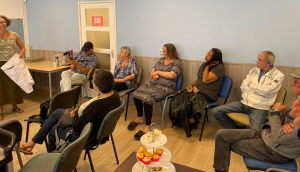
After a short break, Liane Lankreijer of the organization Ons Eten from The Hague introduced the session “Design your ideal supermarket”. In one group, they talked about what can be found in the ideal supermarket and what is definitely not (plastic packaging). The other group focused on what the residents themselves can do to realize the supermarket and on the question in what way the ideal supermarket is different from a regular one.
The local supermarket will supply unsprayed, unirradiated food, fresh and locally grown fruit, and vegetables. To prevent waste, the misfitted vegetables are also for sale in the local supermarket, as well as a smaller range of products. It is not necessary to have ten types of rice on the shelves. Voting on what will be offered in the supermarket, meal prepping, discount cards, loyalty points, recipes, trips to where the food comes from and honest information, hiring young people from the neighbourhood as employees and providing breakfast at schools were mentioned as possible added value.
Residents want entrepreneurs to take responsibility. The pressure must be kept on and media attention is a means of achieving this. One local newspaper showed up. The time was too short to go deep into the topics and from the group came the request to organize such a meeting again, but this time in an evening and with civil servants present.
FeedbackEU created a video of the meeting to use at other occasions, both nationally and internationally, to stimulate the discussion on food poverty and the democratisation of supermarkets:

We would love to hear from you!
Share on social media
Stay up to date with our latest work.
🚜 Anger, frustration, and burning wheels in front of the EU Parliament. The successful take-over of the protest & public discussion by destructive farming lobbies and right-wing parties. We all still remember these loud (and smelly) weeks of farmers’ protests in Brussels, the Netherlands, and beyond.
But as we stood in solidarity with those peaceful protestors asking for a sustainable & fair change of the current system, the next step was truly disappointing for all of us: shortly before the EU elections, environmental rules of the current agricultural policy were rolled back. And we asked ourselves: what would we be getting into in the coming five years, the new EU term?
🌊 But now the tides seem to have turned. Yesterday, the results of the “Strategic Dialogue on the future of EU Agriculture” were published. The dialogue consisted of 29 diverse (and often opposed) organisations and discussed for 8 months behind closed doors (and without leaks!). Decisions had to be made in consensus – which make the recommendations even more impactful.
So how does the dialogue propose that we get out of this mess?
Some key take-aways from the report:
1. (Finally) change the CAP & reach social justice: we need to fundamentally change the way we spend public money of the Common Agriculture Policy. That means strongly giving money to farmers for environmental services, as well as paying income support only targeted to the farmers who need it most! (p. 42)
2. Bye bye UTP’s! Farmers need to be able to make a living from the products they produce. Unfair trading practises need to be fought against. (p. 37)
3. End unsustainable trade (offs): the EU should ensure greater coherence between its trade and sustainability policies. And the process/purpose itself of negotiating trade deals on agriculture should be reviewed & changed. (p. 47)
4. Go (more) sustainable, healthy & plant-based! Recognizing the current trend of eating more plant-based products, citizens should be supported in this journey, through a review of current food labelling/marketing to children (including sugar), reforming public procurement to favour sustainability over the lowest price, and introducing tax reductions (at the national level) on more sustainable products. (p. 54)
⛔️ Unfortunately, the dialogue could not agree to clearly point out the need to reduce livestock numbers throughout Europe. Rather, the EU Commission should develop a strategy on the role of animal farming in general. More, there is also a focus on (not-defined) tech-fixes to reduce livestock emissions, and an ask for “long-term solutions” for areas which have a high concentration of livestock and environmental pollution.
5. Fight food waste! The EU should strongly fight against food insecurity and food loss & waste. For this, there should also be a focus on local food waste prevention programmes and “food waste hotspots”. Further, an EU Commission’s appointed body including all relevant Commission services should be introduced to coordinate future work on this topic. (p. 69)
6. Bioeconomy, but right? While highlighting the role that biomass will play also in the future, the risks of the bioeconomy (for example, when producing bioenergy from food or plants, as highlighted in our report on biomethane production) are underlined. Such risks also exist for countries outside the EU that supply us with biomass. The report further mentions the necessity to respect the “waste hierarchy” (so that the best use of a resource is ensured). (p. 67)
7. Work harder for gender equality and diversity: unequal access to land, childcare, financing, services, technology, and unsecure LGBTQIA+ rights stand in the way of reaching gender equality and diversity in agriculture and also rural areas! (p. 80)
⚠️ Let’s hope that all these specific recommendations will actually lead the way for the coming years – we have never been closer to making that much needed change!
So the results of the strategic dialogue are not only food for thought. Now is the time to act and implement! 🚀
We would love to hear from you!
Share on social media
Stay up to date with our latest work.
⚡ We say it like it is: these have been some crazy weeks after the EU elections. But don’t be fooled: the real work for the old and new President of the European Commission, Ursula von der Leyen, as well as the new EU Parliament to deliver a Green & Social Deal only starts now! We need courage, we need the “European Pact for the Future“!
Don’t be mislead by those claiming that it’s time to put the brakes on European environmental laws – the opposite is true, as demanded by an overwhelming majority of Europeans!

Source: Eurobarometer, 2024
You want to see what the future could & should bring? Check out & sign the Pact here.
Of course, the coming 5 years will be tough. But the whole Foodrise team will work hard to ensure that the EU..
So there is no time to waste, and we are ready to make a change with our partners in the Netherlands, in Brussels, throughout Europe, and Western Africa.
We are in this together. To have a strong say against revisionist parties; and the fossil, meat, aquaculture, and industrial agriculture lobbies, we need everyone! Sign the European Pact for the Future – drafted by the EEB and supported by Foodrise EU – now! #EUpact4future
We would love to hear from you!
Share on social media
Stay up to date with our latest work.
Today, a groundbreaking report from our friends at the Changing Markets Foundation exposes the tactics used by Big Meat and Dairy – alongside their powerful trade groups – to derail climate action worldwide.
Key findings of “The New Merchants of Doubt” include:
This investigation underscores the urgent need for stricter legislation and transparency in the meat and dairy industries – something that we at Foodrise have also been fighting for for years! For example, we exposed the big-name financiers bankrolling livestock corporations and fueling the climate crisis in our report “Still Butchering The Planet“. We also successfully pressured big retailers to stop fresh meat discounts.
The New Merchants of Doubt is the largest investigation of its kind, spanning four continents and scrutinising Big Meat and Dairy’s global influence. The report exposes 22 of the largest meat and dairy companies across four continents, alongside their powerful trade groups. Companies include Danish Crown, Tyson Foods, JBS, Fonterra, and Nestlé.
Similar to what we have experienced with the tobacco and fossil fuel industries’ tactics in the last decades, the report reveals how Big Meat and Dairy convinces policymakers of agricultural exceptionalism and downplays its climate impact through misleading science on methane emissions and promoting their preferred solutions, such as voluntary techno-fixes. The research for the report involved more than 15 expert researchers and investigative journalists and took place between February 2023 and June 2024.
In case you are curious, you can find the name of the 22 companies currently under fire for their actions here: Arla, Bigard, Cargill, DFA, Danish Crown, Danone, DMK, Fonterra, FrieslandCampina, Itoham, JBS, Lactalis, Marfrig, Mengniu, Nestle, NH Foods Group, OSI Group, Saputo, Tyson, Vion, WH Group, Yili.
Read the full report here: [report]
We would love to hear from you!
Share on social media
Stay up to date with our latest work.
Monday, 17th of June, Eindhoven, Netherlands, 17:00 sharp. I enter the bus that will bring us to the venue of the International “Towards Halving Food Waste” Conference. And I know immediately that the next two days will be something very special.
Why? Because the momentum could not be greater: just earlier that day, EU Ministers had agreed to, for the first time ever, introduce binding food waste reduction targets for the whole European Union – something that we had been heavily pushing for in the last few months as “Prevent Waste Coalition” with Zero Waste Europe, SAFE, EEB, and Too Good To Go.
And because the whole world seems to sit in this bus. A professor from New Zealand. A doctoral researcher from Australia. A scientist from Greece. A Dutch expert on feed made from food surplus. And of course, Foodrise EU is also on board, excited to share our work, make new contacts, get inspired, and develop new ideas for our campaigns on food waste and biomethane.
Organising such a high-level conference, and giving room to all the different backgrounds and experiences of participants is challenging. And people taking time for more than two days, turning on their “out of office” notifications in their mailbox, and being truly focused, cannot be valued enough.
But this is what the conference delivered.
If there is one way to get people’s attention and start off a conference, it is a mind-blowing documentary. This was delivered by Kadir van Lohuizen and his World Press Photo winning project ‘Wasteland’ as well as film ‘Food for Thought’ that is currently showing on Dutch television. Whoever still thought that the Netherlands are a small country of tulips and cheese, was proven wrong this evening.
Only 17 million people, but 11 million pigs, 4 million cows, and 100 million chickens – that is the Netherlands. 80% of Dutch tomatoes are exported. 85% of Dutch cheese is exported. And 84% of Dutch onions are exported – leading to most of the onions sold in Ivory Coast being Dutch.
At the same time, this happens in a food system that is unjust, unsustainable and highly wasteful. More than 1/3 of all food is wasted. For many, that sounds abstract. In practise, this means that 700.000 loafs of bread are wasted in the Netherlands. Every single day. Worldwide, emissions from food waste are as high as four times the emissions of the aviation sector!
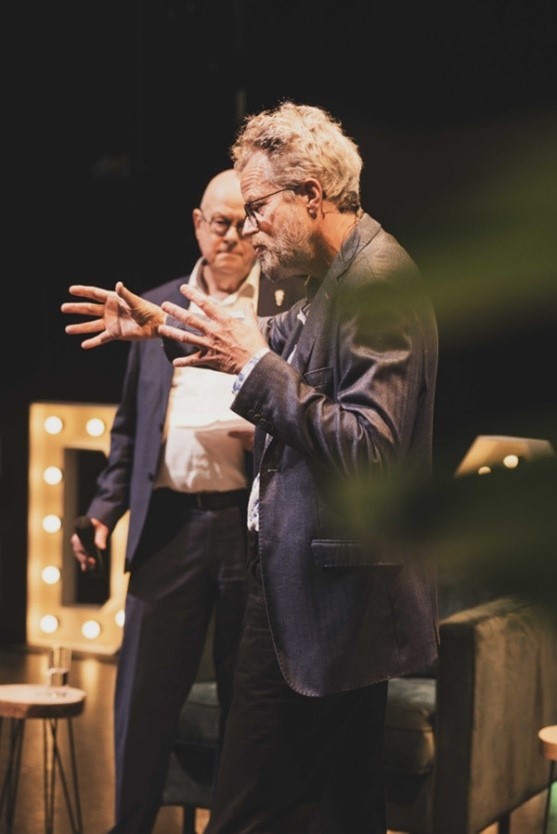
Photo credit: To Huidekoper
“Food-feed-fuel competition”. Yet another word that doesn’t really capture the absurdity of our current agricultural system. It was therefore high time for our director Frank Mechielsen to take the floor – both in a smaller breakout-session, as well as on the large plenary stage in front of 350 people – to present our work and shed light on the mislead European biomethane policies we are currently up against with our allies:
Mislead because instead of preventing food “waste” or using food “surplus” at least for animal feed, more and more it ends up in anaerobic digesters to produce biogas, which can then be upgraded to biomethane (and be injected into the gas grid).
Mislead because biomethane hinders the needed reduction of livestock (with manure getting a price tag for energy production) as well as causes harmful methane emissions (especially due to the additional growing of crops like maize for the biogas plant as well as methane leakage).
And mislead because all of that comes at a high price, not only for the environment and climate, but also for taxpayer’s money in the form of subsidies.
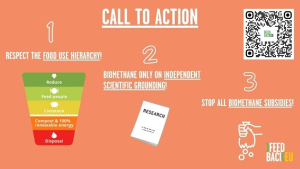
At the conference, we therefore had a clear call to action. EU countries need to respect the food use hierarchy and especially increase their efforts to prevent food waste. The EU must finally conduct a thorough scientific impact assessment on current biomethane policies. And until truly sustainable production and use is proven, all biomethane subsidies should be stopped!
For our presentation and statements, we received a lot of positive feedback. Be it our discussions with the EU Commission, other civil society organisations, feed companies, or scientists – we know the current biomethane surge is wrong and dangerous, but the conference also gave us new momentum to have a more critical debate.
After an eventful first day, it was time for what would make this conference even more special – practical fieldtrips. Choosing from all the options that the organizing team offered had already been a challenge. But it was worth it.
Because sometimes you need to see it with your own eyes to fully realize the amounts of food surplus that Europe produces. Visiting companies that produce feed for animals from food surplus delivered just his. Tens of thousands of containers. Filled only with chocolate. Bread. Noodles. Rice. Whole truckloads of carrot pieces, left over as carrots are cut into unnatural round shapes before being sold in supermarkets.
What became crystal clear is that producing feed from surplus food can only be one part of the solution. We need to produce less food leftovers in the first place. We need to redistribute it to people whenever we can. And yes, we need to reduce livestock production drastically. Becoming more circular, and closing the “loop”, that must also mean that the “loop” becomes smaller in general.
But one thing is for sure: the bus ride of international experts dedicated to halving food waste by 2030 is going on, and already aiming for its next conference and destination this fall – Budapest!
Coming back to Brussels and The Hague after two inspiring days, we want to use the opportunity to especially thank:

We would love to hear from you!
Share on social media
Stay up to date with our latest work.
In this second year of operation, we achieved a lot as Foodrise EU, in close collaboration with our sister organisation Foodrise, based in the UK. We further built legitimacy for our campaign asks in relation to less and better meat, targeting supermarkets, big meat and dairy companies, financial institutions, the Dutch government and the EU.
We further developed our campaigns on biomethane with a win at EU level at the end of last year, and on farmed fish, resulting in the publication of our Blue Empire report at the start of this year. Furthermore we achieved new funding to start new campaigns on trade justice and food sovereignty, food justice and food environment.
Our peer credibility, partnerships, networks, and coalition presence in the Netherlands and Europe continues to grow. A joint NGO position and building alliances with other stakeholders who aim for a real food system transition is necessary in these turbulent times. Loud farmer protests causing EU and Dutch policymakers to roll back the few safeguards to preserve our land and biodiversity and reduce the food emissions under the EU Green Deal. We need a fair deal that addresses the systemic issues responsible for our current unhealthy, unfair and unsustainable food system.
Foodrise EU ended 2023 with a strong position for 2024 in which we will be more than doubling our funding support, from Euro 296,316 in 2023 to a projected income of Euro 771,000 in 2024 of which Euro 370,000 for sub-grants for European partners. Our team has grown from 4 to 5 staff members, one of them based in Brussels to implement our EU level advocacy. Read the complete report here.
I like to thank our team and board for the excellent work to contribute to our mission.
Frank Mechielsen,
Executive Director Foodrise EU
We would love to hear from you!
Share on social media
Stay up to date with our latest work.
In a recent article, the Mauritanian Institute for Oceanography and Fisheries, French fish oil supplier Olvea and the Marine Stewardship Council use the platform of science to pursue a corporate agenda and to promote certification as a model to replicate across West Africa based on the example of a controversial Fisheries Improvement Project (FIP) in Mauritania.
In reality, the Fisheries Improvement Project the authors are seeking to justify has substantial flaws. NGOs and small-scale fishers have repeatedly denounced the initiative as ‘certifying the unsustainable’. The FIP’s sponsors are principally producers of fishmeal and fish oil, as well as global feed producers such as Cargill and Skretting which supply aquaculture producers in the Global North. Recently, a report by Partner Africa, commissioned by the Global Roundtable for Marine Ingredients, highlighted numerous problems linked to the production of fishmeal and fish oil in the region including pollution from factories, loss of income and opportunities to work, and the depletion of fish stocks.
According to the authors of the Marine Policy article, “The idea behind FIPs is to use market incentives in seafood value chains to stimulate improvements in fisheries management, which may lead to environmental improvement.” Since the inception of the FIP in 2017, sponsors of the project including Olvea have continued sourcing fishmeal and oil from factories in Mauritania as documented by the Mauritanian Society for the Commercialisation of Fisheries Products (SMCP), the CFFA, and Foodrise, contributing to the problem of overfishing that the FIP is meant to solve.
The UN Food and Agriculture Organisation (FAO) EAF-Nansen Programme has called the state of the once-abundant sardinella fisheries, which are targeted by the FMFO industry, “alarming” and data shows a precipitous decline in the round sardinella catch since 2018.

Braham et al Fisheries Research 2024
The FIP was scheduled to provide a progress report at the end of February, which it has so far failed to do. With the project set to end next year and taking into account all of the above, we cannot see this initiative as anything but a greenwashing attempt by an industry threatened by further reputational risk through their persistent extraction of fish essential to ecosystems and people’s livelihoods in a region struggling with food insecurity. The article’s authors themselves clearly outline the motivations of the industry to be part of the FIP:
The FIP is recognised under the MarinTrust’s ‘Improver Programme’, which allows factories who are FIP participants and pass a MarinTrust factory audit to sell product ‘from the MarinTrust Improver Programme’. This is not the same as MarinTrust certified product, but nevertheless allows some direct commercial benefit (access to a higher value market), according to FIP-participating companies, and as such is an appropriate tool to anticipate the end of the FIP with the goal of having both the fishery and the suppliers MarinTrust certified. (p.3)
Going back to the FIP’s impact and benefits to marine ecosystems and local communities, we struggle to find evidence for it in this article. We’re left with the following hypothesis, but miss references or tangible evidence: “in conclusion, a credible FIP, and other engagements with certification programmes, have provided Mauritania with a useful tool to bring together the private and public sector to address management challenges, as well as mobilising international resources which can be used in Mauritania in a flexible way. The benefits brought by engagement with certification programmes also include clear goals and a transparent and participatory ethos”.
With little progress to show since its inception, and the ongoing depletion of target fish populations, the FIP provides a free-pass to companies aiming for high-value markets, without them needing to comply with the demanding environmental or social standards of these markets. According to the authors of the article, the problems in Mauritanian fisheries stem from weak state regulation: “Weak state regulation has failed to control capacity, and stakeholders are turning to value-chain arrangements such as industry coalitions, fishery improvement projects (FIPs) and certification to support progress towards management objectives in the face of this expansion.”
Research by Foodrise shows that fish sourced from Northwest Africa (FAO 34) to supply fish oil to the Norwegian salmon farming industry in 2020 could have provided between 2.5 million and 4 million people in the region with a year’s supply of fish sufficient to meet their nutritional needs. The small fish targeted by the FMFO industry contain key nutrients including iron, zinc, and calcium that are those most needed for children’s cognitive development and for women in West Africa, where more than half of the female population suffer from anaemia. This is happening at a time when hunger is on the rise across sub-Saharan Africa (SSA) and new research shows that of eight global regions, SSA is the one most severely impacted by lack of micronutrient availability
We should not allow FMFO and feed companies to drive exploitative practices under the guise of a mere promise to improve fisheries that has for more than half a decade failed to deliver. It is time to put a stop to the practice of extracting whole, wild fish in their millions to supply the global feed industry, depriving millions of people in Africa of nutritious food and putting entire communities’ livelihoods at risk.
We would love to hear from you!
Share on social media
Stay up to date with our latest work.
Long-awaited, feared, or hoped for – the European elections have finally arrived! In the coming decisive weeks, we will know in what direction our European Union will move in the next five years.
But before it will get heated here in Brussels (again), it is good to take a step back and reflect upon the last years and especially the last months that were, let’s say it this way, eventful.
Because it must be said how it is: when it comes to making our food systems more sustainable and fairer, these last five years have been a big disappointment. Starting ambitious with the European “Farm to Fork” strategy in spring 2020 – the EU Commission’s vision for a “fair, healthy and environmentally-friendly food system” – the debate became increasingly polarized (not to say toxic) and led by absurd fake news.
Translating the “Farm to Fork” strategy into binding law therefore turned out to be even more challenging than expected, as this overview sadly shows:

In other words: What Europe has experienced over the past year has been an outrageous ‘green roll-back’ that is recklessly playing with our future.
But let’s have a closer look at what this has been looking like in practise!
Sustainable Food Systems Law
With its long-awaited proposal on sustainable food systems (SFS), the European Commission wanted to systematically shift food production and consumption patterns for good, something that could be seen as the core of the Farm to Fork promise. For example, the SFS should have included “measures like mandatory requirements for sustainable public procurement of food or voluntary harmonised sustainability labelling systems”. But after years of work by not only the EU Commission but hundreds of civil society organisations, the proposal was not even published anymore and put back into the drawer.
Sustainable Use of Pesticides Regulation:
Following up to the Farm To Fork-Strategy, the Sustainable Use of Pesticides Regulation (SUR) proposed to reduce the use of pesticides by 50% by 2030 – a groundbreaking step. But after the EU Parliament had already watered down the proposal in November 2023, it eventually voted against the whole proposal and even decided to not work on the file anymore. At the same time, the Ministers of the EU Member States could also not reach an agreement, despite of efforts by the Spanish Presidency who presided the negotiations. EU Commission President von der Leyen then withdrew the proposal in February 2024, abandoning any target to reduce pesticides completely.
EU Nature Restoration Law:
Not our climate is danger, humanity is. The same applies to what keeps us alive every single day: our nature. But if it is our rivers, wetlands, butterflies and farmland birds, or our pollinating insects – our nature is in rapid decline. That is why the EU Commission proposed a law to restore “at least 20% of the EU’s land and sea areas by 2030, and ultimately all ecosystems in need of restoration by 2050.”
After a tough fight by progressive Members of the EU Parliament (MEPs), civil society organisations, as well as the climate movement, the EU Nature Restoration Law (NRL) was eventually passed in the EU Parliament in spring 2024. Still, conservative EPP’s boss Manfred Weber heavily divided his group by demanding everyone to vote against the law. Earlier, he even exchanged MEPs for critical votes in the Environment Committee if they indicated to be in favour of the law. Weakened, but still alive, the law was passed – only to now be in a deadlock in the Council of Ministers. Countries such as Hungary and the Netherlands block the law, and no solution is in sight as their refusal seems to be ideological and not driven by concrete wishes for amendments.
Ahead of the Council of Environment Ministers on June 17th, Ireland has coordinated an open letter signed by 11 countries and Ministers, demanding an approval of the NRL: The states that have signed up are Germany, France, Spain, Denmark, Luxembourg, the Czech Republic, Lithuania, Slovenia, Estonia and Cyprus, as well as Ireland.
Common Agricultural Policy (CAP):
Imagine, you had 386.6 billion euros in your pocket. Imagine, you could use that money to protect our climate, our biodiversity, and ensure that our farmers receive a fair remuneration. But the truth is that so far, the CAP – accounting for a third of the EU’s budget – has been systematically failing on all these dimensions.
As a matter of fact, also the last CAP reform in 2020 was a big disappointment. If there was some progress, it was – pushed for by more than 3600 scientists – the Good Agricultural and Environmental Conditions (GAECs), in other words minimum standards to comply with to receive CAP funding.
But then farmers took to the streets all over Europe in the beginning of 2024. While they were united in rightfully demanding fair incomes for their hard work, there remained a huge dispute relating to the environmental ambition of the CAP. For example, the international peasants movement Via Campesina underlined “that certain CAP conditionality rules are not adapted to the realities of farmers, requires complex and heavy bureaucracy indeed, and is insufficient to effectively support European farmers in a transition towards more sustainable agricultural models and towards agroecology. Yet this transition is essential in the face of the seriousness of the climate and biodiversity crises. It requires a strong political commitment from all European institutions to secure the income of all European farmers through fair prices and a better distribution of public aid.”
But while Via Campesina had to wait months to even get a meeting with EU Commission President von der Leyen, leading policy makers were happy to listen to the controversial and heavily criticised association COPA COGECA and largely fulfil their wish-list of rolling back green rules. In turn, 140 NGOs (including Foodrise EU) condemned what they called an “opportunistic” rollback of EU green policies to gain political support ahead of the upcoming European Parliament elections.
What this shows? Our votes matter. YOUR VOTE MATTERS.
The future of the EU’s future food policies lays in your hand!
We would love to hear from you!
Share on social media
Stay up to date with our latest work.
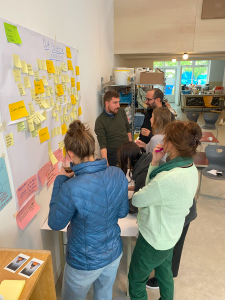
Foodrise EU together with six organisations from Europe started a joint project aiming to mobilize voices to enable access and choice of healthy, sustainable, and just food for all. To launch the project, we held a workshop in The Hague from April 24-26.
The characteristic of this project funded by Healthy Food, Healthy Planet, is that the element of learning is strongly represented. How can the voices and choices of citizens be mobilized to effectively influence policy makers and retailers? How to diversify and unite movements to challenge the existing narratives on healthy, sustainable, affordable, accessible, and fair food (at local, national, EU level and within EU: North-South and East-West). These overall learning questions will be a common thread throughout the duration of the project.
Most organisations will collaborate with communities who have difficulties accessing affordable healthy food and will listen to what they need. Retailers are still by far the most dominant food suppliers in our surroundings and therefore we will target supermarkets to adjust their supply to affordable, sustainably produced, more plant-based, and healthy food. Starting at the local and national level, we hope to expand this initiative to more countries in the EU and will target policy makers at the right level to make enabling policies. Being aware that a fundamental change of the food system is needed, we will promote alternative models for healthy food environments, as well as a 60-40% plant-based supply in supermarkets by 2030.
The kick-off workshop was held in the Utopie and the Gymzaal, both locations are based on alternative models. In the evening of 25th of April, we organized an event with local people from the Hague who engage in alternative food initiatives. Participants from the workshop and local people gave presentations, for example Keenan Humble from Foodrise UK about a green bus in Liverpool providing affordable healthy food in areas that are characterized as food deserts. Liane Lankreijer, member of the Food Council of The Hague presented her survey showing the structural challenges around food poverty in certain areas in The Hague, and also the first experiments to strengthen cooperation in neighbourhoods based on positive forces that have since been set in motion and involve collaboration between formal and informal organisations. Foodrise EU supported the translation of this report Weaving Food into English (link). The city of The Hague was also represented and was telling how they support and cooperate with local food initiatives. During dinner lively discussions continued.
ALTAA and CAN from France, CECU from Spain, Green Rev Institute from Poland, Terra! from Italy, Foodrise UK and Foodrise EU will also reach out to organisations from different sectors. We will search dialogue with climate, environmental and agricultural organisations, health organisations, farmers, consumers, and organisations working on poverty reduction and social justice aiming to bring our voices together in a loud demand for a sustainable and just food system.
Our Food, Our Choice!
We would love to hear from you!
Share on social media
Stay up to date with our latest work.
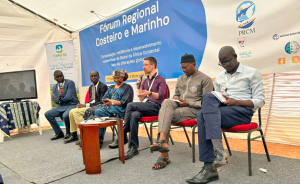
In late April, the Regional Partnership for the Conservation of the Coastal and Marine Zone hosted the 11th edition of the Marine and Coastal Forum in Guinea-Bissau, bringing together a host of actors working for the protection and restoration of the oceans and the safeguarding of populations negatively impacted by the blue economy. Apart from scientists and civil society, decision makers also attended, among whom the President of Guinea-Bissau and several ministers from countries across the region.
The conference hosted various events spanning a wide range of topics, and although only reserved a small space in the overall agenda, we made sure to address the problems of fish farming and this industry’s rapid global expansion. It baffles us how the role of aquaculture keeps being portrayed as a spotless solution in the transition to a sustainable food system. A former Fisheries Minister from Mauritania, invited to speak of his countries role in conservation efforts and sustainable fisheries, almost got away with not mentioning his country’s massive expansion of fishmeal and fish oil factories over the past decade until put on the spot by a Mauritanian CSO referring to this industry’s devastating impacts on marine life and coastal communities. Unfortunately, this intervention was left without comment by the official.
We did not miss the opportunity to present our work along with the partners of the Our Fish project at a dedicated side event. Our coalition made sure to highlight the dramatic decline in small pelagic fish stocks in the region, illustrate the problems this causes for local communities and how the global fish farming industry, at the example of salmon farming in Europe, is driving the needless destruction of marine life and people’s livelihoods. The audience’s reactions supported our message and appreciated the facts and figures we shared as they allow them to spread the message and join our advocacy efforts.
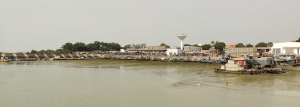
Venturing out to Bissau’s fishing port, we see a familiar sight from across the West African coast: Chinese funded and built infrastructure as well as a refrigerated storage facility taking up a sizeable portion of the small port, and placards displaying the support of the EU in the context of the EU-Guinea-Bissau fisheries partnership agreement in force since 2019 which gives access to EU member states to fish in Bissau-Guinean waters for around 15 million euros a year. The agreement includes the fishing of small pelagics.
Although disappointed by the uncritical embracing of aquaculture by institutions like the World Bank during the conference, we left Bissau encouraged by the Forum’s Declaration issued after the conference as well as the myriad initiatives labouring to protect marine ecosystems and the people who depend on them, making sure that producing aquatic foods does not harm people or the planet.
We would love to hear from you!
Share on social media
Stay up to date with our latest work.
An estimated 40% of food is wasted globally, which causes an estimated 8–10% of global emissions, and uses an estimated 28% of the world’s agricultural land area, larger than China and India combined. In 2021, the EU wasted at least 58.4 million tonnes of food – with even more currently going unmeasured at primary production level. Food waste costs EU businesses and households an estimated €143bn a year. Yet left to voluntary measures, EU progress to reduce food waste has been slow.
Now, the EU faces a historic opportunity. The Council of the European Union is currently in the process of negotiating proposals for legally binding EU targets to reduce food waste – a historic move. However, everything is still at stake: targets may be set too low, and whole parts of the supply chain like farms might be excluded. The European Commission’s proposal is for household/retail/restaurant/food service food waste to be reduced by 30% by 2030, for manufacturing/processing food waste to be reduced by only 10% by 2030, and for no targets to be set for primary production at all. The European Parliament has backed more ambitious targets – 40% for household/retail/restaurant/food service and 20% for manufacturing/processing – but the Council currently seems to be on track to back less ambitious targets.
Luckily, a movement is building around Europe for ambitious action on food waste. 65 organisations ranging from NGOs to businesses and research institutions have signed a joint-statement calling on the EU to set legally binding targets to reduce food waste by 50% from farm to fork by 2030. But it will be vital to get policymakers from across Europe backing the fight for regulation to end food waste too. We’ve also created a policy briefing to explain how higher food waste targets are feasible.
That’s why the Prevent Waste Coalition – Foodrise EU, European Environmental Bureau, Zero Waste Europe, Safe Food Advocacy Europe and Too Good To Go have collaborated to create a short survey asking EU member states for their views on EU legally binding food waste targets. We’ve also created a policy briefing to explain how higher food waste targets are feasible. As we show in our briefing, already featured by the EU media outlets Politico and Euractiv recently, there is just no excuse for low ambition. On the contrary, there is much to gain – not only for the environment and consumers, but also food businesses themselves. We targeted the Ministries for the Environment and Agriculture for each country, via email – and received responses between April – May 2024. The results are presented below.
The support of these Ministries will be essential for achieving an agreement on (more) ambitious targets, through member state representatives (and ultimately the national ministers) at the Council of the European Union. If you would like to raise pressure on your country’s government to back ambitious EU food waste targets, please contact maximilian@foodrise.org.uk for more info and support. If you’re an EU-based organisation who’d like to support our joint-statement, please sign up here.


We would love to hear from you!
Share on social media
Stay up to date with our latest work.
Our society’s relationship with the nature that sustains it is fundamentally broken. Despite the growing evidence of looming ecological collapse and the alarming acceleration of the climate crisis, European governments and EU politicians are currently blocking new measures to protect nature and tearing up ones already in place.
Healthy nature underpins our ability to feed ourselves, to have clean water to drink, clean air to breathe and a safe climate to live in. We are horrified that so many politicians across Europe are threatening the basis of life on this planet to provide false solutions to farmers’ hardships, while doing nothing to address farmers’ complaints of abusive practices in the supply chain or unfair competition and cheap imports from trade deals. And all this as an opportunistic attempt to gather a few more votes in the upcoming elections.
The European Environment Agency has warned that the continent is woefully underprepared for the impacts of a changing climate. Natural ecosystems that protect us from the worst of extreme weather, drought, heatwaves and floods are disappearing when we should be restoring them.
In recent months, Ursula von der Leyen’s European Commission has loosened pollution rules for industrial farms, dropped plans for sustainable food production, abandoned targets to reduce pesticides and shelved efforts to ensure a resilient water supply. Some national governments have frozen EU plans to restore nature in Europe and compromised corporate due diligence rules protecting human rights and the environment. Now, the European Commission wants to scrap basic environmental standards for farms to appease industry lobbyists, and agriculture ministers are threatening the EU’s new rules to fight global deforestation.
Nature is not in conflict with our society’s ability to thrive, it is the very foundation of it. But some politicians in European capitals, and in the EU institutions in Brussels, are accelerating the nature and climate crisis, and risking the lives of the people they represent. We urge you to stop before it is too late.
We would love to hear from you!
Share on social media
Stay up to date with our latest work.
With the European farmers’ protests and the looming excess of manure in the Netherlands, agriculture will play a significant role leading up to the European elections on June 6th. How do we balance farmers’ livelihoods with the protection of nature and the environment?
On Thursday, May 23rd at 7:45 PM, Foodrise EU, in collaboration with Platform Earth Farmer Consumer, is organizing an election debate at De Schakel in Nijkerk, addressing crucial issues regarding EU agricultural and trade policy.
Candidates include: Hans Geurts (BoerBurgerBeweging), Arjan Tolkamp (CDA), Hendri Nortier (D66), Lara Vita Sibbing (GroenLinks-PvdA), Fenna Feenstra (Socialistische Partij), Hans van de Wind (SGP), and Bart Millenaar (VVD). Pending confirmation: Anja Hazekamp (Partij voor de Dieren) and the EP candidate from NSC.
Introductions by Keimpe van der Heide of the Dutch Arable Farming Union and Frank Mechielsen of Foodrise EU.
We cordially invite you to participate and contribute to this important discussion. It is crucial that we engage in dialogue together about the future of our agricultural sector. Your voice and contribution are invaluable to this critical discussion.
We would love to hear from you!
Share on social media
Stay up to date with our latest work.
Not so long ago, in November 2023, final negotiations on the Gas and hydrogen markets Regulation came to an end. A hotly debated topic during these negotiations was the introduction of a binding target of 35 billion cubic metres (bcm) of annual biomethane production by 2030 (in comparison, currently, only 4.2 bcm are produced per year).
As we demonstrated in our substantial report, a 35 bcm target (originating from an industry report and then included in the REPowerEU plan by the EU Commission) lacked and still lacks any independent scientific grounding. Furthermore, no impact assessment has been carried out with regards to its environmental impact. In fact, an own study by the European Commission’s Joint Research Center highlighted that only a much lower level of 24 bcm of biomethane could be produced sustainably by 2030.
Even though a binding biomethane target was eventually rejected following strong public pressure by Foodrise EU and 15 other organisations, the industry-led push for unhinged biomethane production is ongoing. This is reflected in a new report commissioned by the European Biogas Association (EBA) that goes far beyond previous projections for EU biomethane.
EBA’s latest figures are highly questionable for a number of reasons:
Firstly, other than assumed by the report authors, no direct connection can be drawn between biomethane production and emissions savings as a contribution to the EU’s proposed 2040 climate target. Merely substituting part fossil fuels’ use with biomethane does not inherently guarantee sustainability. Rather, it is essential to address the potential for emission reductions together with the feasibility of biomethane production from each feedstock. Independent research and impact assessments taking into account not only the impacts of biomethane production on climate change in terms of GHG emissions but also environmental impacts related to different planetary boundaries are therefore urgently needed.
Secondly, EBA’s projections completely ignore the necessity to drastically lower the production of livestock in Europe – to reduce greenhouse gas emissions, increase food security, and promote healthier diets – as called for by the EU Commission’s Chief Scientific Advisors. In fact, manure should not just be seen as a waste product and means to produce biomethane but as a byproduct of livestock (over)production which causes substantial methane emission. Likewise, the projections pay no heed to the EU’s commitment to reduce food waste as reaffirmed in the current revision of the waste framework directive. Unarguably, EBA’s projections are based on failing on major EU environmental targets including dietary changes and reductions in food waste that are indispensable to achieve the sustainability transition.
Thirdly and lastly, the EBA’s reliance on a massive increase in “sequential crops” to create feedstock availability for biomethane is alarming. The total disregard of significant environmental risks associated with pesticide use, water usage, soil health, and primary crop yields is yet another confirmation that the current biomethane rush is essentially one for profit based on ongoing plunder of the planet.
This is why today, we have published our newest open letter and sent it to key decision-makers throughout the EU. Together with 15 independent not-for-profit organisations, we condemn the current political and industrial push for biomethane production and – based on our report that was published in 2023 – point out that even 35 bcm of biomethane cannot be produced sustainably in the EU.
In light of the coming European elections and thus a new EU Parliament as well as a new cabinet of EU Commissioners, we therefore urgently demand a review of high biomethane targets together with sustainable food and land use experts to ensure that EU biomethane production helps rather than hinders climate and sustainability goals.

We would love to hear from you!
Share on social media
Stay up to date with our latest work.
Demand trade justice politics from your candidates in the 2024 European Parliament elections. European trade and investment agreements are still not in line with EU´s climate and sustainable development ambitions. Trade policy and the European Green Deal are in stark contradiction. We, as EU citizens, want to put the planet and people before profit. And for this to happen, the next EU parliament must vote for a fundamental shift in trade politics. Together we can make this happen!
Ask your candidates for the EU parliament to make EU trade policy fit for the 21st century and its challenges. Ask them to sign the pledge by sending them an email (see below)!
By making the pledge on trade justice, candidates promise to promote 5 key commitments for changing the track of the EU trade policy in the next legislative cycle.
This means we all together have the best chance to stop detrimental trade deals and develop a globally just and climate and environmental friendly trade policy which respects human and workers rights, fosters the creation of decent jobs and promotes animal welfare. Send out the mail and ask your candidates to make the pledge for a new EU trade policy.
We would love to hear from you!
Share on social media
Stay up to date with our latest work.
We would love to hear from you!
Share on social media
Stay up to date with our latest work.
All major Dutch supermarkets have expressed the ambition to offer more plant-based products. Unfortunately, they still heavily promote meat and dairy products. However, Jumbo is the first to completely abandon promotions on fresh meat.
CEO Ton van Veen in de Volkskrant: “With the cessation of meat promotions, we are taking a significant step towards our contribution to the protein transition from animal to more plant-based food. We realize that acceleration is needed in this regard.” Jumbo acknowledges that societal pressure has played a role in the decision.
Jumbo emits 10.5 megatons of CO2 throughout its entire chain. An estimated 40% of this emission comes from the sale of meat and dairy products. Hence, there is substantial climate improvement to be made. Since 2021, Foodrise EU has been campaigning supermarkets. We want them to take action on climate change and reduce their meat and dairy sales. We ran a campaign targeting Jumbo, urging the supermarket to: 1) be transparent about their climate impact and the sale of meat and dairy, 2) embrace the protein transition towards more plant-based options, and 3) reduce the promotion of meat. Jumbo was among the lowest-scoring supermarkets in our 2022 scorecard (see ´de Minder Vlees Race´).
In 2023, Jumbo and other major supermarkets made commitments to transparency regarding their greenhouse gas emissions, their protein ratios, and their ambition for a protein transition to a 50/50 animal/plant-based ratio by 2025 or 2030. However, none of the supermarkets ceased offering promotions on meat and dairy products. This means that in practice, customers are still tempted to purchase more meat than is beneficial for their health and the environment.
Our report ´ , launched mid-2023, highlighted the greenwashing tactics, questionable data reporting, and profit-driven approaches regarding the climate crisis within supermarkets. Our findings reveal a lack of clarity and commitment from retailers regarding how they intend to achieve their climate ambitions. Supermarkets employ greenwashing tactics to appear more sustainable while continuing to promote meat and dairy products
Market leader Albert Heijn is renowned for its abundance of promotions. Therefore, we strongly urge Albert Heijn to follow Jumbo’s example and cease promoting bulk discounts on meat and dairy products

We would love to hear from you!
Share on social media
Stay up to date with our latest work.
Brussels, 13 March 2024 – Members of the European Parliament voted on the Waste Framework Directive to raise legally-binding food waste reduction targets to 20% for processing and manufacturing, and 40% for retail, restaurants, and households.
The Prevent Waste Coalition on food waste remarked that setting the first EU-wide food waste reduction targets confirms political commitment to tackle the environmental and social impacts of food waste. However, the result is at odds with the European Parliament’s previous commitments to slash food waste by 50% from farm to fork; a commitment expressed in the EU Green Deal and UN Sustainable Development Goals. The Coalition is part of a wider group of 65 organisations from 22 countries that signed a joint statement calling EU policymakers to support the 50% reduction target.
Theresa Mörsen, Waste & Resources Policy Officer, Zero Waste Europe, states:
“Almost 10 years ago, the EU and its Member States committed to the UN Sustainable Development Goals, including 50% reduction of food waste across the entire supply chain as outlined by SDG 12.3, but now that the proposal is on the table, decision-makers shy away from decisive action. This is happening against the backdrop of recent reports by the European Scientific Advisory Board on Climate Change that warn against the huge impact food waste has on climate change.”
Christophe Diercxsens, Global Public Affairs Director, Too Good To Go, underlines:
“Although the European Parliament’s vote today moves us in the right direction, the adopted targets are significantly lower than the EU’s prior commitment to UN SDG 12.3. Ambitious legally-binding food waste reduction targets are essential to bring all countries and all food businesses on board in the fight against food waste, not just a few.”
The targets do not apply equally to all steps of the food supply chain. Both the Commission proposal and the Parliament position set a far lower target for manufacturing and processing, and completely omit taking action against food losses and waste at farm level. With evidence from Kellogg’s showing that fast reductions are possible in the processing sector, this unequal treatment is not justified. Moreover, Eurostat data shows that at least 11% of food is lost at primary production level. Meanwhile, the majority of food loss has been excluded from the EU measurement of food waste. This urgently needs to be rectified as current best estimates suggest that up to 90 million tonnes – 60% of EU food waste – could occur on farms.
Antonio De Carluccio, Policy & Project Officer, Safe Food Advocacy Europe, states:
“It is inconsistent and unfair for processing and manufacturing to be assigned far lower targets than other sectors, especially given the ample evidence that manufacturers are equally capable of food waste reduction. We therefore recommend that the targets for the manufacturing sector be raised to match those of other sectors. This adjustment ensures that manufacturers contribute equitably to the EU’s efforts to combat food waste. That being said, we saw a strong political statement by some groups today who lent their support to a 50% target, signalling a promising alignment with SDG 12.3.”
Frank Mechielsen, Director, Foodrise EU, points out:
“Excluding primary production from binding food waste targets is harmful not only to sustainability efforts, but also farmers. This will only increase the likelihood that food waste will be pushed onto farmers via cosmetic rejections, unfair contracts, and order cancellations, at a time when many farmers suffer crippling costs due to food waste caused by retailer practices. Including farms in the targets, and expanding the scope of measurement to cover unharvested food waste, would raise pressure to reform these practices so farms can get more of their produce to market.”
Members of the Prevent Waste Coalition on food waste now put their hopes on Member States to honour their previous commitment to the SGD 12.3 and support a binding target of 50% reduction from farm to fork.
Notes to Editors
A group of NGOs and progressive businesses, the Prevent Waste Coalition, consisting of Zero Waste Europe, the European Environmental Bureau, Too Good To Go, Foodrise EU, and Safe Food Advocacy Europe, has campaigned jointly over the past months and raised awareness with policymakers about the importance of aligning EU targets with the Sustainable Development Goal 12.3.
Champions 12.3, an international coalition of executives from governments, businesses, and civil society leading global food waste action, recommends that states should interpret the SDG 12.3 target as a 50% reduction in all food losses and waste from farm to fork, including ‘food losses’ [i.e. pre-retail food waste], not just food waste at the retail/consumer-level.
In 2017, the European Parliament voted consistently with this Champions 12.3 recommendation when it called on Member States to “take the measures required to achieve a Union food waste reduction target of 30% by 2025 and 50% by 2030”, covering “the whole supply chain, including in primary production, transportation, and storage”. The recent Parliament vote therefore represents a significant watering down of the Parliament’s position.
Zero Waste Europe ENVI Committee vote press release: “Waste Framework Directive: proposal to tackle food and textile waste only slightly improved by European Parliament’s committee” [Published 14 February 2024]:
ZWE feedback to the proposal for a targeted revision of the Waste Framework Directive [Published 30 November 2023]:
Foodrise EU’s briefing on food waste [Published September 2022]: https://foodrise.org.uk/wp-content/uploads/2022/09/Feedback-EU-2022-No-Time-To-Waste-report.pdf
Joint statement from Prevent Waste Coalition: “Statement on EU legally binding targets to reduce food waste” [Published 20 September 2022]:
Proposal for a targeted revision of the Waste Framework Directive [Published 5 July 2023]: https://environment.ec.europa.eu/publications/proposal-targeted-revision-waste-framework-directive_en
Press contacts
Sean Flynn, Media Outreach & Communications Officer at Zero Waste Europe, sean@zerowasteeurope.eu or news@zerowasteeurope.eu / +32 471 96 55 93
Theresa Mörsen, Waste & Resources Policy Officer, theresa.morsen@zerowasteeurope.eu
Christophe Diercxsens, Global Public Affairs Director at Too Good To Go, cdiercxsens@toogoodtogo.com
Daemon Ortega, Policy & Project Officer at Safe Food Advocacy Europe, campaigns@safefoodadvocacy.eu
Maximilian Herzog, EU Advocacy Officer, Foodrise EU, maximilian@foodrise.org.uk
About Zero Waste Europe
Zero Waste Europe is a European network of communities, local leaders, experts, and change agents working towards the elimination of waste in our society. Advocating for sustainable systems and the redesign of mankind’s relationship with resources, they accelerate a just transition towards zero waste for the benefit of people and the planet. www.zerowasteeurope.eu
About Too Good To Go
Too Good To Go is a certified B Corp social impact company that connects users with partners to rescue unsold food and stop it from going to waste. With 90 million registered users and 155,000 active partners across 17 countries, Too Good To Go operates the world’s largest marketplace for surplus food. Since its launch in 2016, Too Good To Go has helped to save over 300 million meals from going to waste, the equivalent to 810,000 tonnes of CO2e avoided.
About Foodrise EU
Already in 2013, Foodrise was founded in the United Kingdom to create a food system that nourishes both people and our planet. In 2022, Foodrise EU was established to broaden Foodrise’s impact in Europe, and strengthen the involvement with EU food policy development & civil society coalitions. In its work, Foodrise especially focuses on EU governments & institutions, supermarkets, livestock companies, and investors.
Foodrise: Feeding People, Backing the Planet (foodrise.eu)
About Safe Food Advocacy Europe
SAFE – Safe Food Advocacy Europe is currently the only Brussels-based NGO specialised in the protection and representation of EU consumers in the food sector. SAFE aims to ensure that consumers’ health and concerns remain at the core of the EU’s food legislation, and its mission includes strengthening the voice of civil society in European food legislation and increasing public awareness of food safety issues. This is achieved through advocacy and lobbying campaigns, publications, working groups, trainings, and more.
We would love to hear from you!
Share on social media
Stay up to date with our latest work.
It probably won’t surprise that fish played a crucial role in the diets of Dutch coastal communities, and that many shaped not only their profession, but also their identities around this staple food. Dutch proverbs dating back centuries bear testimony of this:

Herring seller. The Herring Woman. By Charles Howard Hodges
Herring in particular remains a staple in Dutch national cuisine and festivals such as the Vlaggetjesdag celebrate the Dutch herring fishery each year in early summer. While fishing was traditionally a man’s job, women took to any matters on-land, including processing and selling the catch. In short: they were managing the family and the business on shore, independently.
Just like their Scottish and English counterparts, society didn’t necessarily cherish them. They were looked down upon for their crude language, and the lingering smell of fish marked them. Not that it bothered them too much – it’s a small price to pay for an entirely self-sufficient and empowered way of living in a time when women were openly oppressed.
Cornelie Quist from the International Collective in Support for Fishworkers adds this:
“In the 19th century, fishermen were paid wholly or partly in kind (i.e. the fish they helped catch). This fish was called women’s fish because it went to the fishwives to feed the family and to sell in the market or at the door. With the advent of industrialization in Dutch fisheries, fishermen’s pay in kind was abolished and replaced by direct cash payments.
In addition, fishermen now went to sea for longer periods (sometimes up to months at a time), which meant that women had to care for their families alone. Fish was still available, but now had to be bought. Women now generated the income needed for the family by taking out loans and/or doing wage work for fishing companies, such as repairing nets and processing fish, or as maids for an employer and less and less as self-employed workers. Before industrialization, the entire fish chain was a household and family-based activity with interdependent roles. Industrialization changed this and marginalized small-scale fishing and the status of women in fisheries.”


Credit: Katwijks Museum’s photo archive
On this International Women’s Day, we want to pay tribute to not only these resilient women from the past, but also those of today, and underline their crucial role in society (providers of food, especially for the less fortunate), as caretakers for their families and communities as well as in the local economies.
In our work, we fight alongside West African women processors and fishmongers for their right to food and against the destruction of their livelihoods and profession by a rotten food system, where staple wild fish are pillaged and reduced to meal and oil for export and to produce farmed fish for luxury markets – driving a phenomenon we can only call food colonialism.

Fish processors protesting against industrial overfishing in Bargny, Senegal, with empty calabash bowls made from gourds, which symbolize the lack of fish in the seas off West Africa. © Clément Tardif / Greenpeace
They’ve consistently called for action and stand up for their rights, and our partner organisation Greenpeace Africa made sure their voices are heard again today:
There are many ways to join the fight, including reading our latest report Blue Empire: How the Norwegian Salmon Industry extract nutrition and undermines livelihoods in West Africa, and signing on to our latest petition to have Wagamama drop farmed salmon off their menu. Dropping farmed fish off one’s menu is another clear individual call for change in the food system, and using one’s agency as a citizen (writing to your local MP or MEP) and as a consumer (writing to your supermarket, and leaving reviews) will help counter the root causes of the problems faced by local fishing communities the world over: harmful private sector practices and insufficient regulation.
We certainly won’t give up the fight, so please stay tuned for our future campaigns.
Further reading:
How your supermarket salmon is impacting communities in West Africa
We would love to hear from you!
Share on social media
Stay up to date with our latest work.
Dutch Banks: Cease Financing Industrial Livestock Farming
A call for change: the impact of industrial livestock farming
In a world grappling with the consequences of climate change, deforestation, and human rights violations, industrial livestock farming takes center stage. Often overlooked as a driver of these issues, their continued expansion is incompatible with the urgent need to protect our planet and ensure the well-being of future generations.
The role of Dutch banks in this story
The recent report by Foodrise EU, ‘Climate Impact of Big Money’, sheds a stark light on the role of Dutch banks, such as ING, ABN Amro, and Rabobank, in financing these harmful practices. These banks have invested substantial sums of money in industrial livestock farming.
ING and Rabobank both rank in the top ten largest financiers of the sector globally. They provided business loans and revolving credit, and guaranteed bond issuances. ING with $15.6 billion in credits, Rabobank with $15.4 billion. This cannot be ignored any longer.
Local consequences and the responsibility of banks
The impact of this financing extends not only globally but also to our own backyard. In the Netherlands, the expansion of mega-farms has led to the bankruptcy of small-scale farmers and serious environmental issues. We must acknowledge that these problems concern us all and that it is time to take action. It starts with no longer funneling billions into the agribusiness.
“The continuous financing of mass production of meat and dairy by Dutch banks undermines crucial efforts in climate, biodiversity, deforestation, human rights, and corruption,” says Frank Mechielsen, Director of Foodrise EU. “It is time for change. Banks must stop financing industrial livestock farming, and they must do so now.”
Towards a sustainable future: A Call to Action
These findings compel us to act. It is time for Dutch banks to cease their financing of industrial livestock farming. It is time for governments to impose stricter regulations and revise subsidies. It is time for change, and it begins today.
Read the full report by Foodrise EU here.
We would love to hear from you!
Share on social media
Stay up to date with our latest work.