
Questions or ideas?
We would love to hear from you!
Yesterday, the European Commission launched a campaign to promote the consumption of EU aquaculture products. However, our research and campaigns have shown the devastating consequences of the aquaculture sector, particularly the farmed salmon industry.
That is why, together with CFFA-CAPE, Compassion in World Farming, Eurogroup for Animals, Seas at Risk, and the European Institute for Animal Law and Policy, we signed a joint statement urging the Commission to promote only those practices that meet the highest standards of animal welfare, environmental protection, and social sustainability.

We would love to hear from you!
Share on social media
Stay up to date with our latest work.
This week, our EU Advocacy Officer Maximilian Herzog was invited to speak at the conference ‘People first: Centring the Just Transition in EU Policy’, hosted in the European Parliament by the Left group.
In his intervention, he made clear that without a radical change of our food systems, there simply won’t be a successful Green Deal and a truly just transition! 1/3 of all global emissions are attributed to the way that we produce and consume food. Food shapes our culture, our communities, our health, our happiness. And at the same time the reality is that our food system produces injustices at European, local, as well as global level.
That’s why we need to empower people and especially women, young people, and marginalized groups; and also put animal rights at the heart of the transition:
Be it at food banks all over Europe as people simply cannot afford healthy meals and to go into the supermarket
Be it at the coast of Western Africa and Senegal, where we work with partners and communities that see their basic nutrition, small fish, being depleted for fish meal and fish oil production – which then is used as feed for salmon production in the Global North.
The question must always be: are we only treating the symptoms of injustice, while promoting false solutions? Or are we truly changing the food system, ultimately strengthening the trust in European institutions?
Thank you to Anja Hazekamp, Per Clausen, and Lynn Boylan as well as the staff of the Left group (especially Ciara Barry) who made this conference possible.
Thank you also to our co-panelists Nienke Blauw (a Dutch activist campaigning against PFAS pollution), Dr Aparajita Banerjee (UCD Just Transition Centre) and Corinna Ziergold (IndustriAll) for your important and inspiring work at European, national, and local level!
Watch the intervention below or find the full recording of the session here.
We would love to hear from you!
Share on social media
Stay up to date with our latest work.
Kweekzalm richt ecologische schade aan, is niet duurzaam en veroorzaakt voedselschaarste aan de Afrikaanse westkust. Toch blijft het roze stukje vis een schoon imago houden dankzij veelvuldige greenwashing technieken van de kweekzalmindustrie, met name actief in Noorwegen, Denemarken en Schotland. Op de websites van deze bedrijven wordt het begrip ‘duurzaamheid’ veelvuldig gebruikt en de gezondheid van de zalm geprezen, terwijl de realiteit heel anders blijkt. En juist Nederlandse banken lijken hiervoor te vallen.
Het nieuwe rapport ‘Fishy Finances: Exposing industrial salmon farming’s biggest financial backers’ van Feedback laat zien dat in de top vijf van grootste financiële dienstverleners aan zalmkwekerijen wereldwijd twee Nederlandse banken staan: ABN Amro heeft sinds 2015 voor 1.3 miljard dollar verstrekt en Rabobank zelfs voor 1.8 miljard dollar. Dankzij de financiële sector wordt de kweekvisindustrie aangemoedigd hun vervuilende en oneerlijke praktijken verder uit te breiden.
Hiermee vormen deze banken de twee grootste financiële verstrekkers (ABN AMRO 1.3 miljard dollar, Rabobank 0.9 miljard dollar) aan het Noorse Mowi. Het miljardenbedrijf heeft al meerdere schandalen achter haar naam staan: het overtreden van milieuwetten in Schotland, rechtszaken in Chili vanwege grote hoeveelheden ontsnapte zalm, het gebruik van verboden chemicaliën op ‘biologische’ zalm in Britse supermarkten en het overtreden van EU mededingingsregels.
Zelfs Triodos, een van de duurzaamste banken van Nederland, blijkt sinds december 2024, 16 miljoen dollar geïnvesteerd te hebben in Bakkafrost, één van de grootste zalmkwekerijen ter wereld. Het bedrijf heeft een toenemend sterftecijfer onder de zalm en gebruikt bovengemiddeld veel wilde vis om de zalm te voeden.
Wat gaat er mis in de kweekzalmindustrie?
Enorme bedrijven zoals Mowi, SalMar and Bakkafrost ontvangen tientallen miljarden aan investeringen en kredietverleningen voor het uitvoeren van schadelijke praktijken. Feedback EU roept de Nederlandse banken op de geldkraan zo snel mogelijk dicht te draaien.
Frank Mechielsen, Directeur Feedback EU: “Het is tijd dat de greenwashing praktijken van de zalmindustrie aan het licht worden gebracht en dat iedereen kan inzien hoe verwoestend deze industrie te werk gaat. Nederlandse banken dragen bij aan het aanrichten van ecologische schade, voedselschaarste en dierenleed. De geldkraan moet dicht.”
Dr Aliou Ba, Ocean Campaign Lead Greenpeace Africa: “De miljarden die naar de industriële zalmteelt gaan, vernietigen niet alleen mariene ecosystemen, maar beroven ook Afrikaanse kustgemeenschappen van voedselzekerheid. Deze financiële instellingen stoppen geld in een industrie die wilde vispopulaties uitput voor de productie van vismeel en visolie, terwijl lokale vissers moeite hebben om hun families te voeden. Door zalmkwekerijen te financieren, kiezen wereldwijde investeerders voor bedrijfswinsten in het mondiale noorden boven het levensonderhoud van miljoenen mensen die afhankelijk zijn van gezonde oceanen in het mondiale zuiden. Wij eisen dat zij de financiële steun aan deze roofzuchtige industrie stopzetten en in plaats daarvan investeren in de bescherming van de mariene hulpbronnen die onze gemeenschappen in stand houden.”
In 2024 bracht Feedback een rapport uit over hoe de groeiende Noorse kweekzalmindustrie resulteert in voedselschaarste aan de Afrikaanse westkust.
Lees de Nederlandse samenvatting van het rapport hier.
We would love to hear from you!
Share on social media
Stay up to date with our latest work.
We would love to hear from you!
Share on social media
Stay up to date with our latest work.
Lees de Nederlandse samenvatting hier
The research exposes the vast financial networks driving the destructive salmon farming industry across Europe. And what turns out? Over the last 10 years, banks in the Netherlands have collectively provided the largest non-Scandinavian source of credit to Norway’s aquaculture sector, with Rabobank providing $1.8 billion and ABN Amro $1.3 billion since 2015. Together these banks form the top two biggest creditors to Mowi, the largest salmon company in the world with various controversies behind its name.
Even sustainable bank Triodos has invested $16 million in Bakkafrost, invested $16 million in Bakkafrost, a growing player in North Sea salmon. The messaging of sustainability doesn’t match Bakkafrost’s track record with high mortality rates among the salmon and sea lice infections.
From Ireland to Senegal, local fishing communities are experiencing a devastating fundamental disruption to marine ecologies and local economies. The disruption and undermining of traditional fishing practises amounts to nutritional colonialism, with Norwegian companies leading a Blue Empire, partially bankrolled by Dutch banks.
Banks and investors must recognise this destructive practise and stop financing salmon farming now!

We would love to hear from you!
Share on social media
Stay up to date with our latest work.
Heated debates, protests, and no real action in sight: that is how the debate around the future of EU Agriculture went on for years, leaving everyone frustrated. At the same time, 5.3 million farms had to close down in the last 15 years, leading to personal hardship and huge gaps in European landscapes and rural communities.
After a promising Strategic Dialogue which brought together 29 stakeholders from all directions and backgrounds, hope for real change was in the air. Then, on February 19th, the European Commission presented its “Vision for Agriculture and Food”, outlining its perspective on the future of the sector while announcing specific legislative action in the coming years. What is our take on it?
The good.
As outlined in the Vision, practices where farmers are systematically forced to sell below costs will no longer be tolerated. To facilitate this, the ‘Unfair Trading Practises’ Directive will be revised. Mental health in the agriculture sector should not be a taboo but part of the social support system for farmers and workers. Community-led initiatives, including food councils – recognized as a key driver of change – will be supported, and the EU Commission is committed to bringing these voices to the EU level. As a part of the Food Voices Coalition, we certainly appreciate this. Public procurement will be strengthened with regards to local and sustainable food. Food waste and loss reductions, underlined by the first-ever binding reduction targets agreed recently at EU level, are recognised as crucial, to the benefit of “EU citizens, farmers and all other actors across the food supply chain” (Vision, p. 24). In a world of severe geopolitical tensions, Europe must take its food sovereignty into its own hands and cut its dependency on harmful imports of proteins/feed for our animals, and (also still Russian) fertilisers. Above all, the agri-food sector needs to (finally) function within planetary boundaries. This is where it gets tricky…
The bad.
For years there has been a heated discussion around the inefficient and unsustainable payout of the largest chunk of CAP payments. These are largely based on the size of farms and often go towards big agri businesses and landowners. With 1000 farms closing down every single day, the failure of EU payment schemes has therefore been evident all the way – without causing much of a change and empathy from conservative policymakers.
In the Strategic Dialogue in 2024, one clear outcome was the call for a strong move away from basic hectare-based payments towards targeted income support and effective environmental payments. Yet in the Vision, this is only partially recognised. Yes, “future CAP support will therefore be more directed towards farmers that actively engage in food production, towards the economic vitality of farms and the preservation of our environment”(Vision, p. 7). Yes, farmers who need it the most should be supported, in particular young and new farmers. But, using more powerful instruments such as the degressivity and the capping of subsidies based on farm sizes will be only “considered” (Vision, p. 8) – a very worrying sign. More concerning still, this new approach towards subsidies “should consider prioritising production of agricultural products which are essential for the EU’s strategic autonomy and resilience” (Vision, p. 7) – leaving the door open to continued ‘strategic’ support of industrial meat production, especially with regards to meat imports from Mercosur countries.
We would have really hoped for a clear commitment of the EU Commission to reduce the extent of animal farming in Europe – because only this way, can we reach our environmental and climate targets (within crucial planetary boundaries). However, even within the Strategic Dialogue participants could not agree to clearly point out the need to reduce livestock numbers, given the unfortunate and irresponsible controversy around this topic. While we still hoped for strong ambition from the EU Commission in this regard, it comes as no surprise that the Vision puts its focus on an upcoming “Livestock strategy”, as well as a new “work stream” focusing on this transition. Interestingly, this will “seek ways to address its climate/environment footprint, including ways to valorise the link between livestock production and maintenance of environment- and climate-valuable grasslands through more extensive livestock systems beneficial to the preservation of biodiversity and landscapes” (Vision, p. 16).
But how does this fit together with the current biomethane upscale that will especially benefit factory farms? The Vision not only fails to provide an answer on that. Even worse, its stresses the role that “technological advancements” will play in this. But we will not solve our animal problem with tech-fixes such as biogas and feed additives. The EU Commission should not allow itself to be blinded – especially not in the upcoming revision of the Nitrates Directive – by gloomy announcements of the industry, which ultimately just wants to save its polluting business model!
Similarly, the EU Commission puts a big focus on the development of the bioeconomy and circularity, which should open up new revenue streams for farmers and the possibility to use farm residues. The role of biogas in this is highlighted. Clearly, in anticipation of a “Bioeconomy Strategy” awaited for the end of 2025, this risks further fuelling the current biomethane rush that we are seeing – especially as the EU Commission is not explaining in more detail what role biogas and biomethane could (and should not!) play in the future EU food system.
The ugly.
The biggest disappointment of the Vision clearly is the loud silence around sustainable and healthy diets. One of the biggest achievements of the Strategic Dialogue was to support a “sustainable balance between animal and plant-based protein intake at the European population level, (..) by balancing towards plant-based options and helping consumers to embrace the transition” (Strategic Dialogue, p. 54), now any reference to this is missing. Not developing a vision for the consumer side and healthy diets as part of the food system clearly is a missed opportunity and disappointing – especially after more than 130 organisations called for a Plant-Based Action Plan recently. Consuming healthily, especially more plant-based protein, is part of mitigating the climate crisis and would stimulate the demand side for organic products and for regenerative agriculture – a win-win situation for farmers and consumers!
Fishy business.
Lastly, there is also some fishy business in the Vision. Next to an upcoming Oceans Pact, the EU Commission will prepare a “vision for the fisheries and aquaculture sector with a 2040 perspective to ensure its long-term competitiveness and sustainability, work to ensure job creation and address pressing issues affecting the fishing community” (Vision, p. 3). Well, we are curious to see whether the EU Commission has read our latest Blue Empire report! Industrial fish farming certainly has many murky practises…
The end?
Unfortunately, the Agriculture Vision is too often ‘business as usual’ with few corrective actions that live up to the big challenges ahead.
Blind trust is put into new technological fixes, perpetuating farmers’ dependencies on banks and big companies for those investments. As it stands, strengthening agriculture’s foundation (nature!), only plays a secondary role. There is far too little attention and too little action to address the climate crisis and its impact on our food system.
But while this Vision is not yet future-proof, hope persists, especially as many elements are still unspecific and need to be further developed. For us, this means to work all the harder in the coming weeks and months!
We would love to hear from you!
Share on social media
Stay up to date with our latest work.
It finally happened! After years of discussions and difficult negotiations, the EU has agreed to legally binding food waste reduction targets – a world first! This will legally require millions of tonnes of food waste to be reduced by 2030 in the 27 EU member states.
And also for us at Foodrise, it is a big moment. Founded as an organisation committed to stopping food waste and saving precious food together with communities, we have been fighting for this for 12 years!
What was agreed?
Further context:
The path towards yesterday’s announcement – after almost 8 hours of negotiations, till 2:45 in the morning – has been rocky:
To sum up:
Since 2030 is now only 5 years away, the 30% targets for households, retail and catering sectors will still be stretching for many Member States. It will therefore be essential for EU countries to rapidly develop action plans to unlock faster progress, drawing on regulations beyond just voluntary business measures. More ambitious countries should see these binding targets merely as a floor to their ambition and still voluntarily aim to halve food waste in all sectors by 2030. Here, we especially want to highlight countries such as the Netherlands, Romania, and Austria who also stated their higher ambition in our EU food waste survey last year. Looking forward, it is essential for the EU to extend measurement to cover food unharvested on farms and include primary production in binding reduction targets, as otherwise food waste risks being pushed onto farmers.
Luckily, we were, and we are not alone in this. As part of the Prevent Waste Coalition on food waste, together with EEB, ZeroWaste Europe, SAFE, as well as TooGoodToGo, in the past years we raised pressure on policy-makers and fought hard for more ambitious targets – be it through exchanges with EU Member States, political groups in the EU Parliament, as well as the EU Commission. With several policy briefings and statements supported by experts and organisations from all over Europe and beyond, we not only made some noise, but also contributed critical evidence for an informed debate. Thank you to all our partners, who made this possible!
Our fight to halve food waste until 2030, from farm to fork, continues!

We would love to hear from you!
Share on social media
Stay up to date with our latest work.
One of Europe’s largest retailers, Ahold Delhaize, has announced a new goal to have 50% of its food sales to be plant-based by 2030. In doing so, they acknowledge how important the shift to plant-based proteins is for reducing CO₂ emissions and achieving health targets. As they put it: “Even small changes in the shopping habits of millions of customers each week can collectively make a positive impact on the health of people and planet.”
Ahold Delhaize’s message comes shortly after an earlier announcement that Lidl plans to promote plant-based foods in all European countries where the retailer operates, aiming to increase sales of these products by 20% in 2030 compared to 2023.
This international approach aligns with a trend that began earlier in the Netherlands, where nearly all major supermarkets have announced that by 2030, 60% of the proteins they sell will be plant-based. A monitoring system has even been set up to closely track whether supermarkets are actually meeting these ambitions.
We wholeheartedly support this development, as our reports and campaigns have already demonstrated the significant impact that meat and dairy sales have on the climate. For instance, the report ‘Valse Bingo’ revealed that nearly 40% of the total greenhouse gas emissions from supermarkets are caused by the sale of animal products, prompting us to urge them to stop promoting meat. It also became clear that while retailers present themselves as sustainable, they show little clarity and commitment regarding how they will meet their climate goals. The report ‘De Minder vlees race‘ revealed disappointing results in terms of the transparency and ambition of supermarkets to reduce their climate impact. The scorecards were glowing red.
Supermarkets play a crucial role in our food chain, yet 80% of their assortment is unsustainable, steering consumers toward unhealthy choices through their offers and promotions. Our local work in Moerwijk shows that residents in this deprived neighbourhood are very eager to make sustainable and healthy choices, but these options need to be accessible and affordable to them.
We therefore look forward to seeing how Ahold Delhaize will turn this goal into reality, while we continue to encourage others to follow this positive example. Bring on the plant-based product deals!
We would love to hear from you!
Share on social media
Stay up to date with our latest work.

We would love to hear from you!
Share on social media
Stay up to date with our latest work.
22 October 2024. The alarm sets off early. I check my emails and open Euractiv’s Agri-Food morning newsletter.“EU biomethane target ‘a curse’“, it says in the title. And my tiredness disappears immediately.

Launching a new report is always a big moment. It’s the ‘grande finale’ after months full of strategy discussions, researching, editing, media work, and most of all great teamwork.
But this time, an extra element of excitement came into play, as Foodrise EU is about to present its newest report “Biomethane from manure: a curse, not a cure“ at the European Biogas Conference.
Organised by the industry every year in Brussels, it is not only the most prominent platform to discuss the future of biogas and biomethane in Europe. As tickets cost almost 1000 euros, it is also an exclusive space that in most cases makes it impossible for civil society organisations to participate and bring in their perspective.
But this year is different. The European Biogas Association has accepted our proposal to present our newest report at the morning plenary “The future of agriculture, today. Resilience, Sustainability and Food Security“.
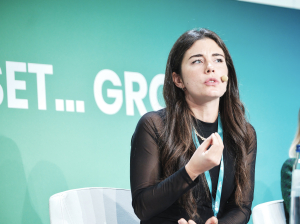
In front of more than 700 guests, during her speech our researcher and author of the report, Francesca Magnolo, highlights key concerns about the current and planned upscale of biomethane from manure, stressing that it:
🔸Creates (financial and regulatory) incentives to maintain or expand livestock production, when a drastic reduction in both production and consumption is essential to meet the EU’s environmental and public health goals and keep global warming below 1.5°
🔸Replaces a natural gas dependency with an animal feed dependency sourced from other continents, especially in the Global South, transforming animal feed into energy crops. This shift threatens the EU’s strategic autonomy and perpetuates neo-colonial forms of extractivism.
🔸Contradicts key EU policies, such as the EU Nature Restoration Law and the Deforestation-free products Regulation.
🔸Worsens power imbalances by increasing competition for land and driving up rental costs.

Naturally, not everyone in the conference hall agrees with our concerns. I can hear it bubbling more and more in the rows of seats behind me, with people starting to debate with each other.
After her presentation, Francesca Magnolo joins a constructive discussion with Connie Miller (FAO); Gaelle Marion (EU Commission), Diana Lenzi (Farming for Future Foundation), and Laurence Molke (Cycle0). As the audience also asks questions about our report, we have already achieved one thing: our concerns are being discussed at the centre of this conference!
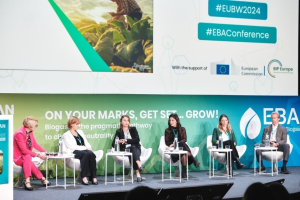
Our intervention and main policy recommendation, to end incentives to manure as biomethane feedstock, is then also displayed in the visual summary of the plenary:

And also after our participation in the morning plenary session and during the entire two-day conference, we achieve exactly that: a debate. Again and again, people approach us and congratulate Francesca Magnolo on her speech. We hear from a biogas association that acknowledges a reduction in animal farming in its country, and has already significantly reduced its projected use of manure as a feedstock. We hear from biogas producers who reflect the origin of their feedstocks, and rather chose truly sustainable smaller scale options (horse straw & poop!). But we also engage in controversial discussions with fossil companies such as Repsol who are now heavily investing in biomethane from manure to “green” their business. Here, it becomes dramatically clear that those companies simply do not (want to) have a clue what the current harmful impact of the agricultural system is – and that biomethane will not solve the damage that intensive factory farming is causing every single day.
But there is no time for frustration – the next dialogue partner is already waiting! And it again provides us extra motivation to keep exposing those harmful business models and the destructive relations between industrial meat consumption, biomethane production, and the health of our soils.

After two days, I am exhausted. But most of all, I am glad that we attempted this adventure, including many encounters and contacts that we would otherwise never have made and reached with our report & evidence.
And one thing is certain: our journey to “burst the biomethane bubble” – as part of a great coalition of inspiring organisations – continues!
📸 credits : Gleamlight / Philippe Molitor

We would love to hear from you!
Share on social media
Stay up to date with our latest work.
Leaving salmon off the holiday recipes has become unthinkable. During the festive season, supermarkets nudge us towards choosing salmon for our Christmas dinner, through advertising and special promotions like recipe suggestions and posters.
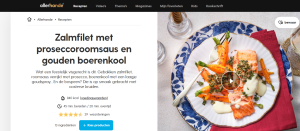
However, the pleasant atmosphere associated with this fish can be deceiving. The salmon we find in our supermarkets mostly come out of industrial farms in countries like Norway, with its industry alone producing 1.479 million tonnes of farmed salmon last year.
Foodrise has been working on the issues related to salmon farming for a while, denouncing the inefficiency, ecological harms and social injustice that come with it. We find it crucial that people are aware of these problems and able to make informed decisions when cooking for their loved ones, so here are 5 insights you can bring to the table should people wonder why you opted out of salmon for Christmas this time around:
We’ve made a short infographic that’s easy to share:

For our other blogs and research reports, please browse our website.
We would love to hear from you!
Share on social media
Stay up to date with our latest work.
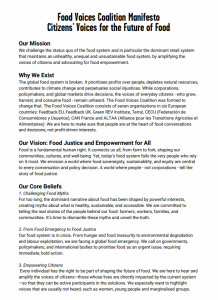
As part of the Food Voices Coalition, we have sent a letter accompanied by our manifesto to Christophe Hansen, the European Commissioner for Agriculture and Food. The coalition includes seven organisations from six European countries: Foodrise UK, Green REV Institute, Terra!, CECU (Federación de Consumidores y Usuarios), CAN France, ALTAA (Alliance pour les Transitions Agricoles et Alimentaires), and Foodrise EU. Together, we strive to fix a broken food system wherein corporations dominate decisions, silencing the voices of those who grow, harvest, and consume food.
In our manifesto we call on commissioner Hansen to join us in transforming retail practices that maintain an unhealthy, unequal and unsustainable food system. Additionally we urge him to work on a progressive food system to ensure that food is produced, distributed and consumed in ways that respect the planet, uphold human rights and animal welfare, empower communities and support equitable economics.
Our ask is clear: let’s work together to create a food system that benefits everyone. We have invited Commissioner Hansen to meet with us and explore how we can collaborate to bring these ideas to life!

Read the letter to Commissioner Hansen here
With the new EU Commission in office, this is also an exciting time for the Food Policy Coalition (FPC), a diverse group of organisations representing farmers, consumers, nature, health, and animals. With Foodrise EU being an active member, we are proud to announce two letters that the FPC has published this week:
We would love to hear from you!
Share on social media
Stay up to date with our latest work.
On 19 November 2024, the fourth Plant the Future dinner took place, organised by the Transition Coalition Food. The afternoon programme brought together around 230 people from a wide range of sectors: entrepreneurs from the entire chain, scientists, NGOs, and politicians. The theme was ‘from ideal to business impact’. Despite the great diversity of contributions by speakers, including from meat processing companies, there was no doubt among those present about the need to reduce the share of animal protein in our diet and to drastically increase the share of plant-based protein.
Foodrise EU was one of the many organisations and companies that hosted a round table. At our table were Elly Hemmelder (supermarket Plus) and Eline van Muilwijk (Quista), Bram van Helvoirt (scientist), Brenda Poot (Municipality of The Hague), Liane Lankreijer (Ons Eten, a local food alternatives network in The Hague), and Renate Stuger (founder of the petition for a neighborhood supermarket in Moerwijk). Foodrise EU specifically invited them to support the initiative from Moerwijk for a supermarket with economic, ecological, and social functions for the neighborhood and to further explore the concept of a democratic supermarket. During the imaginative and tasty plant-based dinner, we had inspiring conversations about giving voices to people in the supply of produce and value creation of supermarkets and what would be needed to make this happen. Time flew by and at the end we concluded that we would like to set up a business case with residents and entrepreneurs for a social and healthy supermarket, in which of course the share of plant-based proteins is at least 60%, but also the supply meets at least 60% of the Wheel of Five with mainly fresh food and short chains. We would like to thank our guests for their committed and inspiring contributions to the discussion!

During the dinner, Frank Mechielsen, director of Foodrise EU, offered a summary of the report “Trading away the Future? How the EU’s agri-trade policy is at odds with sustainability goals” to MPs from five political parties. The report uses case studies in soy, rapeseed, and beef to show that EU trade policy does not contribute to a sustainable transition of our food system, but rather increases inequality and climate change, health problems and food insecurity.

Key-note speakers were Rasmus Prehn, former Danish Minister of Agriculture, and Rune-Christoffer Dragsdahl, President of the Vegetarian Association in Denmark. They presented the progressive Danish Plan of Action to enable the plant-based transition in agriculture. Their main message was to work together, even with parties with whom you usually do not sit around the table and look for the common ground that connects us all, in this case food. In the process, all interests are carefully considered, but it is inevitable that concessions will also have to be made. Above all, look for the possibilities for all parties. They referred to the Netherlands, where the agriculture sector has many similarities with the situation in Denmark, to develop its own Plan of Action to accelerate the food transition and to collaborate with the Danes to produce such a plan at the European level as well.


We would love to hear from you!
Share on social media
Stay up to date with our latest work.
Following our research and campaigning highlighting the supply of fish oil sourced from FAO 34 — the Major Fishing Area located off the coast of Northwest Africa — to the European feed industry, Foodrise is issuing this statement in response to the industry’s response, including:
We are pleased that the industry has responded to the overwhelming evidence on the damaging impact of sourcing from this region.
We remain extremely concerned about the ‘food-feed competition’ which is being driven by the global aquaculture industry in regions around the world as high-impact activities such as salmon and seabass farming continue to expand to serve high-income consumers in Europe, North America and Asia.
We therefore reiterate our call to companies throughout the supply chain (feed ingredient and compound feed producers, farmed salmon companies, retailers and food service companies) to provide full transparency on their sourcing practices and to comply with the following set of demands:
We would love to hear from you!
Share on social media
Stay up to date with our latest work.
Our new report is out!
There is no better time to rethink the EU’s current agri-trade policy. Recent U.S. election results have revealed the sudden vulnerability in the European Union’s global position. With Donald Trump threatening new tariffs and trade restrictions on Europe, the risks of the EU relying on third countries for its plant protein supply have become painfully clear. At the same time, the controversy surrounding the EU-Mercosur trade deal has laid bare the stark consequences of current trade agreements: negative impacts on farmers’ livelihoods due to unfair competition and environmental harm. This deal alone could trigger between 620,000 and 1.35 million hectares of deforestation over just five years, driven by expanded beef production in the Mercosur region.
As one of the largest global markets and one of the world’s most outward-oriented economies, the EU plays a key role in influencing global food trade. However, our new report ‘Trading Away the Future? How the EU’s agri-food policy is at odds with sustainability goals’ reveals how the EU’s current agri-trade policy is undermining global and EU sustainability goals in five key areas:
We call for concrete policy actions, including setting more ambitious international standards, adopting import requirements in EU law aligned with sustainability goals that benefit EU farmers, promoting a shift towards protein autonomy, and strategically implementing ‘Mirror Measures.’ The latter is further explored in the coalition report “Double Standards on Our Plates: Using Mirror Measures to Mitigate the Impacts of EU Trade Policy for a Sustainable Food System.”
The time to rethink trade is now!
We would love to hear from you!
Share on social media
Stay up to date with our latest work.
Op 19 november vond het vierde Plant the Future diner plaats, georganiseerd door de Transitie Coalitie Voedsel. Het middagprogramma bracht ruim 230 mensen van uiteenlopende sectoren bijeen: ondernemers uit de gehele keten, wetenschappers, NGOs en politici. Het thema was ‘van ideaal naar business impact’. Ondanks de grote diversiteit in bijdragen van sprekers, inclusief van vleesverwerkende bedrijven, was er onder de aanwezigen geen twijfel over de noodzaak om het aandeel van dierlijke eiwitten in ons dieet te reduceren en het aandeel plantaardige eiwitten drastisch te vermeerderen.
Feedback EU was een van de vele organisaties en bedrijven die een ronde tafel organiseerde. Aan onze tafel zaten Renate Stuger (initiatiefnemer buurtsuper), Elly Hemmelder (Plus) en Eline van Muilwijk (Quista), Bram van Helvoirt (wetenschapper), Brenda Poot (Gemeente Den Haag) en Liane Lankreijer (Ons Eten, Haags netwerk van lokale voedsel alternatieven). Feedback EU nodigde juist hen uit aan tafel om het initiatief te ondersteunen voor een buurtsupermarkt in Moerwijk met economische, ecologische en sociale functies voor de buurt en om het concept van een democratische supermarkt verder te verkennen.
Tijdens het fantasievolle en lekkere, plantaardige diner hadden we inspirerende gesprekken over zeggenschap en waardecreatie van supermarkten en wat daarvoor nodig is. De tijd vloog voorbij en aan het eind concludeerden we dat we graag een business case zouden willen opzetten met bewoners en ondernemers voor een sociale en gezonde supermarkt, om beter te begrijpen waar de knelpunten en mogelijkheden liggen. Vanuit het oogpunt van duurzaamheid zou uiteraard het aandeel plantaardige eiwitten minimaal 60% moeten zijn. Daarnaast zou het hele aanbod in de supermarkt voor minimaal 60% moeten voldoen aan de Schijf van Vijf met vooral vers voedsel en korte ketens. We danken onze tafelgenoten voor hun betrokken en inspirerende bijdragen aan de discussie!

Tijdens het diner bood Frank Mechielsen, directeur van Feedback EU, alvast een samenvatting van ons nieuwste rapport “Trading away the Future? How the EU’s agri-trade policy is at odds with sustainability goals” aan kamerleden van vijf aanwezige politieke partijen. Het rapport laat aan de hand van de handel in soja, koolzaad en rundvlees zien dat het EU handelsbeleid niet bijdraagt aan een duurzame transitie van ons voedselsysteem, maar juist de ongelijkheid en klimaatverandering, gezondheidsproblemen en voedselonzekerheid verergert.

Key-note sprekers waren Rasmus Prehn, de voormalig Deense minister van landbouw, en Rune-Christoffer Dragsdahl, voorzitter van de Vegetarische Bond in Denemarken. Zij presenteerden het vooruitstrevende Deense Plan van Aanpak om de plantaardige eiwittransitie in de landbouw mogelijk te maken. Hun belangrijkste boodschap was: werk vooral samen, ook met partijen met wie je gewoonlijk niet zo gauw om de tafel zit. Zoek naar het gemeenschappelijke dat ons allen verbindt, in dit geval voedsel. In een zorgvuldig proces worden alle belangen goed meegenomen, maar is het onvermijdelijk dat er ook concessies gedaan moeten worden. Zoek vooral naar de mogelijkheden voor alle partijen en wat zij nodig hebben om het doel te bereiken. Zij refereerden aan Nederland, waar in veel opzichten een vergelijkbare landbouw situatie is als in Denemarken, om tot een eigen Plan van Aanpak te komen om de voedseltransitie te versnellen en om met de Denen samen te werken om ook op Europees niveau tot een dergelijk plan te komen.

Iedereen moet toegang hebben tot gezond en betaalbaar voedsel
See the issueWe would love to hear from you!
Share on social media
Stay up to date with our latest work.
With the European Biogas Conference starting today, Foodrise EU’s new research shatters arguments for increasing the use of livestock manure as a feedstock for biomethane production and calls for an immediate moratorium on new and expanded factory farms in the EU.
As the EU is planning to scale up its biomethane production from yearly 4.2 billion cubic meters (bcm) to 35 bcm in 2030, industry calculations heavily count on manure which is expected to contribute one third of all raw materials to this target. Under the heading Biomethane from manure: a curse, not a cure, the latest report from the food justice organisation Foodrise EU dramatically bursts the bubble on biomethane production from livestock manure by exposing the perverse link between the current biomethane rush and the intensification of livestock production in Europe.
As new evidence shows, the push towards expanded livestock factory farms for the production of biogas and biomethane throughout Europe – heavily supported by public subsidies and accounting tricks in the Renewable Energy Directive – is in total contradiction with the requirement to drastically reduce livestock production and consumption. While the current move to more plant-based consumption pattern has also been recently affirmed by the Strategic Dialogue on the Future of EU Agriculture, it is all the more worrying that current biomethane policies sabotage such positive developments, standing against climate and public health goals.
Despite the remarkable absence of a European Commission impact assessment, increasing biomethane from manure is hailed as a win-all solution, one that reduces environmental impacts of industrial livestock and contributes to energy independence. This sounds too good to be true? Unfortunately, it is, with the current biomethane rush having major perverse environmental, economic and social implications.
As Foodrise EU’s latest report demonstrates, Europe’s blind trust in biomethane:
Francesca Magnolo, the researcher and technical expert who conducted the research said: “One of the perverse consequences of the biomethane rush is the ironic replacement of dependence on natural gas imports with dependence on animal feed, particularly from the Global South. In other words, biomethane fuels the neo-colonial exploitation of resources outside of Europe. But social justice issues are also emerging here in the EU, where local communities fear increased transports of waste as well as pollution from biomethane production. Most importantly, these concerns are currently being ignored. At the same time, competition for land and thus rental costs for farmers are rising further and further.”
Frank Mechielsen, Director of Foodrise EU highlighted: “This reports bursts the bubble on biomethane from manure and shows it for what it is: a curse, not a cure. We request an immediate moratorium on more industrial livestock and call on policy-makers to prioritise dietary changes instead. What we need now are coordinated EU energy and food policies for a systemic and just change in our food systems. We cannot afford to repeat the painful mistakes of the last harmful biogas boom.”

We would love to hear from you!
Share on social media
Stay up to date with our latest work.
In Senegal, the artisanal fishing community is making sure that their voices are heard. Decades of negligent fisheries management, overfishing and the arrival of fishmeal and fish oil factories have led to a dramatic reduction in fish populations along the coast of West Africa. As a consequence, fishermen find it increasingly hard to secure their daily catch. This in turn creates a ripple effect along the value chain: fish processing suffers from an increasingly scarce and expensive raw material. The price of a crate of sardines, sardinella, mackerel for instance have risen ten-fold over the last few years, making it impossible for artisanal processors to compete.
By tradition, fish processing is a woman’s profession in West Africa. On our recent visit to Cayar, a fishing town harbouring one of the largest fishing fleets in Senegal, we spoke to the local GIE (economic interest group) of women processors and their outlook remains grim. The group’s members – all independent processors – have been in steady decline from over 300 to around 70 with women leaving as they cannot make ends meet through fish processing anymore. Therefore, lethargy has fallen over the processing sites. And it isn’t just the factories that threaten their livelihoods – climate change and new offshore oil and gas exploration in Senegal make the group worry about further harmful effects on the coastal and marine biodiversity and the capacity of fish populations to recover.
It’s been long since the women were able to pay for the fish they smoke, dry, salt and ferment out of their own purses. They tell us that the only reason they are still in business are foreign companies that buy their product up-front, prefinancing the purchase of the fish they process. Nowadays, most of the fish they use comes deep-frozen from the port of Dakar. Meanwhile, the fish landed on the beach just next to the processing site remains absurdly inaccessible.

The women are not alone in their fight, however. Several coalitions are active in Senegal, advocating for sustainable fisheries and the fair treatment of artisanal fishing community. The Network of Women in Artisanal Fisheries (REFEPAS) Interprofessional Council of Artisanal Fisheries (CONIPAS), the National Coalition for Sustainable Fisheries (CONAPED), the Coalition Against Fishmeal and Fish Oil Factories have all been putting pressure on the previous and current government. Their goal is to put a stop to allowing further factories to be built on the Senegalese coast and to close the ones in operation. Additionally, they want to make the fisheries sector more transparent, enforce sustainable fishing practices, and prevent foreign fishing fleets from pillaging populations of fish essential to the nutrition and livelihoods across the region. Further desperate calls for action revolve around preventing the persistent tragedy of clandestine migration: among those attempting to cross the Atlantic to reach Europe via the Canary Islands, many come from families dependant on fisheries and who have run out of options. More than 22,000 people have made it to the Canaries this way, more than double than last year.
When confronted with the devastation caused by the global seafood economy, industrial fish farming and the feed companies that rely on the fishmeal and oil sourced from places like West Africa, it is hard to believe in the many statements of sustainability and efficiency that fish feed and farmed fish producers often like to repeat. Madame Ndao, president of the women processors’ GIE in Cayar, cannot understand why ‘these companies have to come to West Africa to steal the fish that her people depend on. They should be taking the fish from their own waters instead of pillaging elsewhere.’
Foodrise continues to work on this issue, hoping to support and amplify the voices like Madame Ndao’s. Our research has and will continue to illustrate how food systems in Europe can have devastating effects in other parts of the world. And we are not alone. The UN special rapporteur Micheal Fakhri, having received a Feedback-led joint letter, made sure to address the issue in the Human Rights Council, stating that: ‘Many farmed fish are carnivorous species that require feed products harvested from wild fish stock, thereby creating another source of pressure on wild fish stocks and disrupting ecosystems. Moreover, global feed companies are exacerbating food insecurity in some communities. For example, over half a million tons of pelagic fish that could feed over 33 million people in the region are instead extracted from the ocean along the coast of West Africa and converted to fishmeal and fish oil, primarily in order to feed farmed fish and livestock, mostly in Asia and Europe.’ We will continue to work with allies in the EU to make sure this issue is not forgotten in policy making and make sure to denounce the companies that profit from this harmful system.

We would love to hear from you!
Share on social media
Stay up to date with our latest work.
Donderdagavond 26 september liep de publiekstribune in de raadszaal van de gemeente Den Haag, tot verrassing van de raadsleden, langzaam vol. Renate Stüger arriveerde samen met twaalf buurtgenoten om in te spreken en toelichting te geven waarom de behoefte voor een buurtsupermarkt in Moerwijk groot is. De petitie van de bewoners met de vraag voor een gezonde en betaalbare supermarkt in de omgeving Jan Luykenlaan stond op de agenda van de Commissievergadering Bestuur.
“Wij vragen u om met ons te praten, niet over ons. Samen kunnen we het verschil maken. Een supermarkt in de buurt is geen symbolisch gebaar, het is een noodzakelijke stap naar een gezondere, socialere en hechtere gemeenschap,” zegt Renate in haar sterke speech gericht aan de raadsleden.


Feedback EU directeur, Frank Mechielsen, was aanwezig om het rapport ‘Een democratische supermarkt in Moerwijk’ toe te lichten, ter ondersteuning van het argument van de buurt. Hij had op basis daarvan twee directe aanbevelingen voor de gemeente Den Haag:
“Werk samen, informeer en voorkom betutteling: De buurtbewoners zijn ervaringsdeskundigen over de impact van het ongezonde voedselaanbod, maar zij worden onvoldoende op de hoogte gesteld van de ontwikkelingen in hun buurt.
Ondersteun het opzetten van een lokale supermarkt. Betaalbaarheid staat voorop: er is een sterke behoefte om voor weinig geld zelf gezonde maaltijden te kunnen koken.”
Naar aanleiding van de speech, kwamen verschillende vragen vanuit de zaal, met name rondom praktische zaken zoals voorbeelden van dergelijke initiatieven en economische verdienmodellen. Renate en Frank maakten samen duidelijk dat er met ondernemers gesproken is die geïnteresseerd zijn, maar ook vooral dat een supermarkt niet slechts een verdienmodel is en juist een belangrijke maatschappelijke rol kan spelen.
Het inspreken werd afgesloten door Liane Lankreijer namens Ons Eten Den Haag: “Het is niet te verkroppen dat een deel van de bewoners in Den Haag 15 jaar eerder ziek worden en 7 jaar eerder overlijden dan bewoners uit andere wijken. Dat accepteer ik niet!”
Hierna volgde direct het debat, dat geopend werd door Ralf Sluijs, raadslid namens de partij Hart voor Den Haag. Hij geeft aan “pal achter de bewoners van Moerwijk te staan”. Vanuit Partij Denk volgde meteen een tegenreactie met de vraag of het initiatief voor een supermarkt vanuit de gemeente moet komen en niet vanuit een bedrijf zelf. Sluijs antwoordt hierop dat de gemeente wel degelijk betrokken kan zijn in gesprekken met pandeigenaren en woningcorporaties om geschikte ruimte te vinden en het initiatief hiermee een duwtje in de rug te geven.
Hera Butt, namens GroenLinks, zegt zich te kunnen vinden in het idee van de insprekers dat de overheid een rol kan spelen in het faciliteren van randvoorwaarden voor een gezond leven. Wel wijst zij Sluijs erop dat hij met name pleit voor een prijsvechter, terwijl de bewoners juist een duidelijke oproep doen voor betaalbaar én gezond voedsel.
Namens wethouder Martijn Balster (Volkshuisvesting, Wijken en Welzijn) voerde wethouder Nur Icar (MKB, werk en participatie) het woord. “Ik heb als mens ontzettend veel bewondering hoe de buurtbewoners zich blijven inzetten voor het verbeteren van hun eigen leefomgeving en kan dit alleen maar aanmoedigen.” Hij gaf aan dat momenteel de transitiemanager druk bezig is met de mogelijkheden te bekijken hoe panden eventueel samengevoegd kunnen worden om ruimte te maken voor een supermarkt.
Daarnaast wordt er door wethouder Balster gewerkt aan een toekomstvisie voor de buurt waar gezondheid in wordt meegenomen. Deze zou voor het einde van het jaar klaar zijn. Sluijs staat erop dat de supermarkt hier duidelijk in blijft staan en de visie niet te abstract gemaakt wordt. Leonie Gerritsen, namens de Partij voor de Dieren, zet nog even wat extra druk op de wethouder om contactgegevens uit te wisselen met de buurtbewoners. Er is immers al gesproken met ondernemers die het initiatief eventueel willen oppakken.
Concrete toezeggingen worden niet gedaan, een foto met de wethouder is waar de buurtbewoners het voor nu mee moeten doen. Maar hun stemmen zijn gehoord en vanuit verschillende politieke partijen is support gebleken. De volgende stap is nu om het onderzoeksrapport aan de wethouder te overhandigen en in gesprek te blijven. Wij geloven dat de gemeente wel degelijk een belangrijke rol kan spelen in het realiseren van de gezonde en betaalbare Moerwijkse buurtsuper en dat het tijd is om die verantwoordelijkheid op te pakken.

Iedereen moet toegang hebben tot gezond en betaalbaar voedsel
See the issueWe would love to hear from you!
Share on social media
Stay up to date with our latest work.
On 4 September, Foodrise EU, in collaboration with Buurtkamer de Luyk, organised a meeting as part of our international project Our Food, Our Choice. The reason for this was a petition that active residents in the vicinity of the Jan Luykenlaan, situated in a deprived area of The Hague, presented to the municipality at the beginning of this year with the request for a supermarket. However, residents are asking for more than just a place to buy their groceries. They want a neighbourhood supermarket with a range of products that match the multicultural character of the neighbourhood. There must be a wide supply of fresh, healthy, and affordable food. It must be a place that contributes socially and economically to the well-being of its residents.
This prompted Foodrise EU to commission a study into what these residents consider to be healthy and fair food and what the factors are to make the supermarket a lever for improving the neighbourhood.
In the first part of the afternoon, Guusje Weeber presented her findings, and the gathered residents reacted immediately and unequivocally. Contrary to the perception that people in deprived neighborhoods have no interest in food and only go for the cheapest and fast food, there was a climate of great awareness, and even passion about the importance of healthy food. Even unsprayed food was questioned, because our groundwater, ditch water, air and soil are so polluted that it is unavoidable that it gets into and on the food.
“We think it’s healthy, fresh fruit and vegetables, but maybe it actually makes us sick, that sprayed rubbish causes all kinds of allergies. We will take our responsibility if we can afford it. But the government must do this too, they don’t see the misery they are causing by their bad policies!”
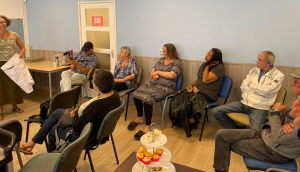
After a short break, Liane Lankreijer of the organization Ons Eten from The Hague introduced the session “Design your ideal supermarket”. In one group, they talked about what can be found in the ideal supermarket and what is definitely not (plastic packaging). The other group focused on what the residents themselves can do to realize the supermarket and on the question in what way the ideal supermarket is different from a regular one.
The local supermarket will supply unsprayed, unirradiated food, fresh and locally grown fruit, and vegetables. To prevent waste, the misfitted vegetables are also for sale in the local supermarket, as well as a smaller range of products. It is not necessary to have ten types of rice on the shelves. Voting on what will be offered in the supermarket, meal prepping, discount cards, loyalty points, recipes, trips to where the food comes from and honest information, hiring young people from the neighbourhood as employees and providing breakfast at schools were mentioned as possible added value.
Residents want entrepreneurs to take responsibility. The pressure must be kept on and media attention is a means of achieving this. One local newspaper showed up. The time was too short to go deep into the topics and from the group came the request to organize such a meeting again, but this time in an evening and with civil servants present.
FeedbackEU created a video of the meeting to use at other occasions, both nationally and internationally, to stimulate the discussion on food poverty and the democratisation of supermarkets:
We would love to hear from you!
Share on social media
Stay up to date with our latest work.
Op 4 september organiseerde Feedback EU in samenwerking met Buurtkamer de Luyk in Moerwijk, Den Haag, een bijeenkomst in het kader van het internationale project ‘Ons Eten, Onze Keuze’. De aanleiding was een petitie die actieve bewoners in de omgeving van de Jan Luykenlaan begin dit jaar aan de gemeente voorlegden met het verzoek om een supermarkt. De bewoners vragen echter om meer dan alleen een plek om hun boodschappen te doen; zij willen een buurtsupermarkt met producten die passen bij het multiculturele karakter van de buurt. Er moet een ruim aanbod komen van verse, gezonde en betaalbare voedingsmiddelen. Daarnaast moet het een plek zijn die sociaal en economisch bijdraagt aan het welzijn van de bewoners.
Feedback EU zet zich in voor het verbeteren van het voedselsysteem en de petitie sluit hier goed bij aan. Om die reden vroegen wij Guusje Weeber een onderzoek uit te voeren naar wat de buurtbewoners als gezond en eerlijk voedsel beschouwen en hoe deze supermarkt als hefboom kan fungeren voor verbetering van de wijk.
Tijdens het eerste deel van de bijeenkomst presenteerde zij haar bevindingen. Buurtbewoners en omwonenden waren actief betrokken en gingen enthousiast met elkaar in discussie over de uitkomsten. In tegenstelling tot het vooroordeel dat mensen in achtergestelde wijken geen interesse zouden hebben in voedsel en alleen maar voor goedkoop fastfood kiezen, heerste er een klimaat van groot bewustzijn over het belang van gezond voedsel. Zelfs onbespoten voedsel werd ter discussie gesteld, want ons grond- en slootwater, lucht en bodem is zodanig vervuild dat het niet te vermijden is dat het in en op het voedsel komt.
“Wij denken dat het gezond is, verse groente en fruit, maar misschien worden we er juist wel ziek van, die bespoten troep veroorzaakt allerlei allergieën! Wij nemen onze verantwoordelijkheid wel als we het kunnen betalen, maar de overheid moet dit ook doen. Zij zien niet wat voor ellende ze veroorzaken door hun slechte beleid,” aldus een van de buurtbewoners.
Na een korte pauze introduceerde Liane Lankreijer van de Haagse organisatie ‘Ons Eten’ de sessie “Ontwerp je ideale supermarkt”. In een groep werd gepraat over wat er in de ideale supermarkt in de schappen ligt en wat beslist niet, zoals plastic verpakkingen. De andere groep richtte zich op wat de bewoners zelf kunnen doen om zo’n supermarkt te realiseren en op welke wijze de ideale supermarkt anders is dan een gewone.

In de buurtsuper komt onbespoten, onbestraald voedsel, verse en lokaal geteelde groenten en fruit. Om verspilling tegen te gaan mogen de buitenbeentjes groenten ook onderdeel zijn van het assortiment, evenals een kleiner aanbod van een product. Het is bijvoorbeeld niet nodig om tien soorten rijst in de schappen te hebben staan. Stemrecht over het aanbod, meal preppen, kortingspassen, spaarpunten, recepten, uitjes naar waar het voedsel vandaan komt, goede informatie, het aannemen van jongeren uit de buurt als werknemers en en het verzorgen van ontbijt op scholen, werden allemaal voorgesteld als mogelijk toegevoegde waarde. Over het algemeen hebben supermarktketens weinig bewegingsruimte om hun aanbod aan te passen aan deze wensen die vanuit de wijk komen. Een overweging kan zijn om met lokale ondernemers samen te werken.
Er is momenteel te weinig communicatie over wat er met de petitie gebeurt. De druk moet op de ketel blijven en media-aandacht is daar een middel voor. De bewoners waren nog lang niet uitgepraat. De volgende stap is dat Feedback EU samen met betrokkenen een dergelijke bijeenkomst organiseert in de avond, zodat er meer buurtbewoners en de gemeente aanwezig kunnen zijn. Dan wordt ook duidelijker in welk stadium het verzoek om een buurtsupermarkt te realiseren zich bevindt.
Feedback EU liet een video maken van de bijeenkomst om deze te gebruiken bij andere gelegenheden, ook internationaal, om de discussie over voedselarmoede en het democratiseren van supermarkten te stimuleren:
Iedereen moet toegang hebben tot gezond en betaalbaar voedsel
See the issueWe would love to hear from you!
Share on social media
Stay up to date with our latest work.
🚜 Anger, frustration, and burning wheels in front of the EU Parliament. The successful take-over of the protest & public discussion by destructive farming lobbies and right-wing parties. We all still remember these loud (and smelly) weeks of farmers’ protests in Brussels, the Netherlands, and beyond.
But as we stood in solidarity with those peaceful protestors asking for a sustainable & fair change of the current system, the next step was truly disappointing for all of us: shortly before the EU elections, environmental rules of the current agricultural policy were rolled back. And we asked ourselves: what would we be getting into in the coming five years, the new EU term?
🌊 But now the tides seem to have turned. Yesterday, the results of the “Strategic Dialogue on the future of EU Agriculture” were published. The dialogue consisted of 29 diverse (and often opposed) organisations and discussed for 8 months behind closed doors (and without leaks!). Decisions had to be made in consensus – which make the recommendations even more impactful.
So how does the dialogue propose that we get out of this mess?
Some key take-aways from the report:
1. (Finally) change the CAP & reach social justice: we need to fundamentally change the way we spend public money of the Common Agriculture Policy. That means strongly giving money to farmers for environmental services, as well as paying income support only targeted to the farmers who need it most! (p. 42)
2. Bye bye UTP’s! Farmers need to be able to make a living from the products they produce. Unfair trading practises need to be fought against. (p. 37)
3. End unsustainable trade (offs): the EU should ensure greater coherence between its trade and sustainability policies. And the process/purpose itself of negotiating trade deals on agriculture should be reviewed & changed. (p. 47)
4. Go (more) sustainable, healthy & plant-based! Recognizing the current trend of eating more plant-based products, citizens should be supported in this journey, through a review of current food labelling/marketing to children (including sugar), reforming public procurement to favour sustainability over the lowest price, and introducing tax reductions (at the national level) on more sustainable products. (p. 54)
⛔️ Unfortunately, the dialogue could not agree to clearly point out the need to reduce livestock numbers throughout Europe. Rather, the EU Commission should develop a strategy on the role of animal farming in general. More, there is also a focus on (not-defined) tech-fixes to reduce livestock emissions, and an ask for “long-term solutions” for areas which have a high concentration of livestock and environmental pollution.
5. Fight food waste! The EU should strongly fight against food insecurity and food loss & waste. For this, there should also be a focus on local food waste prevention programmes and “food waste hotspots”. Further, an EU Commission’s appointed body including all relevant Commission services should be introduced to coordinate future work on this topic. (p. 69)
6. Bioeconomy, but right? While highlighting the role that biomass will play also in the future, the risks of the bioeconomy (for example, when producing bioenergy from food or plants, as highlighted in our report on biomethane production) are underlined. Such risks also exist for countries outside the EU that supply us with biomass. The report further mentions the necessity to respect the “waste hierarchy” (so that the best use of a resource is ensured). (p. 67)
7. Work harder for gender equality and diversity: unequal access to land, childcare, financing, services, technology, and unsecure LGBTQIA+ rights stand in the way of reaching gender equality and diversity in agriculture and also rural areas! (p. 80)
⚠️ Let’s hope that all these specific recommendations will actually lead the way for the coming years – we have never been closer to making that much needed change!
So the results of the strategic dialogue are not only food for thought. Now is the time to act and implement! 🚀
We would love to hear from you!
Share on social media
Stay up to date with our latest work.
⚡ We say it like it is: these have been some crazy weeks after the EU elections. But don’t be fooled: the real work for the old and new President of the European Commission, Ursula von der Leyen, as well as the new EU Parliament to deliver a Green & Social Deal only starts now! We need courage, we need the “European Pact for the Future“!
Don’t be mislead by those claiming that it’s time to put the brakes on European environmental laws – the opposite is true, as demanded by an overwhelming majority of Europeans!

Source: Eurobarometer, 2024
You want to see what the future could & should bring? Check out & sign the Pact here.
Of course, the coming 5 years will be tough. But the whole Foodrise team will work hard to ensure that the EU..
So there is no time to waste, and we are ready to make a change with our partners in the Netherlands, in Brussels, throughout Europe, and Western Africa.
We are in this together. To have a strong say against revisionist parties; and the fossil, meat, aquaculture, and industrial agriculture lobbies, we need everyone! Sign the European Pact for the Future – drafted by the EEB and supported by Foodrise EU – now! #EUpact4future
We would love to hear from you!
Share on social media
Stay up to date with our latest work.
‘Hoe ziet een gezond en eerlijk voedselaanbod eruit in Moerwijk?’ Met die vraag ging Guusje Weeber voor Feedback EU op pad in deze Haagse wijk. Een belangrijke voorwaarde binnen dit onderzoek was dat de stemmen van de buurtbewoners centraal staan. Wat is hun definitie van gezond voedsel en wat verwachten zij van een buurtsupermarkt?
De antwoorden van de bewoners hebben geresulteerd in het rapport ‘Een democratische supermarkt in Moerwijk’ dat nu hier te lezen is. Dit nieuwe onderzoek sluit goed aan op een eerder gepubliceerd rapport door Ons Eten rondom voedselarmoede in Den Haag.
Samen met de Buurtkamer de Luyk en met medewerken van Ons Eten, organiseerde Feedback EU op 4 september een buurtevenement in Moerwijk om de onderzoeksresultaten te presenteren en gezamenlijk een ‘ideale supermarkt’ in te richten.
Dit onderzoek maakt deel uit van een project dat wordt gefinancierd door Healthy Food Healthy Planet, waarin Feedback EU samenwerkt met zes Europese organisaties in de Food Voices Coalition.
Iedereen moet toegang hebben tot gezond en betaalbaar voedsel
See the issueWe would love to hear from you!
Share on social media
Stay up to date with our latest work.