
Questions or ideas?
We would love to hear from you!
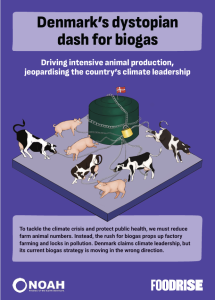
Our new research together with NOAH-Friends of the Earth Denmark, reveals a concerning development: the expansion of manure-fed biogas risks undermining Denmark’s climate ambitions. Analysis of Danish biogas and livestock data shows that, despite an overall reduction trend, municipalities with the largest biogas production capacity have also experienced the greatest increases in pig or cattle numbers over the past 15 years. The four municipalities with the highest biomethane and electricity production saw an estimated 8% increase in pig numbers, while those ranked 5–8 saw a 5% increase in cattle between 2010 and 2024.
That the hype around biomethane is real is also reflected in the European Commission’s ambition to reach 35 billion cubic metres (bcm) per year by 2030. This trend comes at a time when scientists repeatedly stress the need to reduce livestock numbers to meet climate targets. Animal agriculture accounts for an estimated 84% of EU agricultural emissions, and around 80% in Denmark. While the industry promotes biogas as a solution to methane emissions, manure represents only about one-quarter of total emissions from animal production. This narrative overlooks emissions from enteric fermentation (such as methane from ruminant digestion), which account for nearly 40%, as well as emissions from feed production, responsible for around 30%.
Despite these limitations, funding priorities tell a different story: an estimated 20 times more public funding is allocated to biogas than to the Plant-Based Food Grant under Denmark’s Plant-Based Action Plan.
The data also highlights a broader trend of intensification in livestock farming. While the number of pig farms has dropped from over 5,000 in 2010 to fewer than 2,000 in 2024 (a reduction of more than 60%), the average number of pigs per farm has more than doubled, from 2,600 to nearly 6,000.
This points to a key structural issue: scaling up biogas requires large volumes of manure. The industry aims to collect significantly more manure than the government predicts, relying on unrealistically high collection rates of around 75% of the total manure produced. Under more realistic assumptions, meeting these targets would require a substantial increase in livestock numbers—resulting in higher emissions and greater environmental pressure. The benefits of biogas expansion therefore appear to favour mostly large-scale industrial farms, with the potential to lock us into an industrial food system that affects animals, people, and the planet.
Read the full briefing here:

We would love to hear from you!
Share on social media
Stay up to date with our latest work.
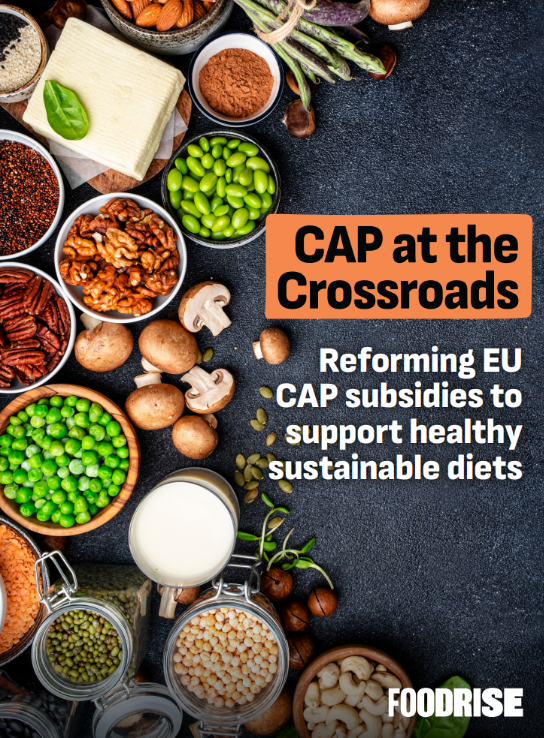
CAP at the Crossroads: Reforming EU CAP subsidies to support healthy sustainable diets, a new report from Foodrise, reveals the scale of EU common agricultural policy (CAP) subsidies directed to meat and dairy, and makes the case for reform to support healthy sustainable diets.
What’s the problem?
Animal-sourced foods are estimated to cause a staggering 81-86% of the total greenhouse gas emissions from EU food production, yet only supply an estimated 32% of calories and 64% of protein consumed in the EU.
This new report reveals that a hugely unfair share of EU CAP subsidies, worth billions of euros of EU taxpayers’ money, are directed to propping up high-emissions meat and dairy production, and to promote meat and dairy products.
The EU is at a crossroads – poised to make crucial decisions on the future of CAP for 2028–2034. Right now, it has the opportunity to support a transition to healthy sustainable diets – a huge economic opportunity with multiple benefits for EU food security, climate mitigation, nature and health. Or continue with a broken status quo.
Key findings:
Solutions
Calls have been growing for agricultural subsidies to be reformed to support a shift to healthy sustainable diets and reduced livestock numbers – including the EU’s Group of Chief Scientific Advisors, the European Court of Auditors, the World Bank, and the 2025 EAT-Lancet Commission.
The benefits this could bring are huge.
The adoption of the plant-rich Planetary Health Diet in high-income countries could reduce agricultural production emissions by an estimated 61%. It could also reduce the EU’s reliance on food imports, boost agricultural incomes, reduce EU fertiliser use by about a quarter, reduce deaths from air pollution, and prevent up to up to 10–39% of cancers in Europe.
Policy recommendations
We recommend that EU policymakers:
What the experts say
Martin Bowman, Senior Policy and Campaigns Manager at Foodrise, said:
“It’s scandalous that such an unfair share of EU subsidies, worth billions of euros of EU taxpayers’ money, are being pumped into propping up high-emissions meat and dairy production and distorting European diets. CAP is at a crossroads, and EU policymakers have a huge opportunity to switch course and take the action required to support a just transition to healthy sustainable plant-rich diets. Which we know have the potential to boost farmer incomes, reduce reliance on imports, mitigate climate change, improve Europeans’ health and restore nature.
“At the very least, plant-based foods deserve a fairer share of CAP subsidies, to compete on an equal footing. In line with the recommendations of the landmark Strategic Dialogue report, EU policymakers should urgently introduce a Plant-Based Action Plan to promote plant-based foods across the supply chain, and an Agri-food Just Transition Fund to support farmers in the transition. The shameful use of EU funds to promote meat and dairy to EU citizens – which is directly contrary to EU health and climate goals – should end immediately.”
Read the full report:
We would love to hear from you!
Share on social media
Stay up to date with our latest work.
For Foodrise, this is an important achievement in our campaigning work over the past couple of years. To have a serious chance of responding to the climate crisis and improving public health, we need to reduce animal numbers and promote plant-based alternatives. The global livestock sector is estimated to be responsible for between 12% and 19% of total human-caused climate emissions, making it one of the world’s highest-emitting sectors. The current industrial scale of meat and dairy production poses a serious threat to both planet and people.
Together with other NGOs, we’ve actively driven the protein agenda, working to steer the Netherlands towards a more plant-based future. We see enormous potential: farmers shifting to plant-based production, consumers discovering new alternatives, and policies aligning with climate goals. The advertising ban brings that future one step closer to reality and helps turning ambition into action.

We would love to hear from you!
Share on social media
Stay up to date with our latest work.
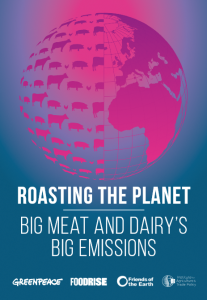
The global livestock sector is estimated to be responsible for between 12% and 19% of total greenhouse gas emissions, according to a recent study from Foodrise, Friends of the Earth, IATP and Greenpeace. The European Union houses more than a third of these industry’s top polluters. When talking about the drivers of the climate crisis, most eyes are focused on fossil fuels, transport, and individual lifestyle choices. And all the while, big corporations like Lactalis (France), Arla (Denmark), Nestlé (Switzerland), and FrieslandCampina (the Netherlands) continue business as usual, without facing any real accountability for their damaging practices.
To have any real chance of limiting global warming to the Paris Agreement’s 1.5°C target, the livestock sector needs to be taken just as seriously as the biggest oil firms. The top five meat and dairy emitters alone produce more greenhouse gas emissions than major oil companies such as Shell. There is no time left for techno-fixes that won’t hold up in court. Livestock reduction is the only credible path forward.
In 2023, the climate emissions of the 45 biggest producers were estimated to exceed the reported emissions of all EU27 countries and the UK combined. This strongly accelerates global warming, fuels extreme weather and environmental destruction, and contributes to air pollution that harms human health.
Read our latest findings here:
We would love to hear from you!
Share on social media
Stay up to date with our latest work.
Learn in less than three minutes about a new, revolutionary supermarket model. It’s not only a place to do your groceries, but also a place that brings people together and offers access to healthy, sustainable food.
The residents of Moerwijk started the initiative and built the foundation for the concept of a ‘democratic supermarket’. Together with them, Foodrise further explored what this concept would entail and how it could make a big difference for the neighbourhood.
Watch the video below in English or Dutch.

Iedereen moet toegang hebben tot gezond en betaalbaar voedsel
See the issue
We would love to hear from you!
Share on social media
Stay up to date with our latest work.
This week marks the European Biomethane Week, a moment when producers, users, investors, and legislators come together to further boost the ongoing upscaling of biomethane. And, of course, it’s also the moment for Foodrise to be a critical voice in the room.
Since we started working on this topic in 2020, we have seen it all: the potential, the room for improvement, but above all the concerning pathway that currently planned biomethane upscaling could lead us down, one where we risk locking ourselves into a dependency on large-scale animal production for both our food and our energy. This, at a time when, both from a climate and dietary perspective, we should actually be moving towards more plant-based food production.
But there is more. Together with the StopTheBiomethaneRush Coalition, we have highlighted multiple downsides of the biomethane rush: impacts on local communities, methane leaks, dependency on food waste instead of preventing it, and many others.
In other words, we simply can’t sit still during this week, and we won’t.
Today, the Methane Matters Coalition – consisting of Changing Markets, Deutsche Umwelthilfe, EEB, Zero Waste Europe and the Environmental Investigation Agency – has launched its new comprehensive report, undertaken by Profundo: “Biogas in the EU: A policy and financial analysis”, for which we have been happy to provide input on this journey as part of the study’s steering committee; and also be part of a panel at its launch event.
The goal of the research has been to provide a concrete analysis of the policy and financial environment for biogas, the potential risks associated with this, and any recommendations for how policies and financial flows can be changed to build a more sustainable and just energy transition in Europe. For this, the report also includes case studies from seven European countries – six EU member states, Denmark, Germany, Ireland, the Netherlands, Poland, and Romania, chosen to reflect a balance of geographies within the EU, and the UK.
Some key insights from the report:
Since our organisation is based in the Netherlands, we were particularly interested in taking a closer look at the current state of biomethane here. The report provides excellent insights with a dedicated Dutch case study:
As highlighted in the report, the biomethane industry in the Netherlands is still in its early stages, now spurred by the country’s new target of 2 billion cubic metres by 2030. This makes it especially important to avoid the pitfalls experienced in other EU countries and to ensure that biomethane develops within a sustainable niche.
The report therefore includes the following recommendations to Dutch policymakers:
Introduce a moratorium on biomethane from manure sourced from industrial animal farming
While the expansion of biomethane production in the Netherlands is still in its early stages, the government’s intention to significantly increase production by using large quantities of animal manure contrasts sharply with the country’s dramatic nitrogen crisis and the need to significantly and rapidly reduce livestock numbers. Dutch policy-makers must review biomethane policies and subsidies as laid out in this research, stop any incentives that could lock in industrial animal farming, and ensure that biomethane policies are co-designed and coherent with efforts to reduce the number of animals.
Maintain stringent MER-requirements for biogas production facilities and distribution channels in allocating so-called ‘’acceleration areas” under RED III
The Netherlands should maintain a so-called Project-MER (i.e. a project-based environmental impact assessment) requirement for biogas production facilities and distribution channels. While the Dutch government is in the process of identifying so-called ‘’acceleration areas’’ for the Dutch energy transition as part of its transposition of RED III into national law, regulators must ensure that environmental safeguards for biogas production facilities and distribution channels are maintained.
Respect the EU-wide nitrogen application levels for animal manure and oppose the RENURE changes to the Nitrates Directive
Contrary to recent actions, the Dutch government should oppose changes in the EU Council to increase the maximum nitrogen application level and to stop applying for any future derogations under the existing limits. The Netherlands is one of three European countries that have a derogation under the EU Nitrates Directive, allowing some farmers to apply more nitrogen from animal manure per hectare. In 2024, the EU Commission opened a public consultation on revising Annex III of the Nitrates Directive, aiming to increase the maximum nitrogen application level from 170 kg to 270 kg per hectare, provided that this nitrogen originates from ‘recovered nitrogen from manure (RENURE)’ fertilisers.
More information can be found on the Methane Matters Coalition page: https://methanematters.eu/
We would love to hear from you!
Share on social media
Stay up to date with our latest work.
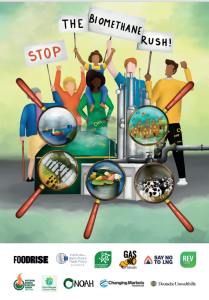
After months of hard work, it is finally here: our StopTheBiomethaneRush booklet!
This is not only a big moment for us at Foodrise after five years of working on this topic – it is especially so for our StopTheBiomethaneRush coalition.
From a small group of organisations that would informally discuss biomethane, we have evolved into a strong coalition ready to step up at a time when biomethane is heavily promoted as “the” sustainable solution – be it for the agricultural sector, industry, transport, or the energy system as a whole.
But where there are glossy brochures and European production targets being set based on industry calculations, it’s important to take a closer look. We do so with StopTheBiomethaneRush, a diverse coalition of organisations active in the fields of food sovereignty, sustainable land use, animal rights, energy systems, shipping, the heating transition, and emissions mitigation. Importantly, local communities around Europe are also represented in our coalition, giving voice to those directly affected on the ground. Together, we challenge the large-scale development of industrial biogas operations, which create risks of additional environmental pollution, climate impacts, animal cruelty, and social injustices.
Don’t get us wrong. As a coalition, we do recognise that biomethane from unavoidable organic waste streams can contribute to energy needs. But production levels must be kept within a sustainable niche.
What does that mean specifically? We explain it in our new StopTheBiomethaneRush booklet. Our analysis, based on scientific evidence and the experiences of impacted communities, identifies how policy can ensure biomethane production remains compatible with sustainable practices in the farming, food, and energy sectors, while also respecting community well-being.
With Denmark, a major producer of biomethane linked to its highly industrialised animal production system, having taken over the EU Presidency at the beginning of July, we look forward to contributing our expertise over the next six months and beyond.
Let’s get this right!
Read the booklet here:
We would love to hear from you!
Share on social media
Stay up to date with our latest work.
On 16 June 2025, a day before the start of the Healthy Food Healthy Planet Annual Forum in Serock, Poland, the Food Voices Coalition came together to reflect on where we stand and how to take our next steps. ALTAA, Cecu, Foodrise UK and Foodrise EU, Green REV Institute and Terra! engaged in discussions on how to shape the Menu of Food Voices, a document that we are preparing to share our experiences on how we contribute to food system transformation by listening to people’s voices.
 During the Annual Forum, which had power as the central theme (power over, to, with and within), we shared already some of our experiences through the ladder & snakes’ game of power. The game was designed by Lucy Antal from Foodrise UK with contributions from the other organisations. There were four groups each representing a character, in this case a young activist, consumer, corporate power and policy maker, each with their own symbol on the pawns. There were several extra features, such as certain advantages or disadvantages you have as a character related to power, or squares like “drought” that led you backwards on the board. If you had landed on one of the colored squares of the giant game board after throwing a die, a realistic scenario was presented, in which you had the choice between two options. The decision had to be taken from the perspective of the character and after consultation in the group about the scenario. It was a successful try-out with many positive reactions.
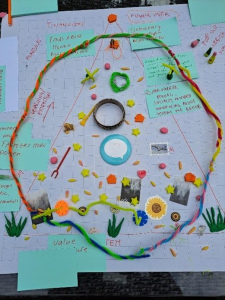 Located in a beautiful, forested area, the Annual Forum provided ample opportunities to connect with each other. The program was designed to connect with and use the wisdom of our bodies. We let our hands do the talking in depicting a European food system (both the current and the ideal system). We could immerse ourselves in the world of unusual allies and create messages to connect with them. We could also take a nap together (‘rest is resistance’) or meditate, alongside storytelling and workshop sessions to develop our skills. This way of connecting creates a completely new dynamic of interaction.
The creative approach, the environment, and the many inspiring people made it a truly powerful meeting. By approaching the huge task of transforming the unjust and harmful food system not only rationally with our brains but by using emotions and intuition and body wisdom, new insights are born and we can be more effective in having an impact. Understanding at an emotional level how power affects us and our relationships and our work opens new ways of working. Before we can change the system we have to be aware of the system within ourselves!

Iedereen moet toegang hebben tot gezond en betaalbaar voedsel
See the issueWe would love to hear from you!
Share on social media
Stay up to date with our latest work.
NICE, FRANCE. 12 June 2025 – While the European Commission is currently promoting the development of the aquaculture industry across the European Union, claiming it is “key to feeding the world”[1], new data shows otherwise. Huge swathes of the Mediterranean have been quietly taken over by industrial-scale seabass and seabream farms boosted by European Union and government funding – driving environmental destruction and depriving global communities of food and livelihoods.
This Mediterranean ‘takeover’ by seabass and seabream farms is revealed today [12th June, 2025] at the United Nations Ocean Conference in a new report Ocean Takeover from environmental charity Foodrise (formerly Feedback EU), Greek alliance Aktaia and Spain’s Associació Cultural Ecológista de Calp (ACEC).
The new research reveals the sheer scale of the ‘feed footprint’ of seabass and seabream farming with huge numbers of wild fish turned into fish oil to feed farmed seabass and seabream. The researchers found 300,000 tonnes of fish could be left in the ocean or over a quarter (28%) more people could be fed a weekly portion of 200g fish if it wasn’t used to feed farmed seabass and seabream. In practice, this means that an additional 18 million people could be fed every year if seabass and seabream farming stopped.
Seabass and seabream farming has a negative impact on global food security – contrary to what the industry consistently claims. The extraction of wild fish from countries in West Africa, including Senegal, Mauritania and Gambia to produce fish meal and fish oil (FMFO) for industrial aquaculture, is contributing to the worsening food security crisis – in 2023 food insecurity in the region hit a 10-year high.[2]
The latest data (2021) from EUMOFA underlines the scale of the problem, with 98% of European seabass eaten coming from farms while just 2% is from fisheries.
While Türkiye is the world’s biggest producer of farmed seabass and seabream (44%),[3] Greece is the biggest producer of farmed seabass and seabream in the European Union – with its industry growing 141% since the turn of the century. This growth in Greece is fuelled partly by the extraction of vast amounts of wild fish from West and Southern Africa – enough to feed nearly one million people a year, according to the new research. At the same time, serious environmental damage caused by the fish farms has already been observed, with a strong decline in Posidionia seagrass found exclusively along the coastlines of the Mediterranean Sea – a loss that is likely to be irreversible.
Despite this, the report reveals substantial support from national governments and the European Union, which collectively have channelled millions of euros into promoting the growth of intensive fish farming to the detriment of critical Mediterranean ecosystems and coastal communities, as well as the detriment of people across the globe.
For example, Under the European Maritime, Fisheries and Aquaculture Fund (EMFAF) 2021–2027, Greece will receive €91 million to support “sustainable aquaculture and processing”.[4] Between 2017 and 2022, the EU funded the €7 million PerformFISH project, claiming to boost the efficiency, profitability, and sustainability of Mediterranean fish farming, with direct backing from industry groups in countries like Greece and Spain – while in reality it fuels a destructive industry, with negative consequences for the communities living with its impacts but seeing little to no benefit.
Natasha Hurley, Campaigns Director at Foodrise, said: “It’s high time we all knew where the seabass and seabream on our plates comes from – and the huge environmental cost of each bite. Our new research clearly shows the shocking takeover of the Mediterranean by profit-hungry corporations is driving environmental destruction and global food insecurity. What’s even more galling is that this is happening courtesy of funding from national governments and the European Union.
“Industrial aquaculture is increasingly touted as a solution to ecosystem collapse and food insecurity as our oceans’ wild fish populations come increasingly under threat, but this is a deeply misleading narrative fuelled by vested corporate interests. Today’s findings powerfully demonstrate that intensive fish farming is a false solution and why we need to see an urgent end to the rapid expansion of seabass and seabream farms in the Med.”
Mor Mbengue, President of the Cayar artisanal fisheries committee (Cayar, Senegal) said: “Before, the sea made us live. We caught enough to feed our families, and the women of the village processed the fish to sell to the inhabitants of the cities, far from the Senegalese coast, thus providing 70% of their animal protein needs. Since the arrival of fishmeal factories, which target coastal pelagic species and fish for juveniles, everything has collapsed. The fish have disappeared, the air has become unbreathable, the water is polluted. Women have lost their jobs, young people no longer have a future here. Many take to the sea, no longer to fish, but to flee. The most revolting thing is that all this fish plundered here does not even feed human beings: it goes to Europe and Asia to fatten farmed fish or pigs. We sacrifice our lives to feed animals on the other side of the world. It’s an injustice that we can no longer bear.”
Fay Orfanidou, from Aktaia – The Greek Alliance for the Protection of the Marine Environment from Aquaculture, said: ”We are aghast at the pillaging of wild fish populations off the coasts of Africa, Latin America and Asia to produce feed for the fish farms which are blighting our lives here in Greece and throughout the Mediterranean.
“This is not food security. It’s theft: taking fish from the hungry to feed a polluting export industry. We are the voice of the coastal communities, and we will not be silenced. Our seas are not for sale. Our fight is for the future of Greece – and we will not give up.”
ENDS
[1] European Union, “About EU Aquaculture – European Union,” accessed April 4, 2025, https://eu-aquaculture.campaign.europa. eu/about-eu-aquaculture_en.
[2] Alexandra Heal et al., “The Hidden Cost of Your Supermarket Salmon,” The Financial Times, January 31, 2024, https://ig.ft.com/supermarket-salmon.
[3] Hellenic Aquaculture Producers Organization, “2024 Annual Report: Aquaculture in Greece,” 2024, https://fishfromgreece.com/wp-content/uploads/2024/10/HAPO_AR24_WEB_v5.pdf.
[4] European Commission, “Greece Will Receive €364 Million from the European Maritime, Fisheries and Aquaculture Fund 2021-2027,” December 1, 2022, https://oceans-and-fisheries.ec.europa.eu/news/greece-will-receive-eu364-million-european-maritime-fisheries-and-aquaculture-fund-2021-2027-2022-12-01_en.

We would love to hear from you!
Share on social media
Stay up to date with our latest work.
Our exciting move from Feedback to Foodrise has been a long time coming. It means we finally have a name that reflects who we are and what we stand for. We are a small but mighty team of audacious activists – taking often unlikely action in pursuit of exposing systemic issues within our food system right the way from farm to fork.
‘Food’ is our focus, and ‘rise’ reflects how we create change. Through bold action, community collaboration and systemic shifts. Foodrise reflects the wide scope of our world-changing work and move – almost a decade ago – from a single-issue charity focusing on the scourge of food waste to one tackling issues right across the food system.
We work at the grass roots and grass tips. Taking on the corporate control of our food system which normalises over-production and exposing its colonial legacy and need for reparations. While showing a better way is possible through our community projects in Merseyside, Sussex, Buckinghamshire, and in The Hague in the Netherlands.
We now – as Foodrise – have a name that is fit for purpose for our broad, audacious and ambitious work in the UK, EU and globally.
We held our first ever ‘Feeding the 5000’ event in London’s Trafalgar Square back in 2009. Thousands were introduced to the shocking levels of waste in our food system – while enjoying a delicious meal . A global movement was born leading to similar events all around Europe and resulting in long-lasting policy change on food waste.
Then we officially registered as a charity and became Feedback in 2013, founded by Tristram Stuart and Nikki Charalampopoulou to shine a light on food waste. Our founders’ impact was significant as they exposed the social scandal and environmental tragedy of food waste, and positioned it as an environment issue.
Following Carina Millstone’s appointment as Executive Director in 2017, and with Frank Mechielsen at the helm in the Netherlands since 2021, we have grown into so much more than a voice against food waste.
We are confronting the structural drivers of injustice in our food system — from exposing the financiers of the global livestock industry to advancing community-led alternatives across Liverpool and Knowsley. All with an unwavering commitment to equity, justice and anti-oppression.
From legal challenges and hard-hitting research to supporting movements on the ground, our work now spans the UK, Europe, and globally. Including the founding of Foodrise EU in 2022 to broaden our impact in the European Union, and strengthen involvement with EU food policy development, civil society coalitions and create alternative local food environments in the Netherlands.
But we still needed a name that reflects the breadth of our expanded, turbo-charged mission. At this critical moment — as climate breakdown accelerates, nature collapses, and millions face hunger and poor health — Foodrise captures our readiness to rise to challenge and our vision for the future that works for people and for planet.
We are a moment of crisis and opportunity. We are seeing the impact of climate change being felt – the geopolitical implications on food security, records numbers of children living in poverty. The worst harvest in 40 years. The wettest 18 months on record followed by the hottest ever spring. The decline of nature.
Our shift to Foodrise is a pivotal moment — one that positions us to amplify our voice, grow our impact, and build momentum in the fight for a just food system. We want more and more people to know who we are and what we do.
We’re rising up with fresh energy and a deeper commitment to transform the food system. For climate, nature and justice. Thank you for rising with us.
Frank Mechielsen, Director at Foodrise in the EU
Carina Millstone, Executive Director at Foodrise in the UK

We would love to hear from you!
Share on social media
Stay up to date with our latest work.
One year ago, seven organisations in six different countries started to collaborate on a project to amplify the voices of citizens and advocate for better food environments and challenging supermarkets to provide and make accessible healthy, just, sustainable, and affordable food for all.
Together with ALTAA and CAN-F from France, CECU from Spain, Foodrise in the UK, Green REV Institute in Poland and Terra! from Italy, Foodrise EU have formed the Food Voices Coalition. The Healthy Food Healthy Planet consortium funds the project and stands out by placing great importance on the learning aspect within a project. This approach allowed us space to test and experiment with new approaches, to reflect on our experiences and to question our own assumptions.
A year is a short time to harvest results, especially if you also must learn how to cooperate as a coalition, with different types of non-governmental organisations working at different levels with different mandates and languages. Therefore, we proudly present our many results so far.
Mobilise food voices: working with communities
The activities with communities have been very diverse, ranging from research to high involvement in Food Policy Councils, from starting a lawsuit at the European Court of Justice to protect communities, to engaging in dialogues with marginalised groups (deprived areas, youth, housewives) and from sub granting community gardens to advocacy to maintain public local markets.
In Spain, CECU (Confederation of Consumers and Users ) is one of the nine plaintiffs, along with Friends of the Earth, ClientEarth and others, taking the Galician authorities to the European Court of Justice to stop the decades-long pollution from intensive livestock farming in the As Conchas reservoir that makes the life in the communities “unviable”. CECU has co-organised the second Annual Meeting of “Nos Plantamos”, a food sovereignty movement to build a collective agenda that promotes and supports agroecological models of agriculture, livestock and consumption. Furthermore, CECU has collaborated with the “NoWasteLawCollective” to jointly advocate for improvements in the legislative process for the new Spanish law on food waste and has worked with organisations from various sectors to influence the National Food Strategy (by developing proposals, public positions and demands to policy makers.
Terra! in Italy plays a key role in the Rome Food Policy Council (FPC). They have been instrumental in bringing this concept to life and their efforts have been recognised as their director has been elected as the first president of the FPC. They have prepared the Council’s tables in particular on food poverty and on food waste in consultation with civil society organisations, farmers’ organisations, representatives of actors in the food chain and policy makers. The FPC has submitted a proposal for the introduction of a “Green Menu” and this is now legally approved by the Metropolitan Government. As a result, all public schools in the territory of Rome, from kindergarten to high school, will have a plant-based menu one day in the month. Terra! has worked on a methodological approach for an innovative study with a community in Rome to undertake action-research aiming to change the perspective and narrative on food poverty.
The Green REV Institute in Poland has worked with scouts, and schools to organise educational workshops and with rural housewives’ clubs to establish community gardens by providing small grants. They have organised Safe Food Days in five cities, including debates with residents, film screenings and local producer markets.
In the United Kingdom, Foodrise UK has been working at the micro level with local communities in the second poorest area of the UK, encouraging them to use their voices and to contribute to reports on food surplus redistribution.
Foodrise EU conducted research in a deprived area of The Hague in the Netherlands to investigate how the residents in a food swamp would like to improve their food environment. This led to the concept of democratic supermarkets, a place with a positive social, economic and environmental impact on the neighbourhood. A meeting with the residents was organised to provide feedback on the findings and to elaborate further on the concept of a democratic supermarket. A video was made and shared through our website and on YouTube to stimulate discussion. As a result, a researcher from the University of Twente approached us to collaborate in a study.
ALTAA ( Alliance pour les Transitions Agricoles et Alimentaires) in France developed a supermarket escape game for children to learn about healthy food (see video).
CAN-F (Climate Action Network France) set up two series of five workshops that have been implemented by Secours Catholique and Act Against Hunger France in 2 different locations, about the problems and expectations that people facing food poverty deal with when shopping in supermarkets. This work fed the co-construction of policy recommendations by CAN France and its partners (including Secours Catholique, Act Against Hunger France, consumer groups and health associations) and contributed to CAN-F’s report on supermarkets. A short movie (17 minutes) was finally produced and will be released in May.

Strengthening sub-national coalitions, influencing local and regional policy makers.
CECU has contributed to a joint manifesto forwarded to the local and regional governments in the Valencia area to reclaim the public function of local markets that are under threat of disappearing.
Green REV undertook several advocacy efforts with the office of the Prime Minister and had a meeting at the Polish Ministry of Climate and Environment. They forwarded three demands regarding the right to consumer information, especially the labelling on climate impact. Green REV involved local communities, young people and local councillors in the Food Safety Days.
Two Local Students Conventions for Sustainable Food (in Paris and in Lyon), initiated by the Students’ network for a sustainable and cohesive society, has included a “supermarket” section. The project started in November 2024, gathered 60 students from both cities and included four webinars, three days of training, two weekends of activities and training, and (forthcoming) one day of feedback on policy recommendations for local governments. Concerning mass retail specifically, the students have realised store visits and data collection in supermarkets, took part into debate and co-construction of recommendations, and produced report quotes and short videos for joint campaigning with CAN France in May 2025.
ALTAA has published an online toolbox with 35 action levers and over 200 good practice initiatives to help sub-national actors in their actions to change food environments towards healthier and more plant-based diets. This toolbox includes action on retail which will be enriched by the conclusions and learnings of the Food Voices Coalition project.
Foodrise UK has been working on the Liverpool Food Plan and contributed to the Northern Food and Farming group on procurement.
Foodrise EU actively participated in the Plant the Future event with organising a round table uniting different actors (resident, municipality, supermarket owner, scientist, local food network, short chain supplier) to discuss the experiences of food voices in Moerwijk. Foodrise EU also supported the presence of residents in the city council committee meeting debating a supermarket in this area. The establishment of a supermarket in that deprived area is now included in the food strategy of The Hague.
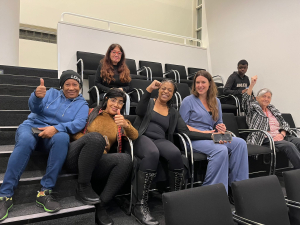
Influencing retailers and alternative models
CECU contributed to the creation of a union around consumer rights with agricultural organizations, environmental organisations, social and solidarity economy and ethical banking actors with the main objective to articulate local food systems that are an alternative to supermarkets and that meet the needs of the most vulnerable producers and consumers.
Green REV conducted a study entitled “Why do young people choose unhealthy food?” and will publish a report in August 2025. They approached the Prime Minister with the request to regulate the promotion of unhealthy food in supermarkets and prepared materials for members of parliament regarding facilitations for small farmers and direct sales.
Within the FVC project, CAN France has been able to develop its second ‘Meat and Climate scorecard’ while conducting a study firstly on the barriers and levers to the just and ecological food transition in the mass retail sector, and secondly on the best practices of retailers in Europe in this transition. CAN France co-constructed its policy recommendations with consumer groups, health associations, students and charity organisations. These different strands of work will be gathered in a global report to be published in May.
ALTAA is a network of 90 allies and a wider circle of 600 public and private organisations. It has embarked on a collective action program to explore shifts in the offer and practices of supermarkets at sub-national level, to accelerate change in food environments and ensure that everyone has access to healthy, sustainable and affordable food. It conducted research to framing the issue with experts and retailers at the national and local level. Four pilot projects have started to experiment with working with retailers at the local level. An audit tool is being developed with the aim of stopping organic products being dereferenced, and to create events/tastings of organic products in supermarkets (Interbio Occitanie). Collective workshops involving supermarkets to gain a better understanding of the issues, obstacles and interests of the various stakeholders and to facilitate collective mobilisation in favour of the transition in the region (Grenobles Alpes Métropole). The Conseil départemental de la Seine-Saint-Denis has set up a cash-first monetary transfer system with a bonus for sustainable products that can be used in supermarket shops, and to provide support for users. The fourth pilot (Club Drômois de l’Alimentation) is set up to offer technical support to increase sales of local and sustainable products in supermarkets, to organise events to create sustainable relationships between distributors and producers/processors, and to facilitate networking.
Foodrise UK conducted an ethnographic study while running the Queen of Greens, a mobile greengrocer service. This study is awaiting publication but it demonstrates that this service is an alternative retail model. The model has been included in a UK Research and Innovation grant for a study in collaboration with the University of Liverpool that seeks to address dietary inequalities for people living in social housing.
Foodrise EU joint a campaign on retailers with the Transition Coalition Food and other allies. We participate in a working group to promote plant-based protein and a joint website will be launched soon. We also participate in the VoedselAnders network, a national network that brings together alternative food initiatives.

The way forward
We are still busy implementing our activities and at the same time already in the middle of a process to capture our learnings, to analyse and to communicate these in a document that we call the “Menu of Food Voices”. We will share some preliminary findings during the Annual Forum of HFHP in June 2025, in Poland. Finally, we also plan for a public campaign in the summer months.
We would love to hear from you!
Share on social media
Stay up to date with our latest work.
We’re well aware that farmed animals are all too often raised in confinement. But is it possible to imagine that the entire food system – crops, livestock, farmers and all – is itself confined and caged? Locked-in and constrained. Not able to deliver what it was meant to and restricted in what it can achieve.
This might seem an unusual way to think about food. But it’s how Foodrise has been analysing the multiple connected problems in our food system – and it’s proving to be transformative in how we analyse problems and advocate for solutions.
We’ve been exploring how the system is unfairly weighted towards the industrialised model of food production. Our conclusion is that we are ‘locked-in’ to a system that is harmful for people and planet.
In our latest webinar on the Meat-Soil-Energy Nexus – outlining the connections between industrialised livestock production, the man-made fertiliser industry, and biomethane – we showcase this emergent thinking.
Industrialised livestock production
Foodrise demonstrates that big corporations and governments in the global north are shaping food and energy systems around industrialised livestock production. For example, an estimated 80% of the EU Common Agricultural Policy money supports emission intensive animal agricultural products.[1]
Fertiliser
This industrialised system also relies on damaging inputs via fossil fertiliser and the overuse of synthetic fertiliser is used to grow feed for animals not people. 80% of the nitrogen harvest in European crops provides feeds to support livestock.[2]
Biomethane
And these two industries are actively promoting the rush for biomethane as a response to the energy crisis. Biomethane from manure is one of the drivers growing industrial livestock production. Herd sizes at dairy facilities with digesters that produce biomethane grew 24 times the growth rate for overall dairy herd sizes.[3]
These industries are intertwined. They feed off each other, they are connected, it is a nexus. For example, industrial meat and dairy produces manure, manure is promoted as an energy source (biomethane), which can also be used to produce fertiliser, which is applied to soils, which in turn are used to feed livestock. According to industry voices this is a win-win – but it is in fact a vicious circle that locks us into a food system of continued and multiple harms.
And this system runs counter to peer-reviewed climate science that clearly outlines the adverse impacts of intensive livestock production on planetary boundaries, the negative impact of overuse of fertiliser on our soils, rivers and public health, and the indisputable evidence that we should be moving towards renewable sources of energy such as wind and solar, not incentivising the production of biomethane way beyond its ‘sustainable niche’.
It also reflects a disastrous example of policy incoherence, with current UK and EU policies on food production and consumption, climate targets, public health and animal welfare working against one another.
But by shining a spotlight on how these industries are connected, we can unlock the positive levers for change.
How can this be done? Through redirecting financial flows of private and public finance away from industrialised livestock towards lower meat and dairy production and consumption, reshaping public policy towards a just rural transition that allows land use and diet change, and dismantling corporate power through targeted regulation and divestment in the sector. Our webinar set out some positive examples of these changes.
If we break this cycle, we can feed the estimated world population of 10 billion in 2050. But we do need to change what we grow and what we eat.
By understanding how the system operates as a whole, we can ‘unlock’ the cage and deliver a food system that is fit for people and planet.
References:
[1] Kortleve, A., Mogollon., J., Harwatt, H., Behrens, P. (2024) ‘Over 80% of the European Union’s Common Agricultural Policy supports emissions intensive animal products’ Nature Food 5 (4), 288-292
[2] Sutton, M., Howard, M., Erisman J, et al. (2011), The European Nitrogen Assessment: Sources, Effects and Policy Perspectives. Cambridge University Press
[3] Waterman, C. & Armus, M. (2024). Biogas or Bull****? The Deceptive Promise of Manure Biogas as a Methane Solution. Friends of the Earth
We would love to hear from you!
Share on social media
Stay up to date with our latest work.
The Hague, 7 April 2025
Frank Mechielsen will step down as Director of Foodrise in the EU in the summer of 2025 to make way for new leadership during a year of significant repositioning for the organisation. He will be succeeded by a new director, with the recruitment process starting today.
Mechielsen said:
“The past few years have been an incredible rollercoaster, working with an ambitious team to put Foodrise on the European map. I’m proud of the impact we’ve made through campaigns on meat and farmed fish, biomethane, and local food policy — all aimed at challenging and changing policies in both Brussels and The Hague. In collaboration with Foodrise in the UK and partners across the Netherlands and Europe, we’ve shown that the food transition can only be truly sustainable and just if all voices are heard. With changing times globally and an important organisational repositioning ahead, this feels like the right moment to pass the baton.”
Gemma Verhoeven, Chair of Foodrise EU, added:
“On behalf of the entire board, we are deeply grateful to Frank for his tireless dedication, professionalism, creativity, and passion in building Foodrise EU. We are impressed by the achievements of Frank and the team. The foundations have been laid, and we look forward to entering a new phase with a new director.”
We would love to hear from you!
Share on social media
Stay up to date with our latest work.
Yesterday, the European Commission launched a campaign to promote the consumption of EU aquaculture products. However, our research and campaigns have shown the devastating consequences of the aquaculture sector, particularly the farmed salmon industry.
That is why, together with CFFA-CAPE, Compassion in World Farming, Eurogroup for Animals, Seas at Risk, and the European Institute for Animal Law and Policy, we signed a joint statement urging the Commission to promote only those practices that meet the highest standards of animal welfare, environmental protection, and social sustainability.

We would love to hear from you!
Share on social media
Stay up to date with our latest work.
This week, our EU Advocacy Officer Maximilian Herzog was invited to speak at the conference ‘People first: Centring the Just Transition in EU Policy’, hosted in the European Parliament by the Left group.
In his intervention, he made clear that without a radical change of our food systems, there simply won’t be a successful Green Deal and a truly just transition! 1/3 of all global emissions are attributed to the way that we produce and consume food. Food shapes our culture, our communities, our health, our happiness. And at the same time the reality is that our food system produces injustices at European, local, as well as global level.
That’s why we need to empower people and especially women, young people, and marginalized groups; and also put animal rights at the heart of the transition:
Be it at food banks all over Europe as people simply cannot afford healthy meals and to go into the supermarket
Be it at the coast of Western Africa and Senegal, where we work with partners and communities that see their basic nutrition, small fish, being depleted for fish meal and fish oil production – which then is used as feed for salmon production in the Global North.
The question must always be: are we only treating the symptoms of injustice, while promoting false solutions? Or are we truly changing the food system, ultimately strengthening the trust in European institutions?
Thank you to Anja Hazekamp, Per Clausen, and Lynn Boylan as well as the staff of the Left group (especially Ciara Barry) who made this conference possible.
Thank you also to our co-panelists Nienke Blauw (a Dutch activist campaigning against PFAS pollution), Dr Aparajita Banerjee (UCD Just Transition Centre) and Corinna Ziergold (IndustriAll) for your important and inspiring work at European, national, and local level!
Watch the intervention below or find the full recording of the session here.
We would love to hear from you!
Share on social media
Stay up to date with our latest work.
We would love to hear from you!
Share on social media
Stay up to date with our latest work.
Lees de Nederlandse samenvatting hier
The research exposes the vast financial networks driving the destructive salmon farming industry across Europe. And what turns out? Over the last 10 years, banks in the Netherlands have collectively provided the largest non-Scandinavian source of credit to Norway’s aquaculture sector, with Rabobank providing $1.8 billion and ABN Amro $1.3 billion since 2015. Together these banks form the top two biggest creditors to Mowi, the largest salmon company in the world with various controversies behind its name.
Even sustainable bank Triodos has invested $16 million in Bakkafrost, invested $16 million in Bakkafrost, a growing player in North Sea salmon. The messaging of sustainability doesn’t match Bakkafrost’s track record with high mortality rates among the salmon and sea lice infections.
From Ireland to Senegal, local fishing communities are experiencing a devastating fundamental disruption to marine ecologies and local economies. The disruption and undermining of traditional fishing practises amounts to nutritional colonialism, with Norwegian companies leading a Blue Empire, partially bankrolled by Dutch banks.
Banks and investors must recognise this destructive practise and stop financing salmon farming now!
We would love to hear from you!
Share on social media
Stay up to date with our latest work.
Heated debates, protests, and no real action in sight: that is how the debate around the future of EU Agriculture went on for years, leaving everyone frustrated. At the same time, 5.3 million farms had to close down in the last 15 years, leading to personal hardship and huge gaps in European landscapes and rural communities.
After a promising Strategic Dialogue which brought together 29 stakeholders from all directions and backgrounds, hope for real change was in the air. Then, on February 19th, the European Commission presented its “Vision for Agriculture and Food”, outlining its perspective on the future of the sector while announcing specific legislative action in the coming years. What is our take on it?
The good.
As outlined in the Vision, practices where farmers are systematically forced to sell below costs will no longer be tolerated. To facilitate this, the ‘Unfair Trading Practises’ Directive will be revised. Mental health in the agriculture sector should not be a taboo but part of the social support system for farmers and workers. Community-led initiatives, including food councils – recognized as a key driver of change – will be supported, and the EU Commission is committed to bringing these voices to the EU level. As a part of the Food Voices Coalition, we certainly appreciate this. Public procurement will be strengthened with regards to local and sustainable food. Food waste and loss reductions, underlined by the first-ever binding reduction targets agreed recently at EU level, are recognised as crucial, to the benefit of “EU citizens, farmers and all other actors across the food supply chain” (Vision, p. 24). In a world of severe geopolitical tensions, Europe must take its food sovereignty into its own hands and cut its dependency on harmful imports of proteins/feed for our animals, and (also still Russian) fertilisers. Above all, the agri-food sector needs to (finally) function within planetary boundaries. This is where it gets tricky…
The bad.
For years there has been a heated discussion around the inefficient and unsustainable payout of the largest chunk of CAP payments. These are largely based on the size of farms and often go towards big agri businesses and landowners. With 1000 farms closing down every single day, the failure of EU payment schemes has therefore been evident all the way – without causing much of a change and empathy from conservative policymakers.
In the Strategic Dialogue in 2024, one clear outcome was the call for a strong move away from basic hectare-based payments towards targeted income support and effective environmental payments. Yet in the Vision, this is only partially recognised. Yes, “future CAP support will therefore be more directed towards farmers that actively engage in food production, towards the economic vitality of farms and the preservation of our environment”(Vision, p. 7). Yes, farmers who need it the most should be supported, in particular young and new farmers. But, using more powerful instruments such as the degressivity and the capping of subsidies based on farm sizes will be only “considered” (Vision, p. 8) – a very worrying sign. More concerning still, this new approach towards subsidies “should consider prioritising production of agricultural products which are essential for the EU’s strategic autonomy and resilience” (Vision, p. 7) – leaving the door open to continued ‘strategic’ support of industrial meat production, especially with regards to meat imports from Mercosur countries.
We would have really hoped for a clear commitment of the EU Commission to reduce the extent of animal farming in Europe – because only this way, can we reach our environmental and climate targets (within crucial planetary boundaries). However, even within the Strategic Dialogue participants could not agree to clearly point out the need to reduce livestock numbers, given the unfortunate and irresponsible controversy around this topic. While we still hoped for strong ambition from the EU Commission in this regard, it comes as no surprise that the Vision puts its focus on an upcoming “Livestock strategy”, as well as a new “work stream” focusing on this transition. Interestingly, this will “seek ways to address its climate/environment footprint, including ways to valorise the link between livestock production and maintenance of environment- and climate-valuable grasslands through more extensive livestock systems beneficial to the preservation of biodiversity and landscapes” (Vision, p. 16).
But how does this fit together with the current biomethane upscale that will especially benefit factory farms? The Vision not only fails to provide an answer on that. Even worse, its stresses the role that “technological advancements” will play in this. But we will not solve our animal problem with tech-fixes such as biogas and feed additives. The EU Commission should not allow itself to be blinded – especially not in the upcoming revision of the Nitrates Directive – by gloomy announcements of the industry, which ultimately just wants to save its polluting business model!
Similarly, the EU Commission puts a big focus on the development of the bioeconomy and circularity, which should open up new revenue streams for farmers and the possibility to use farm residues. The role of biogas in this is highlighted. Clearly, in anticipation of a “Bioeconomy Strategy” awaited for the end of 2025, this risks further fuelling the current biomethane rush that we are seeing – especially as the EU Commission is not explaining in more detail what role biogas and biomethane could (and should not!) play in the future EU food system.
The ugly.
The biggest disappointment of the Vision clearly is the loud silence around sustainable and healthy diets. One of the biggest achievements of the Strategic Dialogue was to support a “sustainable balance between animal and plant-based protein intake at the European population level, (..) by balancing towards plant-based options and helping consumers to embrace the transition” (Strategic Dialogue, p. 54), now any reference to this is missing. Not developing a vision for the consumer side and healthy diets as part of the food system clearly is a missed opportunity and disappointing – especially after more than 130 organisations called for a Plant-Based Action Plan recently. Consuming healthily, especially more plant-based protein, is part of mitigating the climate crisis and would stimulate the demand side for organic products and for regenerative agriculture – a win-win situation for farmers and consumers!
Fishy business.
Lastly, there is also some fishy business in the Vision. Next to an upcoming Oceans Pact, the EU Commission will prepare a “vision for the fisheries and aquaculture sector with a 2040 perspective to ensure its long-term competitiveness and sustainability, work to ensure job creation and address pressing issues affecting the fishing community” (Vision, p. 3). Well, we are curious to see whether the EU Commission has read our latest Blue Empire report! Industrial fish farming certainly has many murky practises…
The end?
Unfortunately, the Agriculture Vision is too often ‘business as usual’ with few corrective actions that live up to the big challenges ahead.
Blind trust is put into new technological fixes, perpetuating farmers’ dependencies on banks and big companies for those investments. As it stands, strengthening agriculture’s foundation (nature!), only plays a secondary role. There is far too little attention and too little action to address the climate crisis and its impact on our food system.
But while this Vision is not yet future-proof, hope persists, especially as many elements are still unspecific and need to be further developed. For us, this means to work all the harder in the coming weeks and months!
We would love to hear from you!
Share on social media
Stay up to date with our latest work.
It finally happened! After years of discussions and difficult negotiations, the EU has agreed to legally binding food waste reduction targets – a world first! This will legally require millions of tonnes of food waste to be reduced by 2030 in the 27 EU member states.
And also for us at Foodrise, it is a big moment. Founded as an organisation committed to stopping food waste and saving precious food together with communities, we have been fighting for this for 12 years!
What was agreed?
Further context:
The path towards yesterday’s announcement – after almost 8 hours of negotiations, till 2:45 in the morning – has been rocky:
To sum up:
Since 2030 is now only 5 years away, the 30% targets for households, retail and catering sectors will still be stretching for many Member States. It will therefore be essential for EU countries to rapidly develop action plans to unlock faster progress, drawing on regulations beyond just voluntary business measures. More ambitious countries should see these binding targets merely as a floor to their ambition and still voluntarily aim to halve food waste in all sectors by 2030. Here, we especially want to highlight countries such as the Netherlands, Romania, and Austria who also stated their higher ambition in our EU food waste survey last year. Looking forward, it is essential for the EU to extend measurement to cover food unharvested on farms and include primary production in binding reduction targets, as otherwise food waste risks being pushed onto farmers.
Luckily, we were, and we are not alone in this. As part of the Prevent Waste Coalition on food waste, together with EEB, ZeroWaste Europe, SAFE, as well as TooGoodToGo, in the past years we raised pressure on policy-makers and fought hard for more ambitious targets – be it through exchanges with EU Member States, political groups in the EU Parliament, as well as the EU Commission. With several policy briefings and statements supported by experts and organisations from all over Europe and beyond, we not only made some noise, but also contributed critical evidence for an informed debate. Thank you to all our partners, who made this possible!
Our fight to halve food waste until 2030, from farm to fork, continues!

We would love to hear from you!
Share on social media
Stay up to date with our latest work.
One of Europe’s largest retailers, Ahold Delhaize, has announced a new goal to have 50% of its food sales to be plant-based by 2030. In doing so, they acknowledge how important the shift to plant-based proteins is for reducing CO₂ emissions and achieving health targets. As they put it: “Even small changes in the shopping habits of millions of customers each week can collectively make a positive impact on the health of people and planet.”
Ahold Delhaize’s message comes shortly after an earlier announcement that Lidl plans to promote plant-based foods in all European countries where the retailer operates, aiming to increase sales of these products by 20% in 2030 compared to 2023.
This international approach aligns with a trend that began earlier in the Netherlands, where nearly all major supermarkets have announced that by 2030, 60% of the proteins they sell will be plant-based. A monitoring system has even been set up to closely track whether supermarkets are actually meeting these ambitions.
We wholeheartedly support this development, as our reports and campaigns have already demonstrated the significant impact that meat and dairy sales have on the climate. For instance, the report ‘Valse Bingo’ revealed that nearly 40% of the total greenhouse gas emissions from supermarkets are caused by the sale of animal products, prompting us to urge them to stop promoting meat. It also became clear that while retailers present themselves as sustainable, they show little clarity and commitment regarding how they will meet their climate goals. The report ‘De Minder vlees race‘ revealed disappointing results in terms of the transparency and ambition of supermarkets to reduce their climate impact. The scorecards were glowing red.
Supermarkets play a crucial role in our food chain, yet 80% of their assortment is unsustainable, steering consumers toward unhealthy choices through their offers and promotions. Our local work in Moerwijk shows that residents in this deprived neighbourhood are very eager to make sustainable and healthy choices, but these options need to be accessible and affordable to them.
We therefore look forward to seeing how Ahold Delhaize will turn this goal into reality, while we continue to encourage others to follow this positive example. Bring on the plant-based product deals!
We would love to hear from you!
Share on social media
Stay up to date with our latest work.
22 October 2024. The alarm sets off early. I check my emails and open Euractiv’s Agri-Food morning newsletter.“EU biomethane target ‘a curse’“, it says in the title. And my tiredness disappears immediately.

Launching a new report is always a big moment. It’s the ‘grande finale’ after months full of strategy discussions, researching, editing, media work, and most of all great teamwork.
But this time, an extra element of excitement came into play, as Foodrise EU is about to present its newest report “Biomethane from manure: a curse, not a cure“ at the European Biogas Conference.
Organised by the industry every year in Brussels, it is not only the most prominent platform to discuss the future of biogas and biomethane in Europe. As tickets cost almost 1000 euros, it is also an exclusive space that in most cases makes it impossible for civil society organisations to participate and bring in their perspective.
But this year is different. The European Biogas Association has accepted our proposal to present our newest report at the morning plenary “The future of agriculture, today. Resilience, Sustainability and Food Security“.
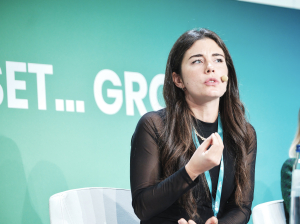
In front of more than 700 guests, during her speech our researcher and author of the report, Francesca Magnolo, highlights key concerns about the current and planned upscale of biomethane from manure, stressing that it:
🔸Creates (financial and regulatory) incentives to maintain or expand livestock production, when a drastic reduction in both production and consumption is essential to meet the EU’s environmental and public health goals and keep global warming below 1.5°
🔸Replaces a natural gas dependency with an animal feed dependency sourced from other continents, especially in the Global South, transforming animal feed into energy crops. This shift threatens the EU’s strategic autonomy and perpetuates neo-colonial forms of extractivism.
🔸Contradicts key EU policies, such as the EU Nature Restoration Law and the Deforestation-free products Regulation.
🔸Worsens power imbalances by increasing competition for land and driving up rental costs.

Naturally, not everyone in the conference hall agrees with our concerns. I can hear it bubbling more and more in the rows of seats behind me, with people starting to debate with each other.
After her presentation, Francesca Magnolo joins a constructive discussion with Connie Miller (FAO); Gaelle Marion (EU Commission), Diana Lenzi (Farming for Future Foundation), and Laurence Molke (Cycle0). As the audience also asks questions about our report, we have already achieved one thing: our concerns are being discussed at the centre of this conference!
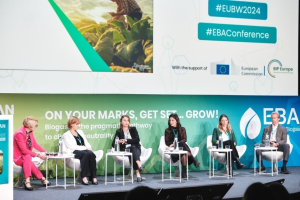
Our intervention and main policy recommendation, to end incentives to manure as biomethane feedstock, is then also displayed in the visual summary of the plenary:

And also after our participation in the morning plenary session and during the entire two-day conference, we achieve exactly that: a debate. Again and again, people approach us and congratulate Francesca Magnolo on her speech. We hear from a biogas association that acknowledges a reduction in animal farming in its country, and has already significantly reduced its projected use of manure as a feedstock. We hear from biogas producers who reflect the origin of their feedstocks, and rather chose truly sustainable smaller scale options (horse straw & poop!). But we also engage in controversial discussions with fossil companies such as Repsol who are now heavily investing in biomethane from manure to “green” their business. Here, it becomes dramatically clear that those companies simply do not (want to) have a clue what the current harmful impact of the agricultural system is – and that biomethane will not solve the damage that intensive factory farming is causing every single day.
But there is no time for frustration – the next dialogue partner is already waiting! And it again provides us extra motivation to keep exposing those harmful business models and the destructive relations between industrial meat consumption, biomethane production, and the health of our soils.

After two days, I am exhausted. But most of all, I am glad that we attempted this adventure, including many encounters and contacts that we would otherwise never have made and reached with our report & evidence.
And one thing is certain: our journey to “burst the biomethane bubble” – as part of a great coalition of inspiring organisations – continues!
📸 credits : Gleamlight / Philippe Molitor
We would love to hear from you!
Share on social media
Stay up to date with our latest work.
Leaving salmon off the holiday recipes has become unthinkable. During the festive season, supermarkets nudge us towards choosing salmon for our Christmas dinner, through advertising and special promotions like recipe suggestions and posters.
However, the pleasant atmosphere associated with this fish can be deceiving. The salmon we find in our supermarkets mostly come out of industrial farms in countries like Norway, with its industry alone producing 1.479 million tonnes of farmed salmon last year.
Foodrise has been working on the issues related to salmon farming for a while, denouncing the inefficiency, ecological harms and social injustice that come with it. We find it crucial that people are aware of these problems and able to make informed decisions when cooking for their loved ones, so here are 5 insights you can bring to the table should people wonder why you opted out of salmon for Christmas this time around:
We’ve made a short infographic that’s easy to share:

For our other blogs and research reports, please browse our website.
We would love to hear from you!
Share on social media
Stay up to date with our latest work.
As part of the Food Voices Coalition, we have sent a letter accompanied by our manifesto to Christophe Hansen, the European Commissioner for Agriculture and Food. The coalition includes seven organisations from six European countries: Foodrise UK, Green REV Institute, Terra!, CECU (Federación de Consumidores y Usuarios), CAN France, ALTAA (Alliance pour les Transitions Agricoles et Alimentaires), and Foodrise EU. Together, we strive to fix a broken food system wherein corporations dominate decisions, silencing the voices of those who grow, harvest, and consume food.
In our manifesto we call on commissioner Hansen to join us in transforming retail practices that maintain an unhealthy, unequal and unsustainable food system. Additionally we urge him to work on a progressive food system to ensure that food is produced, distributed and consumed in ways that respect the planet, uphold human rights and animal welfare, empower communities and support equitable economics.
Our ask is clear: let’s work together to create a food system that benefits everyone. We have invited Commissioner Hansen to meet with us and explore how we can collaborate to bring these ideas to life!
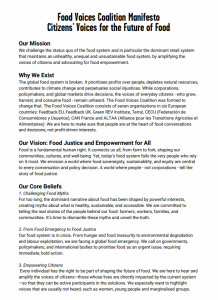

Read the letter to Commissioner Hansen here
With the new EU Commission in office, this is also an exciting time for the Food Policy Coalition (FPC), a diverse group of organisations representing farmers, consumers, nature, health, and animals. With Foodrise EU being an active member, we are proud to announce two letters that the FPC has published this week:
We would love to hear from you!
Share on social media
Stay up to date with our latest work.
On 19 November 2024, the fourth Plant the Future dinner took place, organised by the Transition Coalition Food. The afternoon programme brought together around 230 people from a wide range of sectors: entrepreneurs from the entire chain, scientists, NGOs, and politicians. The theme was ‘from ideal to business impact’. Despite the great diversity of contributions by speakers, including from meat processing companies, there was no doubt among those present about the need to reduce the share of animal protein in our diet and to drastically increase the share of plant-based protein.
Foodrise EU was one of the many organisations and companies that hosted a round table. At our table were Elly Hemmelder (supermarket Plus) and Eline van Muilwijk (Quista), Bram van Helvoirt (scientist), Brenda Poot (Municipality of The Hague), Liane Lankreijer (Ons Eten, a local food alternatives network in The Hague), and Renate Stuger (founder of the petition for a neighborhood supermarket in Moerwijk). Foodrise EU specifically invited them to support the initiative from Moerwijk for a supermarket with economic, ecological, and social functions for the neighborhood and to further explore the concept of a democratic supermarket. During the imaginative and tasty plant-based dinner, we had inspiring conversations about giving voices to people in the supply of produce and value creation of supermarkets and what would be needed to make this happen. Time flew by and at the end we concluded that we would like to set up a business case with residents and entrepreneurs for a social and healthy supermarket, in which of course the share of plant-based proteins is at least 60%, but also the supply meets at least 60% of the Wheel of Five with mainly fresh food and short chains. We would like to thank our guests for their committed and inspiring contributions to the discussion!

During the dinner, Frank Mechielsen, director of Foodrise EU, offered a summary of the report “Trading away the Future? How the EU’s agri-trade policy is at odds with sustainability goals” to MPs from five political parties. The report uses case studies in soy, rapeseed, and beef to show that EU trade policy does not contribute to a sustainable transition of our food system, but rather increases inequality and climate change, health problems and food insecurity.

Key-note speakers were Rasmus Prehn, former Danish Minister of Agriculture, and Rune-Christoffer Dragsdahl, President of the Vegetarian Association in Denmark. They presented the progressive Danish Plan of Action to enable the plant-based transition in agriculture. Their main message was to work together, even with parties with whom you usually do not sit around the table and look for the common ground that connects us all, in this case food. In the process, all interests are carefully considered, but it is inevitable that concessions will also have to be made. Above all, look for the possibilities for all parties. They referred to the Netherlands, where the agriculture sector has many similarities with the situation in Denmark, to develop its own Plan of Action to accelerate the food transition and to collaborate with the Danes to produce such a plan at the European level as well.

We would love to hear from you!
Share on social media
Stay up to date with our latest work.