
Questions or ideas?
We would love to hear from you!
This Summer, Phoebe Zhuang, a master’s student from the University of Amsterdam, joined Foodrise’s team as an intern. Here is her take from this year’s MARE Conference.
The MARE People and the Sea Conference is an event where social scientists come together to have interdisciplinary discussions on the use and management of marine resources. This year’s edition focused on the balance between tensions, trade-offs, and the potential transformations required for the future of sustainable marine resource management and governance. I acted as both a volunteer for the University of Amsterdam and an intern for Foodrise. I witnessed a great gathering of wonderful people and the latest scientific findings from marine social scientists.
In my own master’s research, I focused on the utilisation of small pelagic fish and their potential for greater human consumption rather than fishmeal production on the South African West Coast. I was curious to hear more and attended the sessions on aquafeed value chains, small-scale fisheries and fisheries system transformation. 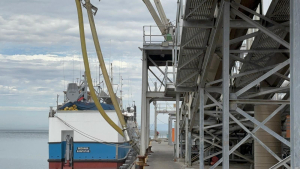
The expanding farming sectors, aquaculture in particular, have driven the increasing demand for Fishmeal and Fish Oil (FMFO), a crucial raw material for animal feeds. The rising FMFO industry has been changing coastal dynamics, aquaculture supply chains and the global food system. The fish used for FMFO production are usually small pelagic fish, such as sardine, anchovy and herring, which are an important source of food, protein and nutrition in coastal areas. In West Africa and South Asia, they are part of local artisanal food systems, contributing to local food security, fishers’ income and sustainable livelihoods. Now, with the increasing demand of raw material for FMFO production, these nutritionally valuable and culturally significant fish are diverted from human consumption to FMFO factories.
However, it is not only about the shift in use, but also what comes afterwards – the local fish food systems left shaken. During the sessions we heard about the shared concerns that affect countries like Senegal, Mauritania, India, Bangladesh, Vietnam. The diversion of fish toward feed is taking place across the world where richer countries extract so called “low value” fish through the capitalist global market. And the locals, they suffer.
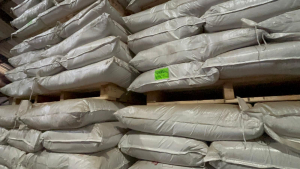 Systems seem trapped in FMFO production for the global market, despite huge capacity and the need for food in the region. Consequently, local fish food value chains were hit hard, driving increased food insecurity among coastal populations.
Governments and corporates often hide behind the concept of a “neoliberal” market and justify the diversion by saying that FMFO creates new revenue and boosts economic growth and local development. But let’s think about what has happened at the local level — Yes, there is growth and development, but for whom, and at what cost?
The people who were born and raised by the sea are now not able to access to the same fish as they have been eating over the generations, not to mention that they are also not welcomed in this new FMFO industry.
At some point, all of us in the room felt a sense of powerlessness and depression — FMFO has done too much to local communities that it seems hopeless for people who suffer from exclusion and marginalisation to fight back at the lower end of the power relation.
We are far from the solution, but we are all working towards it. One researcher from India shared, that at least some of the governments are starting to see the problems. This is where we must focus. As the FMFO industry continues to expand, growing attention is being paid to the conflicting and unequal dynamics among seafood supply chains, the FMFO sector, and local fish-based food systems.
Foodrise has been looking at high-trophic aquaculture on the EU and global levels, especially salmon and seabass aquaculture, which contribute to environmental degradation and food injustice along the supply chains. Foodrise is taking action to stop this toxic industry in its tracks — through hard-hitting investigative research, building public pressure, and platforming the voices of communities on the frontlines.
In the report Ocean Takeover, we found that seabass and seabream farming have taken over large tracts of the Mediterranean Basin in recent decades and wild-caught fish from West and Southern Africa are being used to produce feed for Greek seabass and seabream farms. Using conservative assumptions, nearly one million people in the region could eat a weekly portion of 200g of fish using the fish currently turned into fish oil for seabass and seabream aquaculture in Greece.
The FMFO industry’s impact is no longer invisible. We may feel powerless at times, but the power lies in connection, in knowledge, and in collective action. As researchers, advocates, and communities, we must challenge this extractive system and push for a future where fish feed people — not just profits and corporate interests.

We would love to hear from you!
Share on social media
Stay up to date with our latest work.